Queer PowerPoint 2026 and the Fabulous Future of Polari
This article reflects on a 2026 appearance at Queer PowerPoint in Canberra, situating the event within its broader experimental arts context with queer sheningnans. In this article, I will be exploring how my presentation on the “Fabulous Future of Polari” connected this historic queer to today’s bear community.
It combines background on the Queer PowerPoint project, a primer on Polari, and an account of how contemporary bears are reclaiming and reinventing this language of survival, camp, and solidarity.
What is Queer PowerPoint?
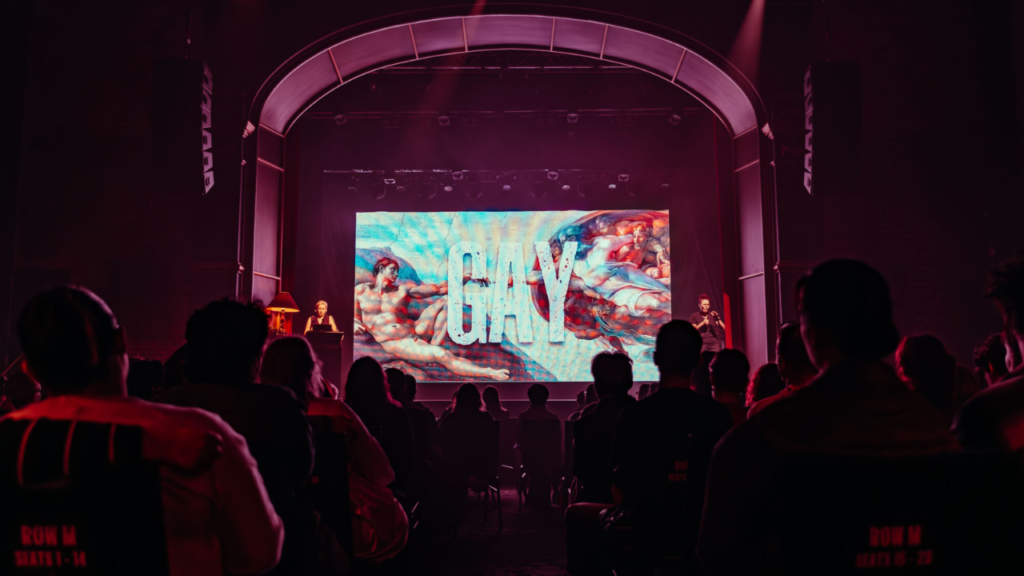
Queer PowerPoint is a cult experimental performance series that invites queer artists and community members to deliver short, 10–12 minute performance-lectures using Microsoft PowerPoint as their primary medium. The format deliberately queers the most corporate of tools – the slideshow – turning it into a vehicle for deeply personal stories, obsessive deep dives, and gloriously niche queer fascinations.


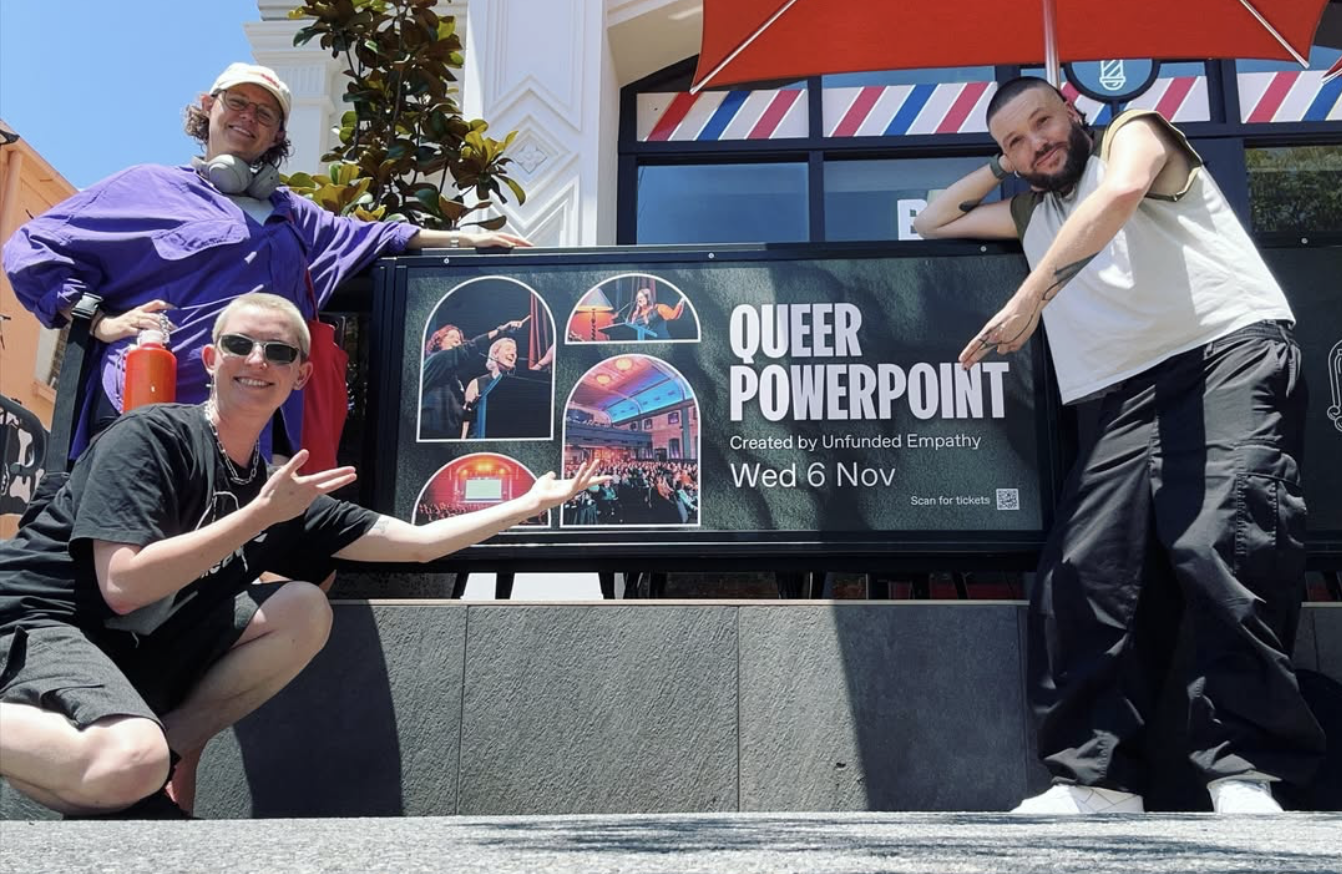
Created by artists Dr. Xanthe Dobbie and Harriet Gillies, and produced through the platform Unfunded Empathy, Queer PowerPoint is framed as “a night of corporate presentations and personal optimisation… but queer,” blending performance, lecture, and party aesthetics. Across each edition, the curators commission or invite line-ups of queer artists, writers, activists, academics, and local community legends to unpack whatever topic currently has them obsessed, from high theory to pop culture ephemera.
Harriet Gilles is an award-winning performance artist who has worked on immersive and interactive projects with Pony Express, PVI Collective, and Hermann Nitsch. She has completed residencies with Robert Wilson, Marina Abramović, and The Bearded Tit. Her solo performance, The Power of the Holy Spirit, won Best Experimental Show at the Melbourne Fringe Festival.

Xanthe Dobbie is an interdisciplinary artist and researcher based in Naarm, Melbourne. Their practice captures the experience of contemporaneity through queer and feminist ideologies. Xanthe’s award-winning graduate film Elagabalus has screened at festivals worldwide. They are currently undertaking a PhD focusing on digital and interactive art at RMIT University.
Thom Smyth is a creative producer interested in socially-engaged and queer experimental performance and events. He created Unfunded Empathy as a sidehustle, a creative outlet for healing political and social anxieties. Working with queer Sydney-based artists across parties, live performance and events, Unfunded Empathy explores ‘possibility’, alternate futures we can build together. Thom also works as a Producer at national producing house Performing Lines.
Jonny Seymour (Stereogamous) is an ARIA-winning musical solo (occasional duo with Paul Mac) known for their remixes, collaborations, and performances at festivals and events worldwide. They have worked with numerous artists, designers, and institutions, including Kylie, Sydney and Melbourne Fashion Weeks, Sia, Sydney Theatre Company and many more.


Check out their Instagram here: https://www.instagram.com/queerpowerpoint/
2026 Queer PowerPoint in Canberra (11-13 March 2026)
The 2026 Queer PowerPoint season in the Canberra region unfolded over three nights at The Q in Queanbeyan, Tuggeranong Arts Centre, and Belconnen Arts Centre, transforming each venue into a queer lecture theatre where community members could revel in the joy of highly niche slideshows.
Audiences encountered a curated mix of local and visiting presenters, each granted a tight ten to twelve minutes to take the crowd on a journey from the deeply personal to the absurdly theoretical and back again.
Within that line‑up, “The Fabulous Future of Polari” sat comfortably alongside presentations that ranged from pop‑cultural deep dives to DIY spiritualities, demonstrating how flexible the Queer PowerPoint format can be in holding multiple tones – earnest, silly, political, horny – often within a single slide deck.
The event’s careful balance of grassroots accessibility and high‑concept experimentation echoed the history of Polari itself: a code born in the streets, caravans, and backstage corridors, but later taken up by academics, broadcasters, and artists.
Bringing Polari to Queer PowerPoint
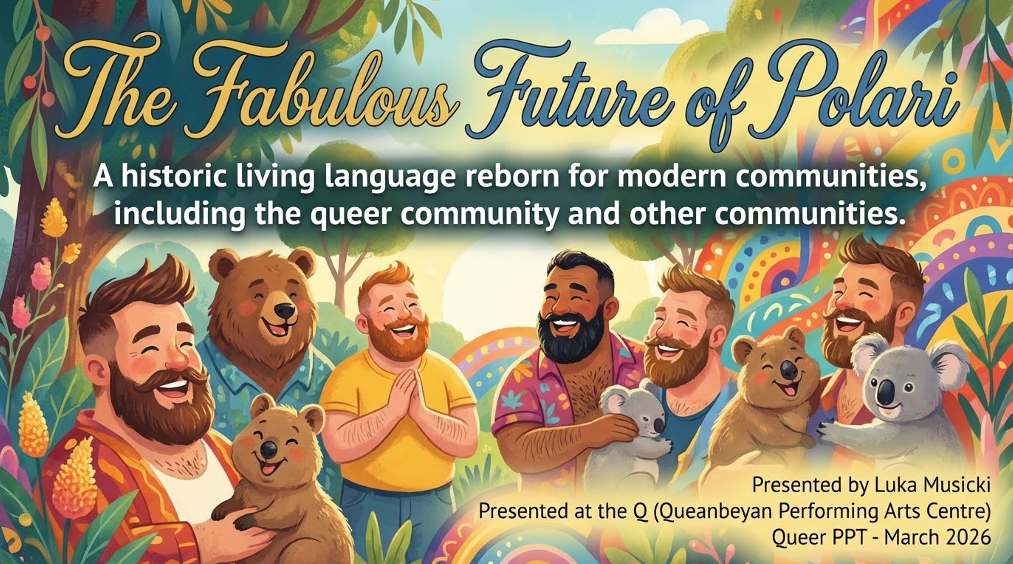
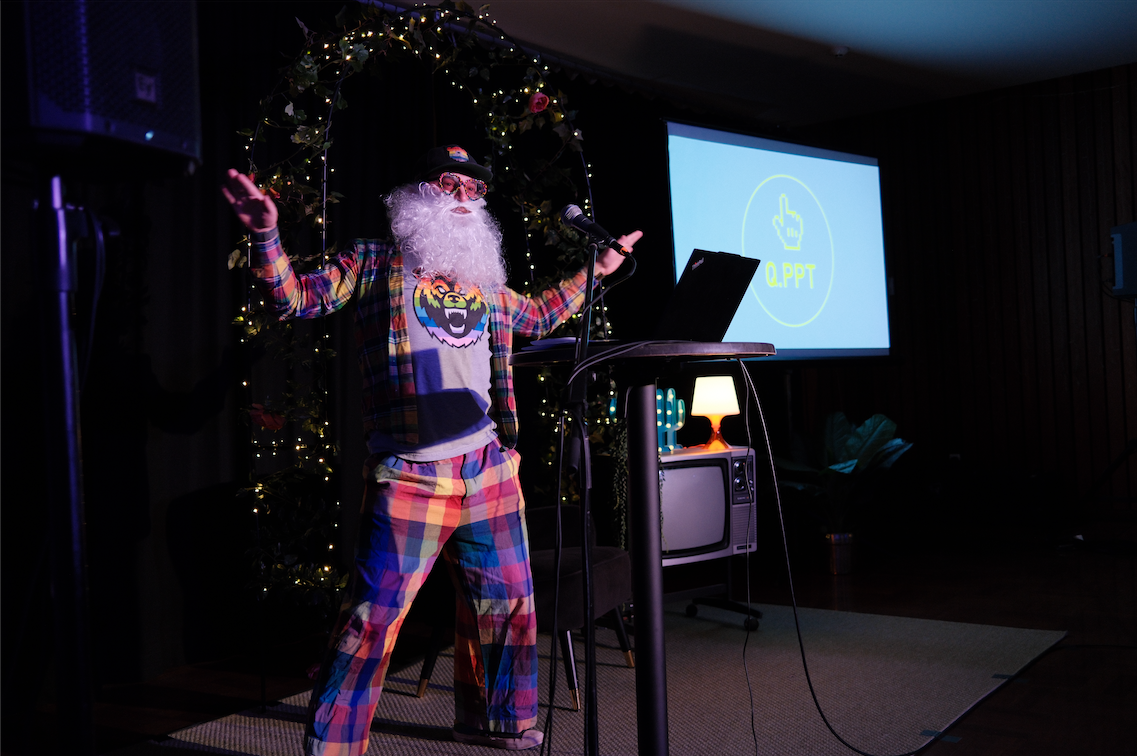
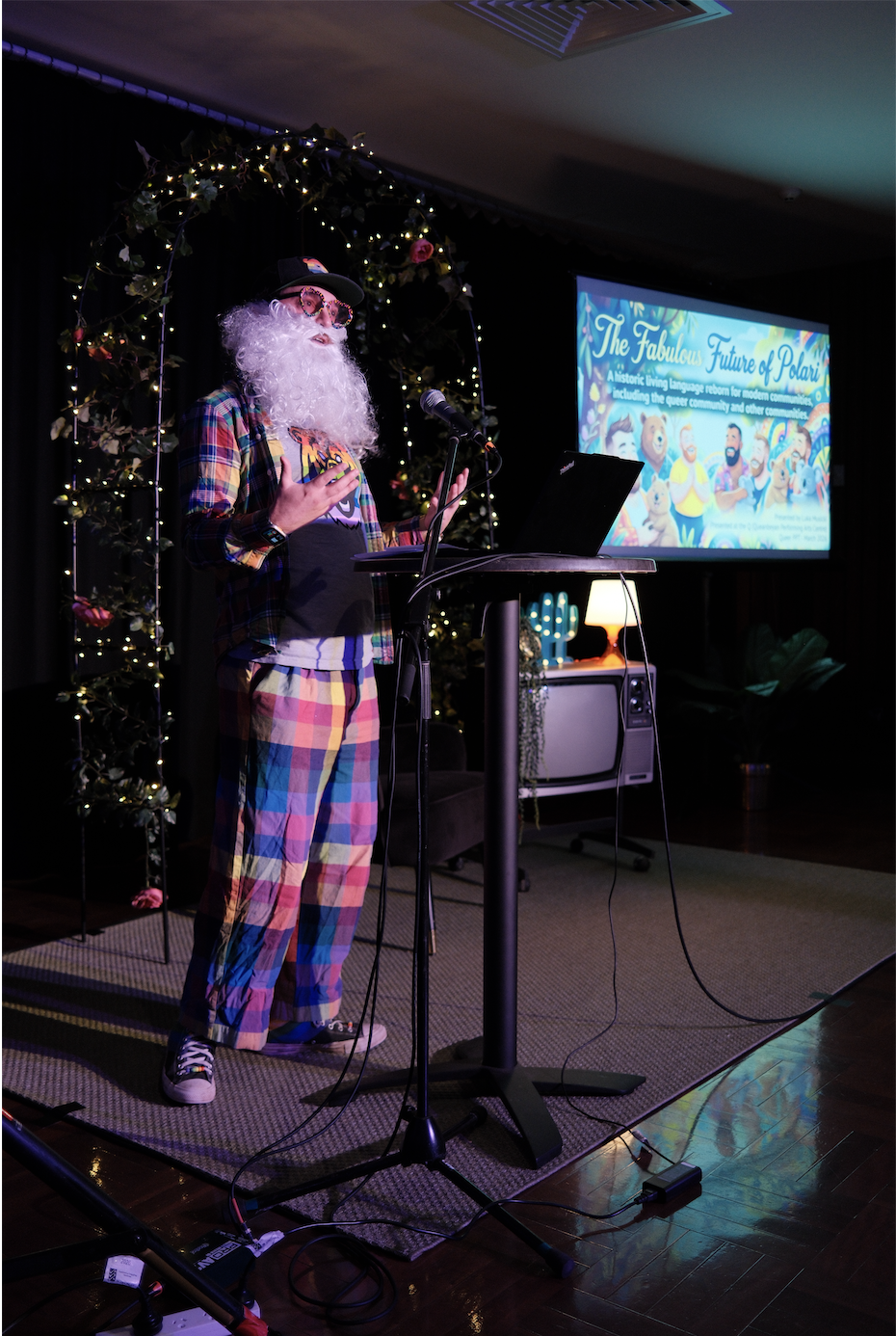
This was my presentation. Quirky, right? My Queer PowerPoint presentation was around “The Fabulous Future of Polari” meant stepping into this layered history and asking what it might mean to carry Polari forward – not as a sealed museum piece (like Latin), but as a living, evolving practice of queer world‑making.
In the context of a bear‑centred magazine and readership, the talk focused especially on how bears might adopt, remix, and extend Polari in ways that honour its roots while speaking directly to contemporary community life. The structure of the talk followed Queer PowerPoint’s performance‑lecture model: part historical overview, part language lesson, part stand‑up routine, and part love letter to the chubbier, furrier corners of the queer universe. Slides moved between archival references to Polari’s origins, screenshots of its appearances in media, and freshly minted bear‑flavoured vocabulary, all punctuated by the delightfully clunky aesthetics of star wipes, bullet points, and clip art. I did my best to make it visually appealing.
Highlighting Bear Community Polari
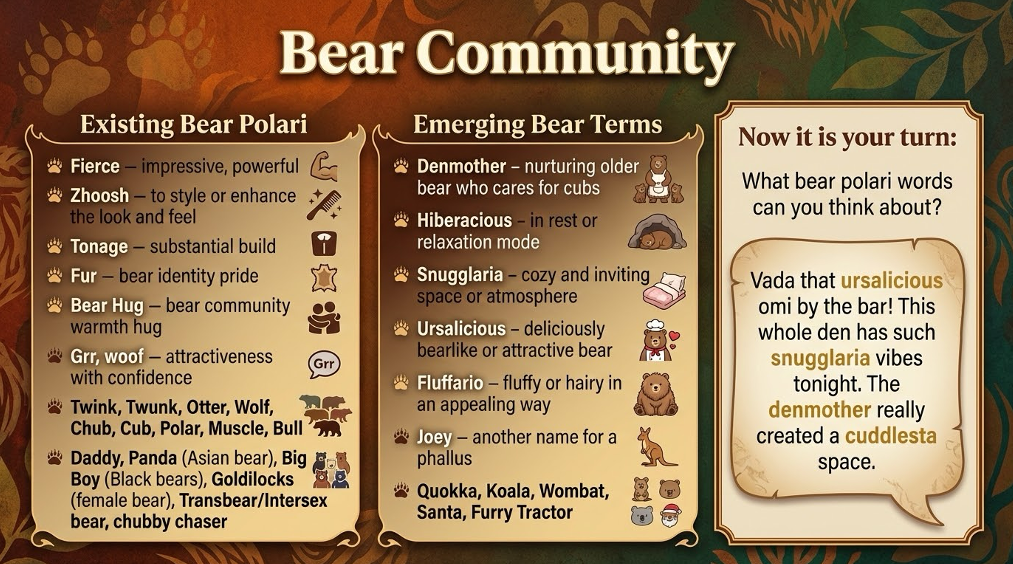
One strand of the presentation proposed a playful “Bear Polari” – new vocabulary that extends the camp spirit of classic Polari into specifically ursine terrain. These coinages were framed not as authoritative additions to the historical lexicon, but as imaginative prompts for how bears might experiment with in‑group language that is both joyous and gently protective.
Examples shared during the talk included affectionate terms for different bear archetypes, in‑jokes for common social situations, and phrases that celebrated body positivity, chosen family, and intergenerational connection. By inviting the audience to try out these words aloud – rolling them around their tongues, embellishing them, and spontaneously inventing new variants – the presentation underscored that language like Polari lives most fully when it is shared, adapted, and collectively owned.
Audience Reactions and Community Feedback:
Audience response to the Polari presentation was enthusiastic, with many attendees expressing delight at encountering this slice of queer linguistic history framed through the lens of bear culture. Informal conversations after the show revealed a mix of nostalgia, curiosity, and creative scheming, as bears and their admirers swapped favourite new phrases and brainstormed contexts where a revitalised Polari might thrive – from online chats to bar nights and podcast segments.
Several attendees commented that learning about Polari’s origins helped them connect contemporary bear spaces to longer lineages of queer mutual recognition and coded care, particularly for those who had experienced policing or stigma around their bodies and desires. Others highlighted how the talk’s generous, humorous tone made a potentially heavy history feel accessible and empowering, turning what could have been a sombre lecture into a participatory celebration.
Why Polari Matters for Bears Today?
For the bear community, revisiting Polari offers more than a set of quirky slang terms; it opens conversations about how language can shape belonging, safety, and pleasure. Since the 1970s, bears have long carved out spaces that challenge narrow ideals of gay male beauty, and a bear‑inflected Polari can help name and affirm those alternative aesthetics and desires in ways that feel both historical and freshly contemporary.
By treating Polari as a living archive rather than a dead language, the presentation argued that bears and their wider queer kin can honour past generations while inventing new vocabularies for care, desire, and resistance. In the context of Queer PowerPoint’s DIY lecture‑party format, that proposition landed not as a theoretical exercise but as an invitation: to keep playing with words, keep sliding new ideas onto the screen, and keep building futures where fat, furry, fabulous bodies and voices are front and centre.


