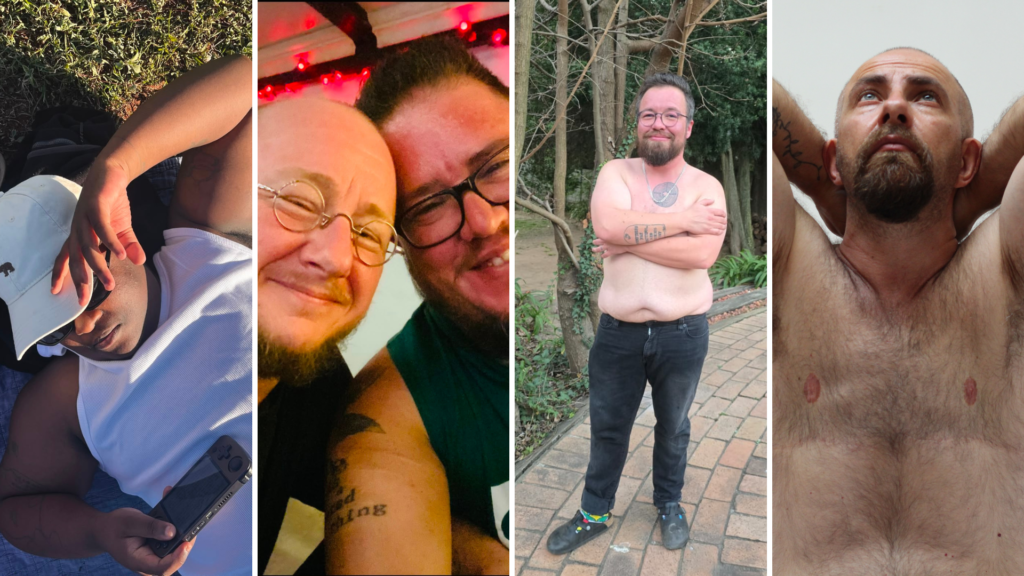
The Bears Who Built Themselves
Trans men are growing into South Africa’s bear scene. Hormone by hormone, hair by hair, and on their own terms.
He remembers the exact words. Early days on testosterone, barely a shadow of a beard, a hookup with a guy who ran his hands over him and grinned. “You are a bear,” the man said. “You’re a gummy bear. Got some extra squishing bits.”
It was meant as a compliment, and it landed as one. For Elliott Kotze, a psychologist who had spent years suppressing the knowledge that he was trans, the word did something his own reflection hadn’t yet managed: it made him feel real.
“I was hunting that label for the longest time,” he says, “because it just felt so affirming.”

That single word, tossed off in a bedroom in Cape Town, is as good a place as any to start a story about trans bears in South Africa.
Bear culture has never really been about a body type. It’s about belonging. Permission to be big, hairy, soft, solid, unfinished, and still be desired exactly as you are.
What almost nobody has stopped to ask is: who gives that permission, and who has to fight for it?
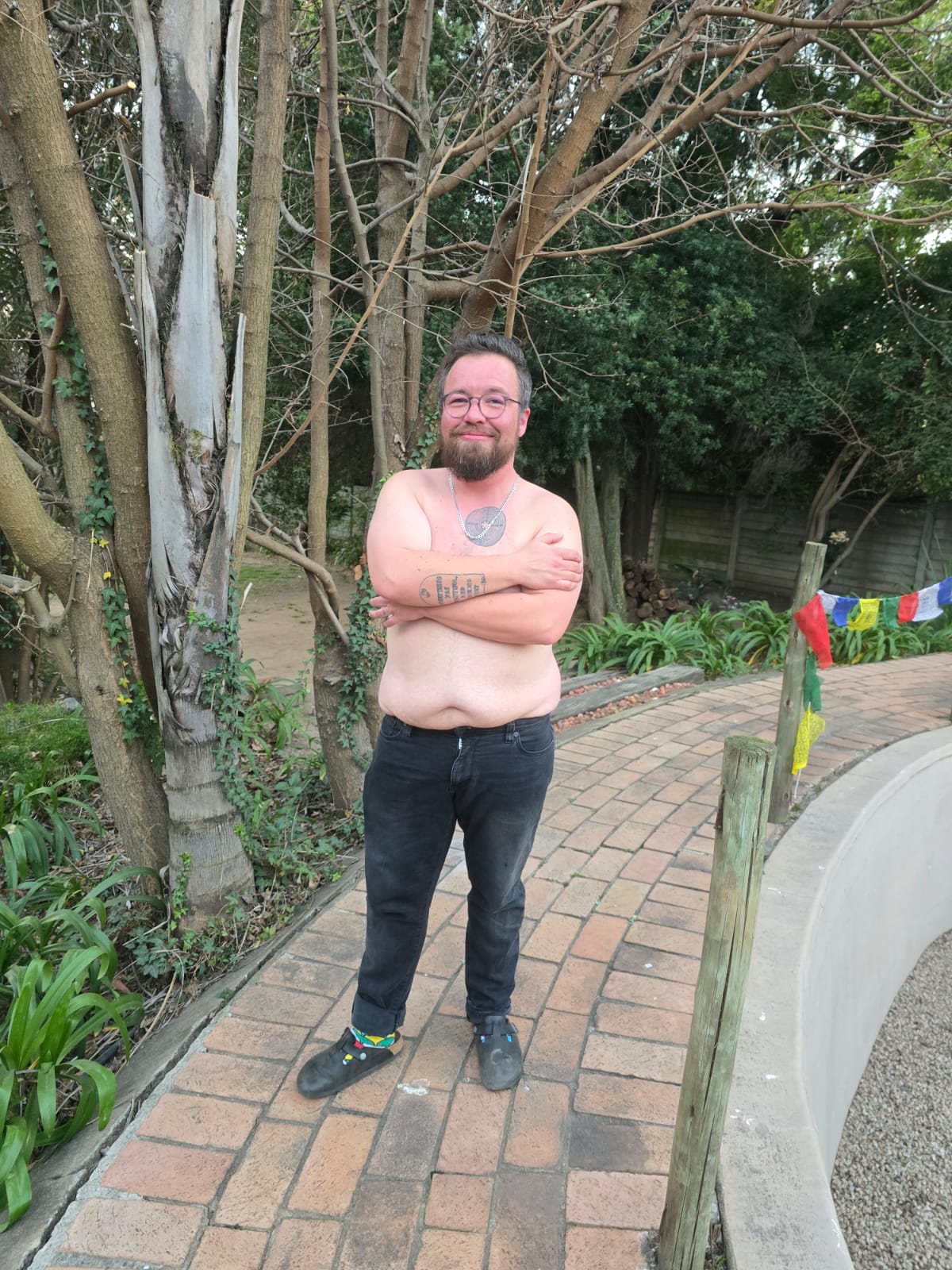
Elliott Kotze
THE BODY AS SOMETHING YOU BUILD
Access to gender-affirming healthcare in South Africa remains brutal by any measure — top surgery waiting lists at government hospitals stretch past two decades, private surgery runs into hundreds of thousands of rand, and almost no medical aid scheme covers it. Most trans men here bind for years, save for a decade, or simply go without.
Testosterone does strange, specific things to a body. Facial fat redistributes. Jaws sharpen. Hair creeps down the neck and chest, sometimes thickly, sometimes not at all. A trans identified person I spoke to, Noah Evans, on a modest weekly dose after menopause, describes their own four years of change with wonder: a full beard, a shaved head where the hair thinned, a chest hairier and thicker than both his adult son’s and his son’s biological father combined.

“It really is incredible what a few drops of a viscous amber liquid can do to your body,” they say. They have grown fond of the small belly that came with it.
Noah’s partner Gabriel de Larch, known as Gabe, who is non-binary, describes a version of that same homecoming from a different direction. Before hormones, “you are at war with your body,” Gabe says. “You’re dysphoric about it. You don’t belong in your own body. It’s a cage.”
Then the changes came, fast enough to feel sudden. “Suddenly you’re like, oh, this is my body. This is me.” The body stopped being a prisoner and became, in Gabe’s words, a vehicle — something to navigate the world through rather than something to escape.
That fondness is not incidental. It’s the whole point. For sivgreyson, a masters student researching how trans and gender-nonconforming people experience public space in Gqeberha, a major coastal city in South Africa’s Eastern Cape, growing a beard was, at first, simply itchy and uncomfortable, and then it became something else.
“Part of being trans is taking on your power to change your body,” sivgreyson says, “and to change how people speak about you. This is me, and I get to mould this clay. Every time I grow a little bit more hair, I’m like, I did that. I made that happen. It’s something to celebrate.”
I made that happen. It’s a small sentence with enormous weight because it flips the script that so much of trans medical literature, and cis conversation about trans bodies, gets backwards. The body isn’t something happening to sivgreyson. It’s something sivgreyson is authoring.
FINDING THE WORD BEAR FROM THE OUTSIDE IN
sivgreyson didn’t arrive at bear culture through a bear bar or a bear run, but through the internet, watching fat transmasculine people describe themselves as bears in a way sivgreyson found, in their words, “really sexy” — language that didn’t just describe desire but conferred it.
“That ended up having me see myself as attractive, and as desirable,” sivgreyson says. That mattered for someone who grew up, as they put it, a young “kind of assumed queer… fat kid” in a conservative town, convinced there was something wrong with them for not doing girlhood the way they were supposed to. Bear culture, discovered second-hand, became one of the first spaces where fat, masculine, and desirable weren’t competing ideas.
Kotze’s route in was more physical and more immediate — a long-running attraction to bigger, hairier men that predates his own transition, crystallised the day he told a beefy, bearded friend, “if I ever had to be a guy, I wanted to look like you.” When the beard finally came in, the label bear wasn’t just descriptive. It was destination. “Yes, I’m a bear,” he says simply.
Not everyone claiming the label fits the classic silhouette. Noah, the trans man based in Johannesburg, still isn’t fully sure the word applies to him. “I feel I’m a bit tiny and slender to be seen as a bear,” he says, and has floated his own half-joking alternative: “I once suggested maybe I’m a koala bear.” It points at something real — even inside a community built around defying a narrow body ideal, people are still working out where they fit.
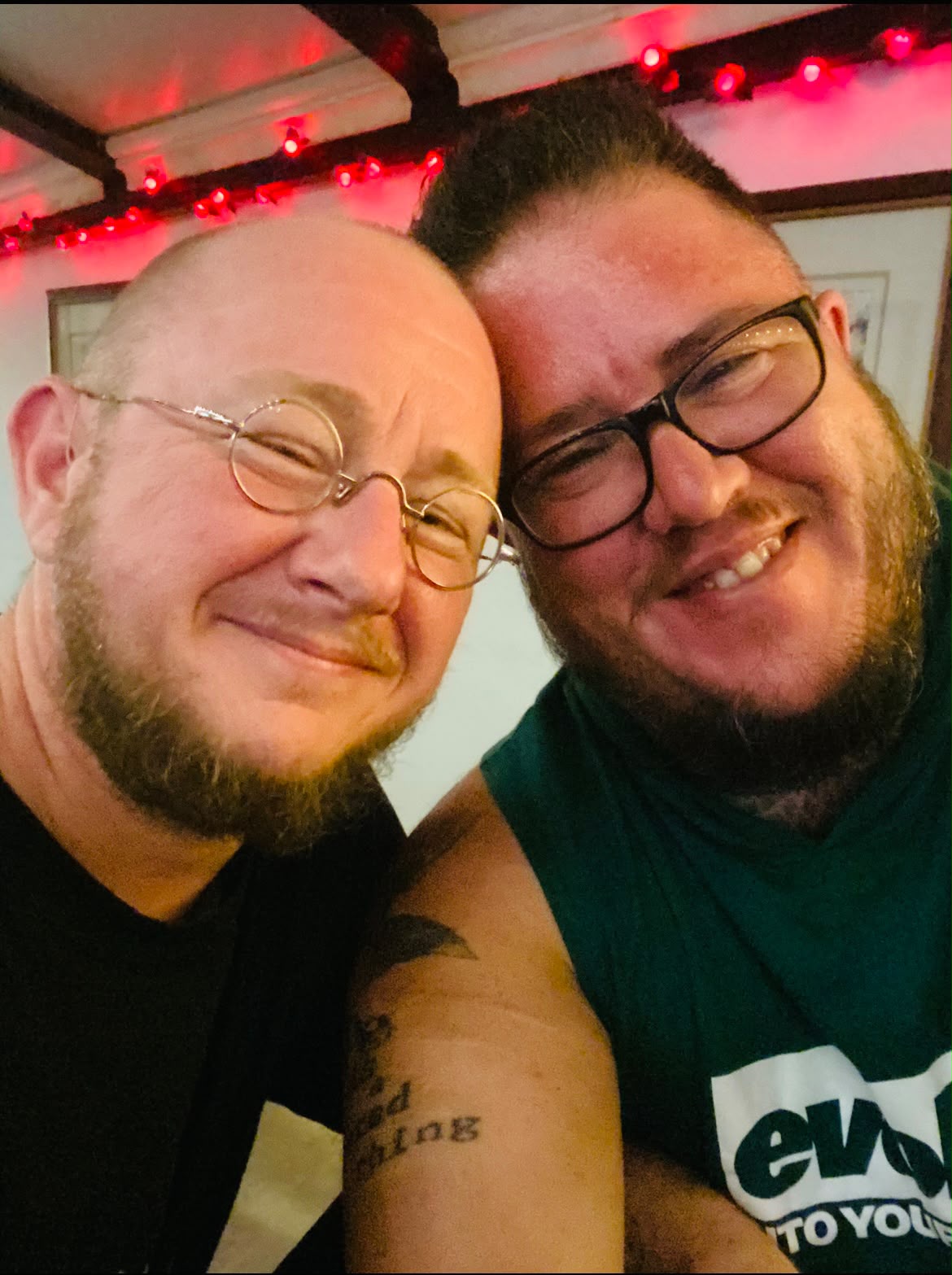
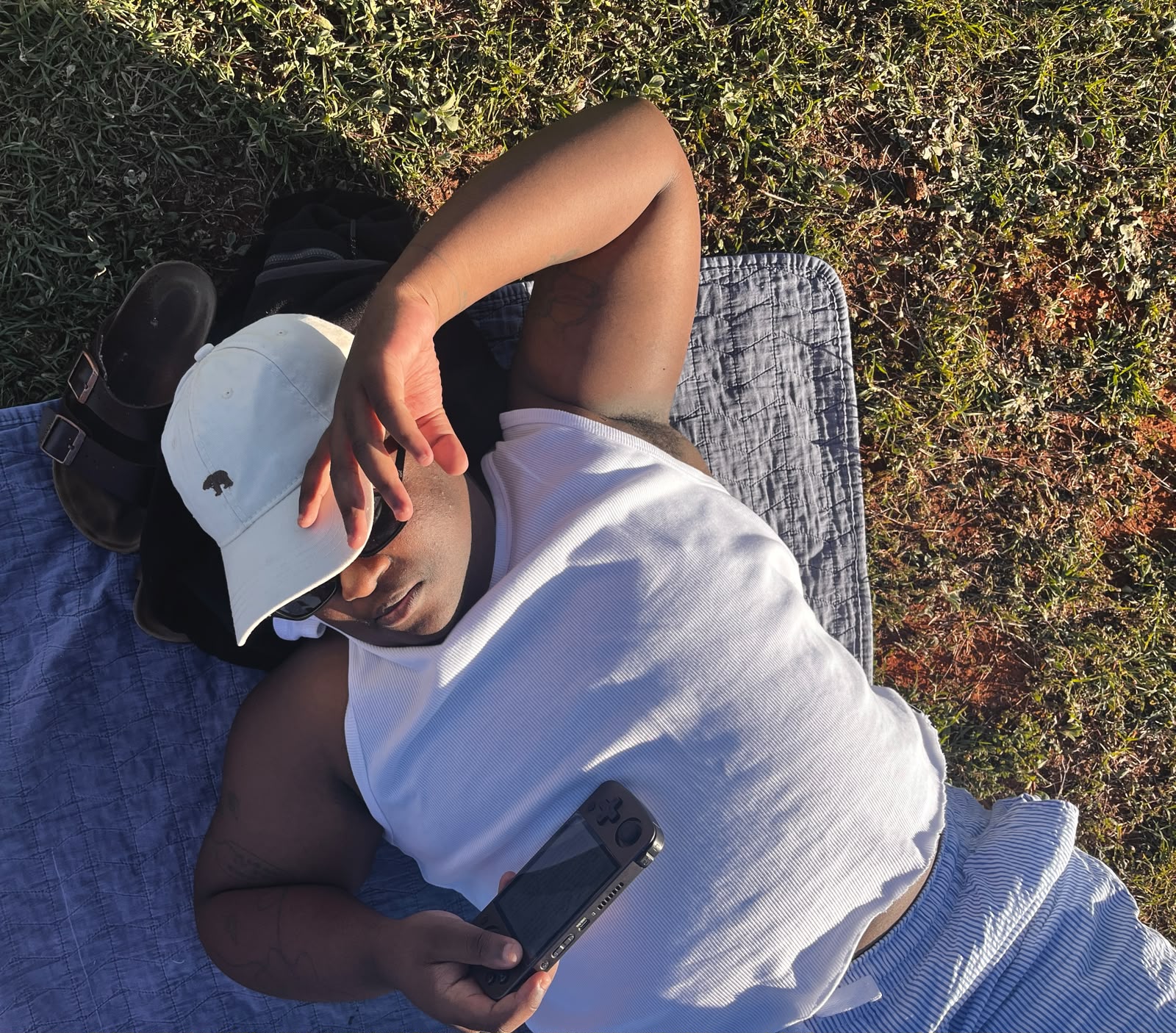
Gabriel de Larch with their life partner Noah Evans
THE VIEW FROM JUST OUTSIDE THE DEN
Not everyone who loves bears is one, and that turns out to matter too. Robert Hamblin, a Cape Town-based artist and trans activist, laughs when the question comes up. “I think I’m more like in the otter category,” he says — though he isn’t shy about the attraction. “I’d love to be it, by the way.” He has, in his own words, “a lot of bears” in his life, and his interest in the culture runs deeper than desire. It’s political.
“It’s amazing that gay bears broke that culture of gay men that were really intensifying the capitalist patriarchal thing of what a body should be,” Hamblin says. Watching bear culture grow more visible made him wonder, long before his own transition, whether something similar could happen for women’s bodies.
Then he transitioned, and the question stopped being hypothetical. “When you come into your own trans masculinity, you’re having a second puberty and a second confrontation with body,” he says, “and you’re programmed culturally, universally, in what rightness looks like, with no dilution of capitalist, white patriarchy.”
Hamblin traces some of that healing to an unlikely source. Back in the early 2000s, before most people even used the word “transgender,” he found his most useful role model in a trans man porn star named Buck Angel — someone who has since become, in Hamblin’s words, “actually transphobic” and a booster of “all kinds of conservative narratives.”
At the time, though, Angel’s refusal to hide his body, branding himself bluntly as “the man with the pussy,” gave Hamblin something to hand his own clients and community, to the “upsettings of some other trans people” but useful nonetheless: proof “that a trans man could be something, an object of desire.” That recognition, he says, was healing in the most literal sense — “sex was healing,” because it showed him “I could be an object of desire or a person of desire.”
He connects it to what he sees as the real fear behind a parent’s panic over a child transitioning. “Who will love my child?” he says. “And will my child get a job?” Bear culture, with what he calls its “interconnectivity” across race and body, is one answer to both.
Hamblin grew up Afrikaner, on farms where the biggest, most powerful men he knew already looked like bears without anyone calling them that. “We have a lot of bear-looking straight men, from Germanic origin — they eat in a certain way, they are boer — Afrikaans for farmers,” he says.
But that body was never celebrated where he grew up; it was pathologized, treated as bad health rather than something worth wanting. Bear culture, arriving later, was the first place he saw that same shape held up as desirable.
His own first bear was a man named Theo, a friend of his father’s, met the way his father met many of his partners: cruising at a dam near the farm where he grew up. “I only met my father as an adult. And it was very much a Joburg city life, gay nineties. Men cruise in the city parks. Theo became a friend after light dalliances with my father in nature so to speak.”
Theo became something close to family, and gave Hamblin a broader, less Western idea of what nurture and bigness could look like together.
“It shaped my own idea of motherliness being something more diverse than a Western-looking model,” he says. He still can’t call himself a bear — “I’m too scrawny” — but he’s clear about the impact. “It’s been massive, what bear identity has meant to me, personally, sexually.”
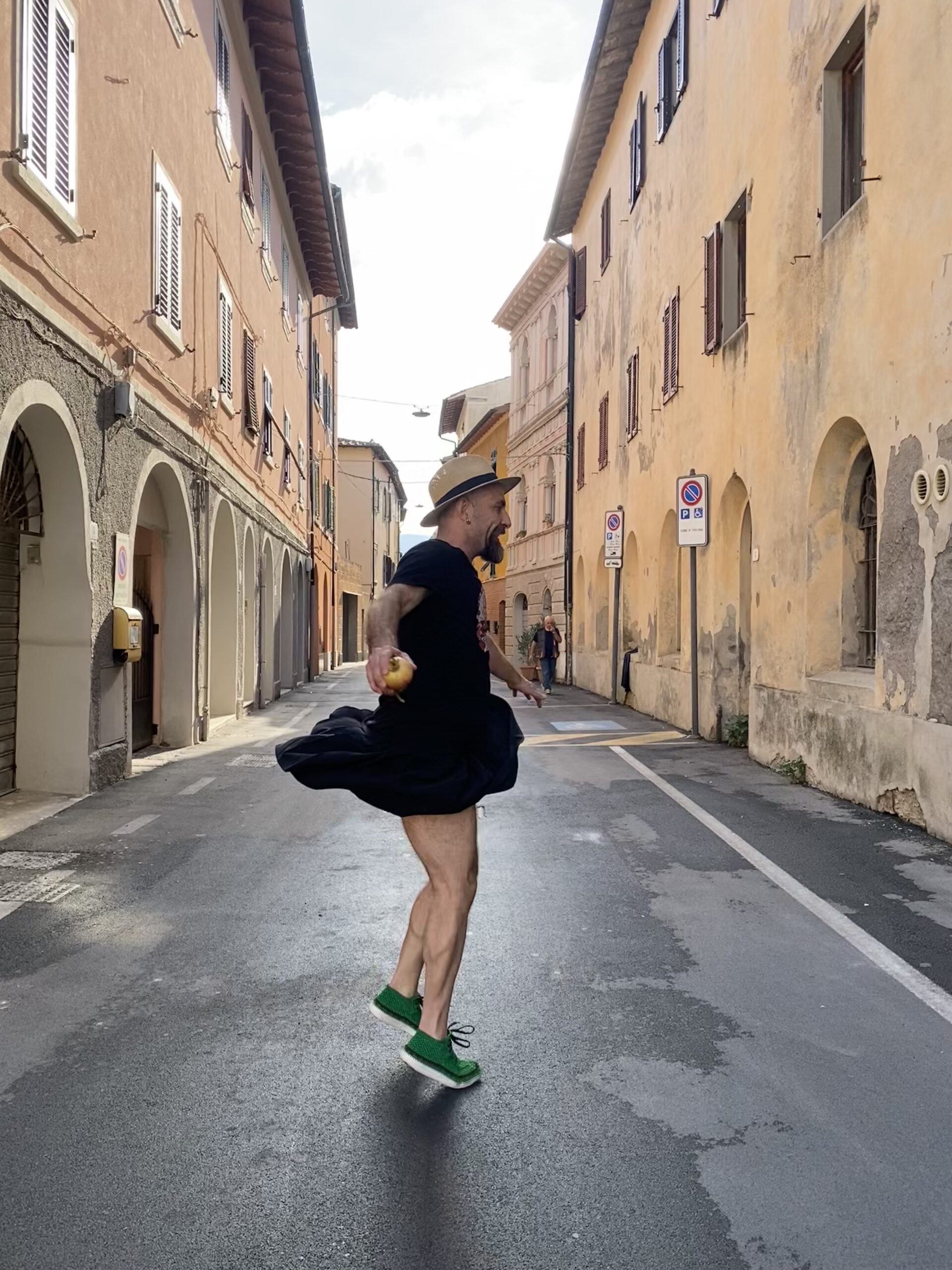
Robert Hamblin – Photo by: Francesca de’ Medici
WELCOME, UNTIL YOU CHECK
But belonging has its limits. Desiring the bear community and being safely inside it are two different things. Kotze has learned, the hard way, never to walk into a bear space without emailing first. One well-known Johannesburg group’s reply, when he asked whether trans men were welcome, was blunt: “unfortunately not.” Contrast that with the Cape Town Jacks, a jack-off club whose publicity materials state outright that trans men are welcome. Kotze went. He was, every time, the only trans guy there.
That gap between official welcome and lived experience is sharpened by race in ways the bear community rarely names out loud. “As a bear of colour, I’ve noticed the difficulties,” sivgreyson says. Kotze, reflecting on his own clients, is honest about why: “particularly if you’re a black trans man, you would for sure have had threats of violence against you already, before transition.”
Hamblin catches himself making a version of the same erasure while thinking the question through out loud. Asked whether trans bears were challenging the old, mostly white idea of a bear, he pauses. “I don’t know why — as the internet offered me — I’ve never seen a black bear,” he admits, half laughing at himself. It takes typing “black” in front of the search, he realises, the same trick he needs for a medical search on a child’s skin condition, or the algorithm quietly assumes whiteness as default.
Gabe and Noah test welcome in a quieter register: a mostly homebound couple whose main brushes with strangers happen at the gym or the mall, where they hold hands — something Gabe has noticed gay male couples rarely do in public.
On a Cape Town holiday, another gay couple found it so unexpected they said so aloud: “Oh my god, it’s so cute that you’re holding hands.” Inside their own friend group, welcome has to be renewed each time someone new joins; at one long-running Friday supper, Gabe spent months bracing for an old acquaintance to place the resemblance before finally saying outright, “This is who I am.”
And yet both keep showing up. Kotze goes to cruise bars and jerk-off parties partly because he can feel his own confidence now — “if you’re going to be mean to me, I’m going to tell you off” — and partly because every time, he’s there, he makes the room a little easier for the next trans guy who walks in. “I feel quite confident at this point in my body and my sexuality,” he says, “and me being a guy without a penis is a thing to try. And I’m also happy with that.”
WANTED, WATCHED, AND STILL HUMAN
There’s a particular kind of exposure that comes with being visibly trans in a sexually charged space, and Kotze, sivgreyson and Hamblin all describe it, from different sides. Cis men are curious, Kotze says — genuinely, sometimes guiltily curious — about what a trans man’s body is and does.
“We do have a very cool, unique set of genitals,” he says, without a trace of shame. But that curiosity comes tangled with a fear of getting it wrong, so people often freeze instead — which can feel, paradoxically, like its own kind of rejection.
sivgreyson has had the opposite problem: too much of the wrong attention, from people on apps explicitly hunting for trans partners as a category rather than as people. “I lost it two hours in,” they say, of an early attempt at dating apps.
Their experiences differ, but the burden is similar: repeatedly explaining who they are before anyone gets to know them. “Who I am, unfortunately, feels so nuanced,” sivgreyson says, “that in the moments where I have tried to make connection with people, it’s been hard.”
Hamblin remembers the same exposure landing differently, because it arrived earlier and all at once, from directions he wasn’t prepared for. “Older women became really sexually aggressive with me,” he says. “And gay men — they are no less handsy than straight men, they’ll just grope you.”
What he was navigating wasn’t only being seen, but being wanted without the fear that used to attach to male desire when he was read as a woman. “I had to re-navigate the meaning of it — there’s not a power differential anymore. You can just say no, or yes, or enjoy it.”
Gabe has arrived at something similar from the far side of fetishization’s old anxieties. Early in transition, being explicitly sought out as trans felt, unexpectedly, less like erasure than affirmation. “As a woman, when you’re objectified, it’s a very uncomfortable thing,” Gabe says. “It’s an erasure of who you are in favour of what you look like.”
But desire aimed at a body newly becoming itself read differently: “to be objectified by an equal partner is different to being objectified by someone in a position of power over you.” With a changing chest, jaw and voice already the centre of attention, being wanted for exactly that body stopped feeling like exposure and started feeling like being seen correctly.
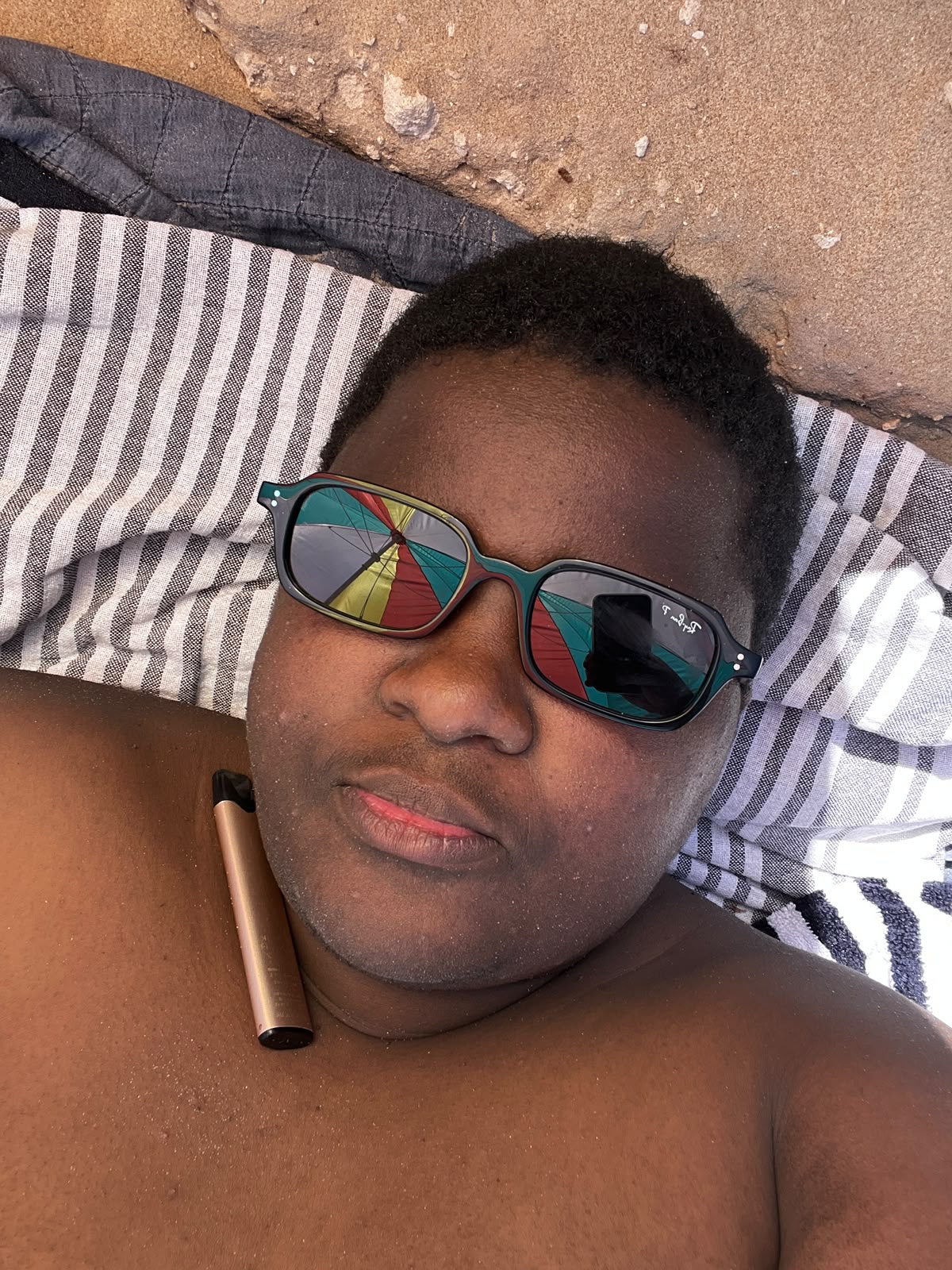
THE PRICE OF DESIRE
Not every part of that navigation ended well, and Hamblin doesn’t sand down the parts that didn’t. Theo, his bear, was fascinated by Hamblin’s transition and openly desired him — until desire ran into the fact of his body. “He had a fear of a vagina,” Hamblin says, plainly.
He showed Theo pornography featuring trans men, hoping it might bridge something. Theo tried, put his hand over his eyes, said “okay, I’m doing it, I’m doing it,” lowered his head — and then couldn’t. “I can’t. I’m sorry, Robert. It was hard for me.” “Not even explaining to him how a clitoris showered with testosterone becomes gorgeously dick-like and suck and fuckable helped,” Hamblin says.
He is unsentimental about what that moment was. “I wanted him to love me in every way,” he says. “You want to know you have that power over someone.” Both felt the power shift, and neither liked where it landed. “He’s not very political,” Hamblin says of Theo, more explanation than complaint. “It was a painful moment for me.”
That memory isn’t only historical anymore. Theo is afflicted with liver cancer, and Hamblin hasn’t seen him since he got sick. “He’s lost sixty or seventy kilograms,” Hamblin says, repeating what friends have warned him to prepare for. What he keeps returning to isn’t the diagnosis. It’s the physical shrinking, described to him second-hand, again and again, until it stuck.
“That is going to be the hard part for me,” he says. “The monumental-ness of it — that that is being diminished.” A man who taught him what bigness could mean, who gave him his first real understanding of the word bear from inside a friendship rather than a search result, is disappearing from the body that made the lesson possible.
MOURNING WHAT MASCULINITY COSTS
Gabe arrived at loss by a different road. Non-binary, neither fully at home in womanhood nor landing inside maleness, Gabe describes a double grief: pushed out of a womanhood that offered instant, unspoken understanding — “you don’t have to give a preamble to who you are” — while never quite arriving inside maleness either. “I still don’t have male friends,” Gabe says.
“The men I’m drawn to are comfortable in their own femininity.” Some of what’s mourned is safety itself, the ease of women-only spaces traded for a world learned in real time: where to stand at the gym, when not to touch, which glance might read as threat rather than warmth. None of it, Gabe insists, comes with regret.
Hamblin’s art has followed the same terrain, and lately it has turned inward. He’s frank that the art world’s current appetite for trans stories mostly means trans-femme stories — fair enough, he thinks, given how much more violence trans women, especially trans women of colour and trans sex workers, absorb. But it has left transmasculine artists quiet too, wallowing, he says, “in guilt for a supposed privilege that we have, which is a split hair we should really get rid of.”
His current body of work started two years ago at a European residency, where he began wearing dresses in public — not performing femininity, just refusing to abandon the fabric. It cost him something unexpected: not violence, but a loss of privacy and peace, stares and refusals of service that followed him even to the Venice Biennale. Lately the work has narrowed to two garments: a black dress and a wedding dress.
The wedding dress carries a grief he grew up not being allowed to name — the promise that this would be “the most important day of a girl’s life,” a promise he was never going to collect on and, on reflection, was never sure he wanted.
One painting from the black-dress series is called I Mourn My Tears, and the title is literal, not poetic. “When I started taking testosterone, I couldn’t cry anymore,” Hamblin says. “The pain is still there — I sometimes feel my ribs are going to break when I want to cry — but the tears don’t come as easily. I mourn that.” He mourns, too, everything of the feminine he had to set down to become legible as a man. “What the fuck is that,” he says, “a man.” He thinks every man, cis or trans, gives something up for the label. He’s just one of the few willing to paint the receipt.
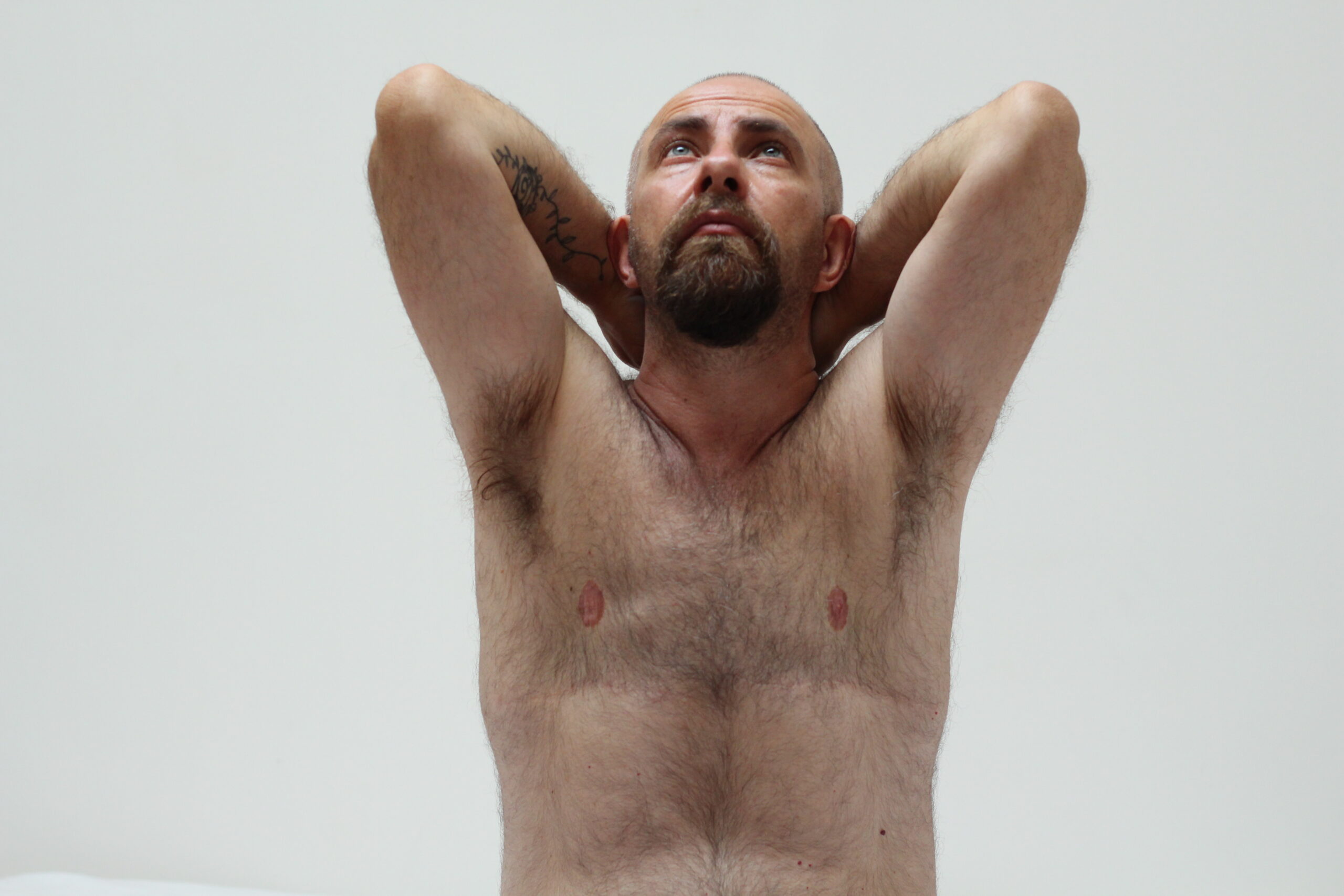
A BODY WORTH CELEBRATING ANYWAY
What none of them describe, notably, is regret. The ease with which Kotze and sivgreyson talk about their changing bodies reads less like vanity and more like quiet defiance. Even Hamblin’s grief is a form of that defiance: he mourns loudly, in public, in paint, rather than pretending the cost doesn’t exist. Gabe is just as unequivocal: for all the grief of a double displacement, a body that has finally come home is not something to take back.
sivgreyson calls manhood, once they finally arrived somewhere near it, “a playground” rather than a prison — the opposite of what womanhood had been. Kotze calls his own chest surgery, self-conscious as he still is about it, the price of finally getting to look like the man he already was inside. Hamblin, watching his oldest bear friend disappear even as he builds work about what his own transition cost him, holds the celebration and the mourning at once.
Kotze, for his part, sees something bigger in the fact that this story is being told at all. “I’m just thinking how cool it is that you’re doing a story about trans bears,” he says. “Most of the press we receive is either about how hard it is to be accepted, access healthcare, or about how we shouldn’t exist. That we are here, where we can talk about subcultures and aesthetics and sex and fun, means that things are moving. Slowly, but moving nonetheless.”
Bear culture likes to say a bear is built, not born. For Elliott Kotze, sivgreyson, Noah Evans, Robert Hamblin and Gabe de Larch, that isn’t a metaphor. It’s measured in testosterone doses, surgery dates, friendships, confidence and time. They are the bears who built themselves. Somewhere in Cape Town, a man once looked at a nervous trans man and called him a gummy bear. He meant it as the highest compliment he knew.
He wasn’t wrong.
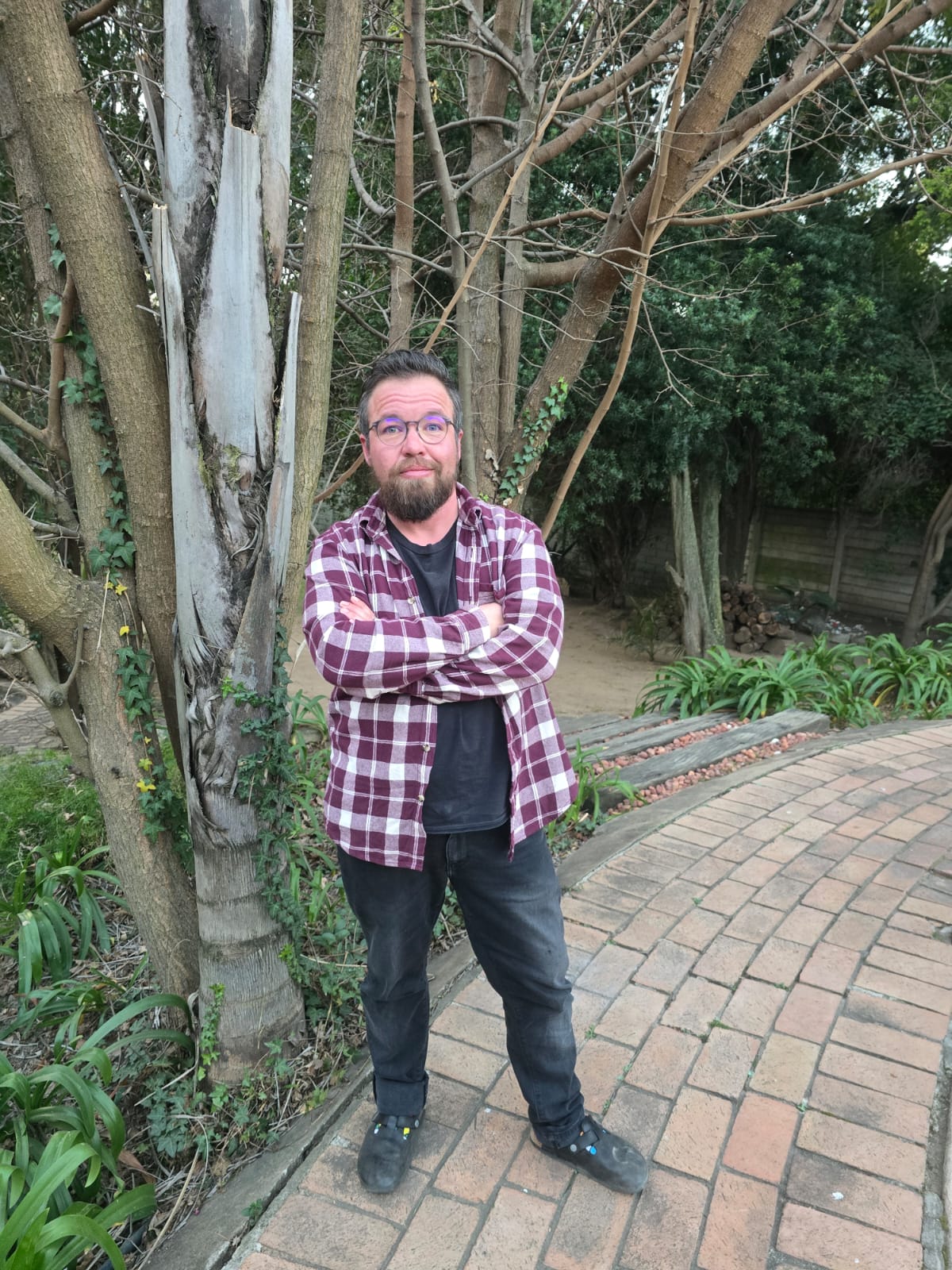
Elliott Kotze
What I Learned About Becoming
Some stories ask you to observe. Others quietly ask you to change.
When I began reporting The Bears Who Built Themselves, I thought I was writing about trans men finding a place inside bear culture. I expected conversations about testosterone, surgery, and transition. Those conversations happened. But they were never the heart of it.
What I actually got was a masterclass in becoming, delivered by people who had no reason to trust me with it, and did anyway.
There are moments from transcribing these interviews I still haven’t fully put down. Robert Hamblin talking about Theo, the man who first showed him what a bear could look like, now shrinking under liver cancer — sixty, seventy kilograms gone, the bigness that once meant everything slowly disappearing from the body that taught the lesson. Gabe describing a grief with no name: pushed out of a womanhood that never quite fit, still not fully arrived inside a manhood that fits better but not perfectly.
Elliott remembering the exact sentence — “you’re a gummy bear, got some extra squishing bits” — that made him feel real in a way his own mirror hadn’t yet managed. sivgreyson, watching a new patch of hair come in, thinking simply: I made that happen.
None of it was tidy. All of it was honest.
What stayed with me longest wasn’t the hardship, though there was plenty — decades-long surgery waitlists, medical aid that won’t cover a thing, the specific exhaustion of explaining yourself before anyone lets you just be. It was the total absence of regret.
Every person I spoke to had waited, been rejected, sat with dysphoria and uncertainty for years. Not one of them wished they’d stayed who they weren’t. There’s a kind of peace in that certainty I wasn’t expecting to find, and it changed how I hear stories about trans lives now. Most of what reaches the rest of us is framed as struggle or controversy. This was neither. This was just people, becoming.
It also rewired what I thought bear culture was. I’d assumed it was about a body type — big, hairy, a certain silhouette. I left understanding it’s really about permission: to inhabit a body still in motion, to hold softness and strength in the same hand, to learn that being desired can start with simply being seen accurately.
Maybe that’s the whole reason this story needed telling. Trans people so often only make it into public conversation when the subject is rights, healthcare, or survival. Such conversations definitely matter and must keep happening. But they’re not the whole of anyone’s life. People also fall in love. They mourn old friends. They laugh at their own bodies, build community out of nothing, and grow into versions of themselves they once thought were out of reach.
I came out of this story with something I didn’t have going in: real gratitude — for the trust these five remarkable people placed in a stranger with a recorder, and for the reminder that becoming yourself isn’t a single event you arrive at. It’s a lifetime’s work, measured not in hormone doses or surgery dates, but in courage, tenderness, humour, friendship, and love.



Brilliant!
Will my salute be valuable! My love for you my child is non ending. You have chosen a hard battle in my eyes, but I am right behind you! Your struggle is mine. Your mom, Elsa
Thank you for not only having the intimate conversations, but speaking candidly. you’re healing humans.
I know how much time you put in researching this article. So proud of you, my Baby.
A very well-written piece, full of keen insights and caring, with an anthropologist’s rigor about seeing people as part of a culture and subculture as well as individuals. His interviews show a lot of respect for his subjects, and they obviously responded by giving sensitive, honest accounts of their new lives.
I’ve known Navin since he was a 16-year-old schoolboy in India. He has certainly had a number of fascinating lives since then and a distinguished career in social science and education. He brings a lot to a journalistic article, and has become a real pro at the craft.
– Edward Hower, US novelist, journalist, retired professor of writing and literature