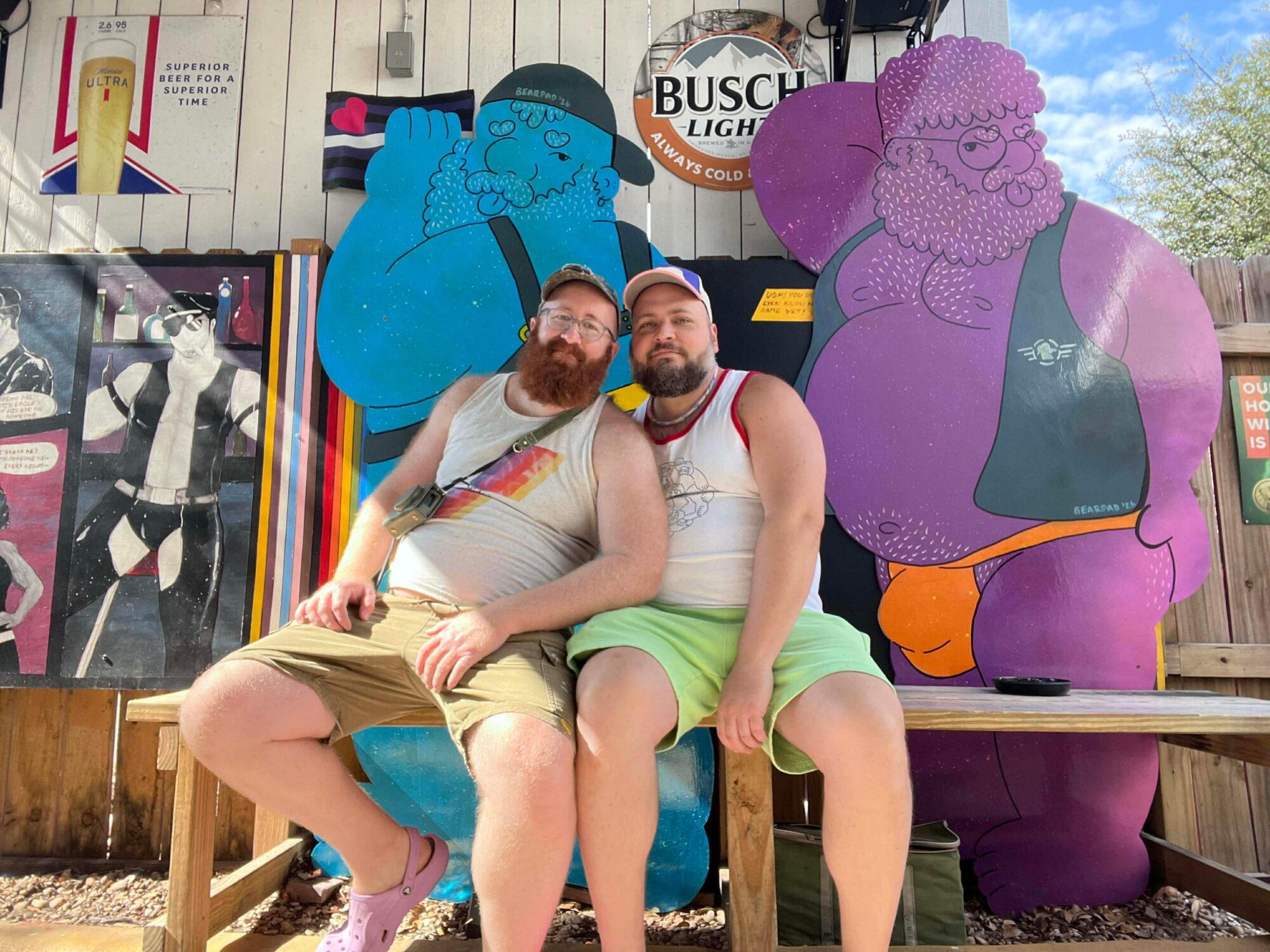
A chat with the visionary duo behind BearPad about art, AI, and more!
A chat with Patrick and Jordan, the artists behind BearPad, about how how they met, what inspires them, their take on generative AI, and so much more.
Art and its effect on the evolution of in the LGBTQ+ community has a long and recorded history that dates back thousands of years. In the last several decades alone, artists like Andy Warhol, Keith Haring, Félix González-Torres, and Tom of Finland have created pieces in several different mediums that reflect the culture of the time and tell stories about our communities.
Art, no matter the medium, is integral to society as a whole. It makes us feel something. It connects us and our shared human experiences.
The duo behind BearPad, Patrick and Jordan, are no strangers to knowing the core ethos about art and what it takes to create something meaningful. They have both been creatives since they were young, and ever since they found each other, they’ve created something powerful and transcendent through their art.


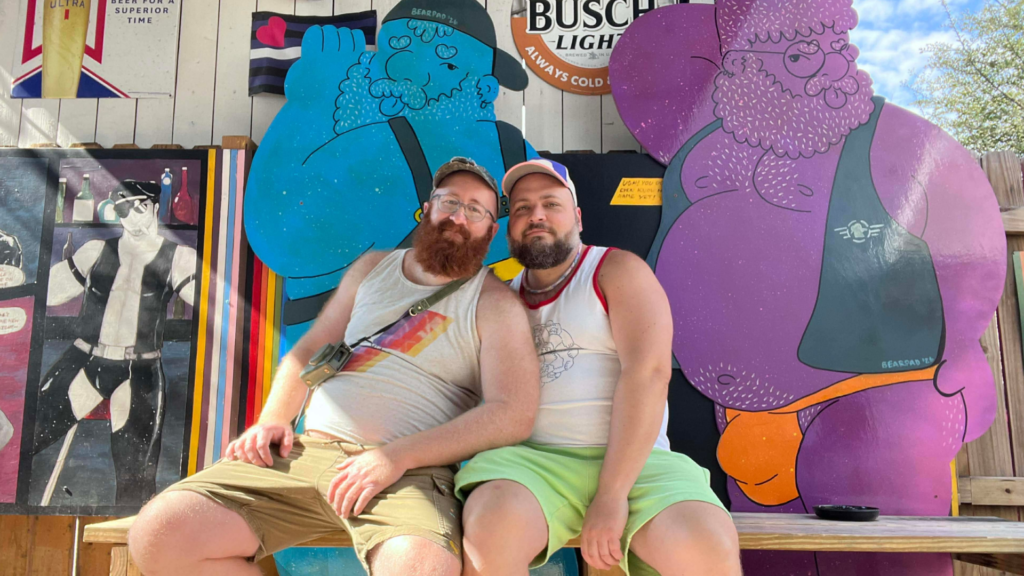
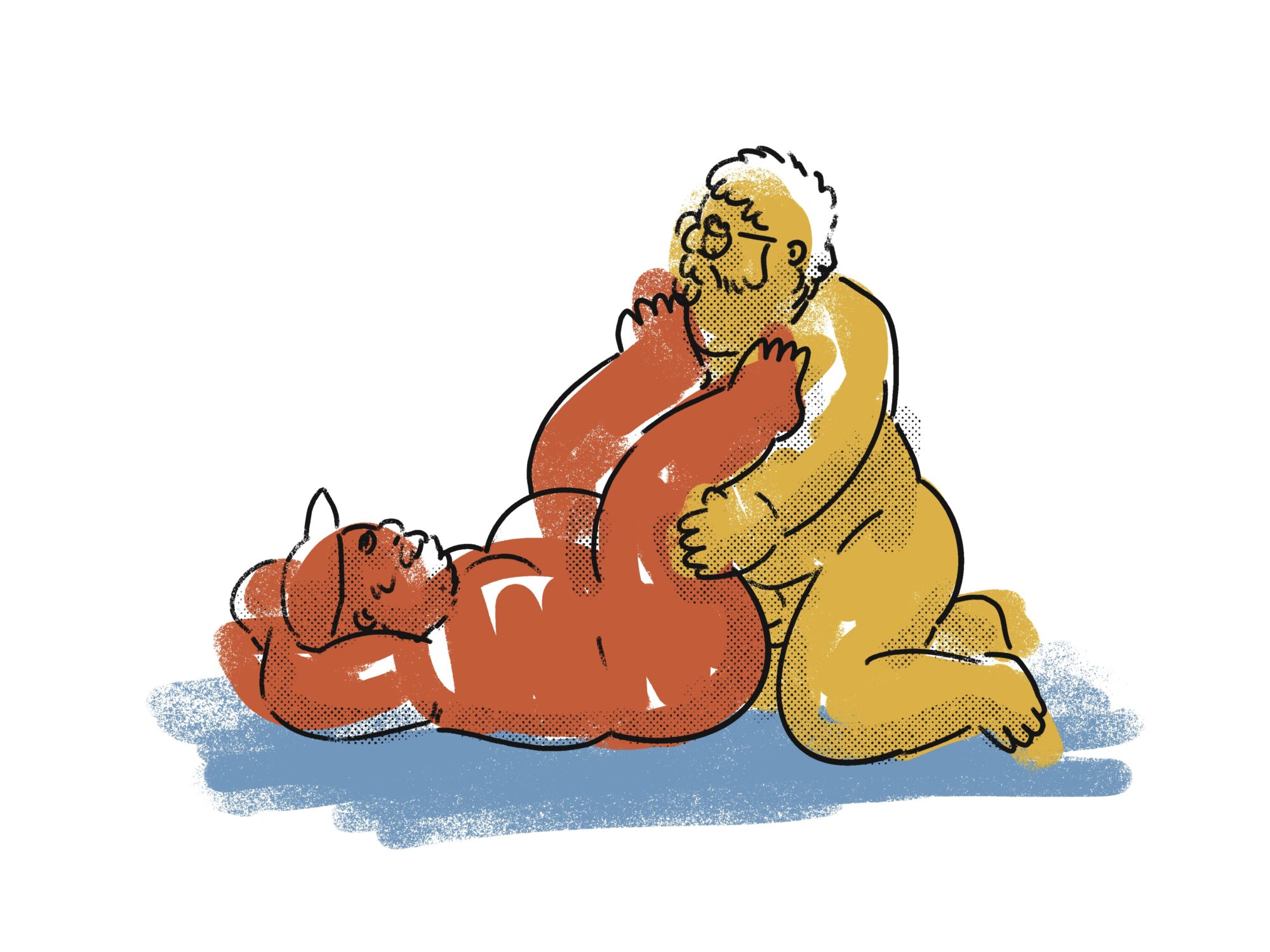
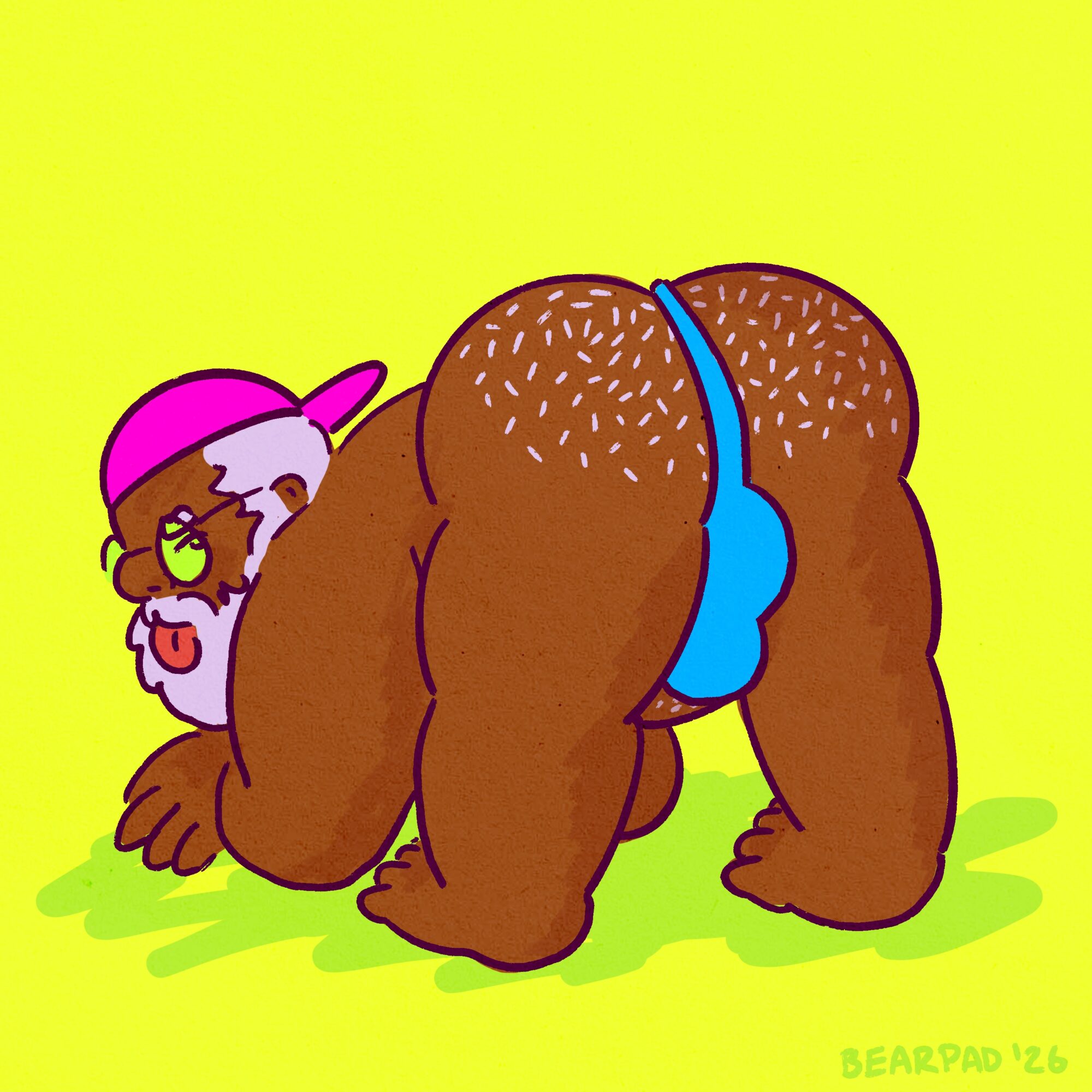
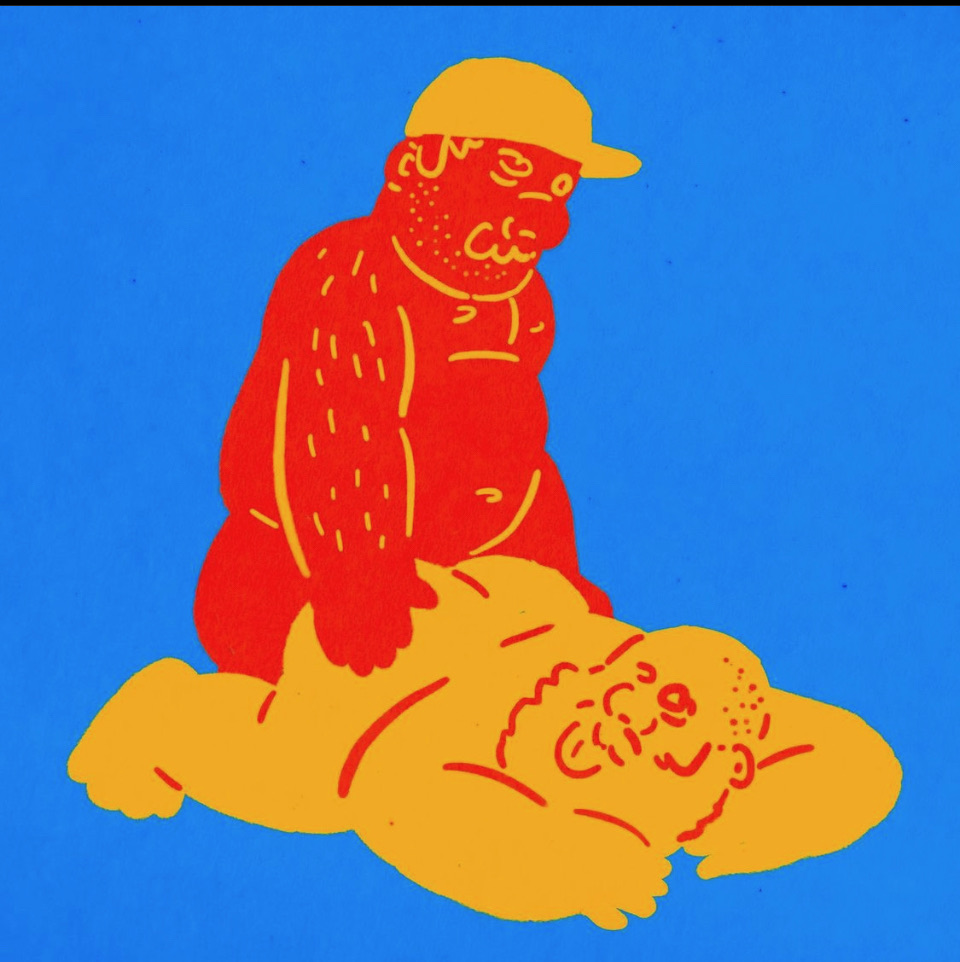
Their work reflects the beauty of chubbier body sizes in a chic and sexy way. Whether it’s through their illustrations or their art installations at events like Western Xposure, it makes us feel something beyond the stir it may give behind our belt buckles.
It connects us as a community with its relatability in the representation of bigger body sizes and the different physical elements that many of us share. It makes us feel seen in ways that we may not have felt before.
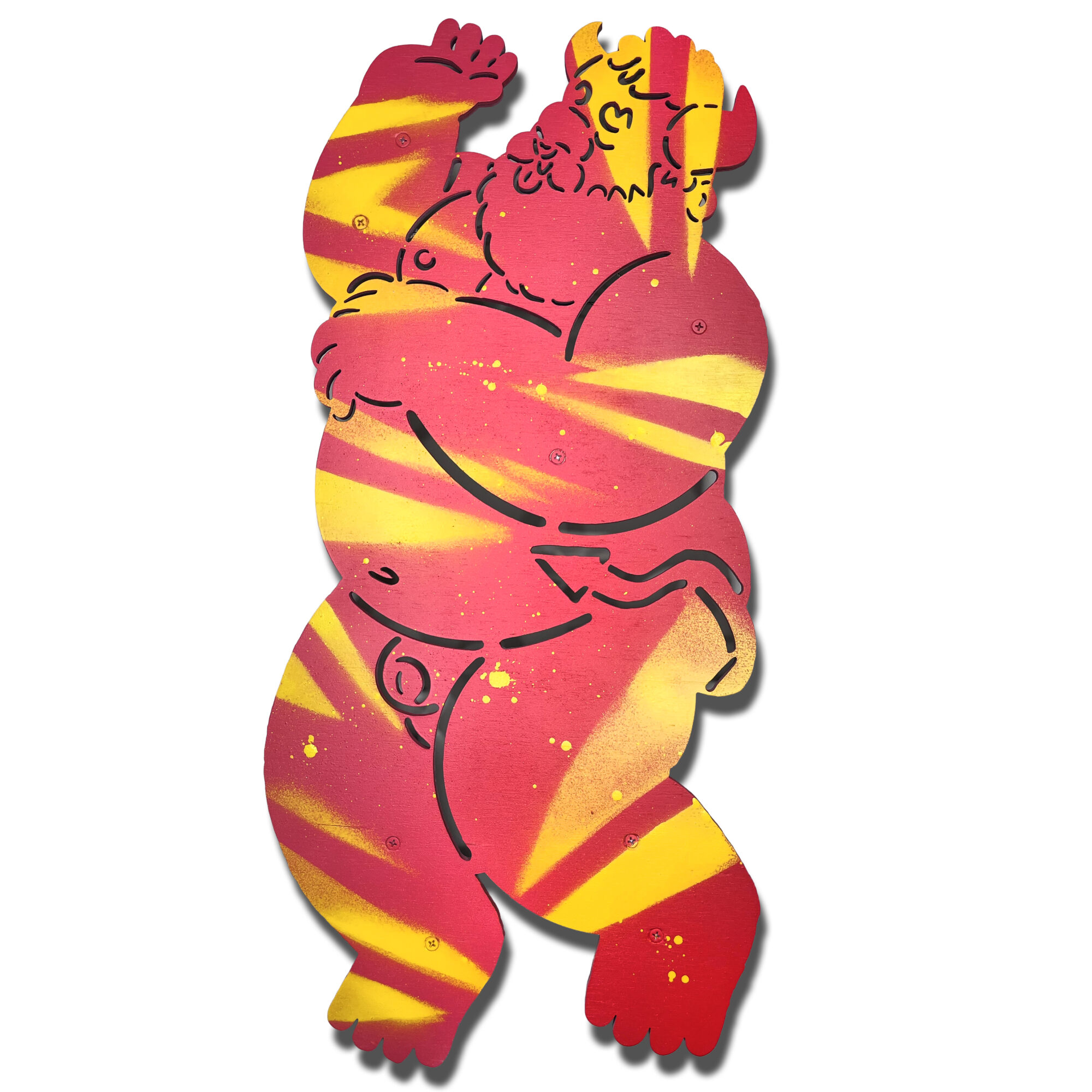
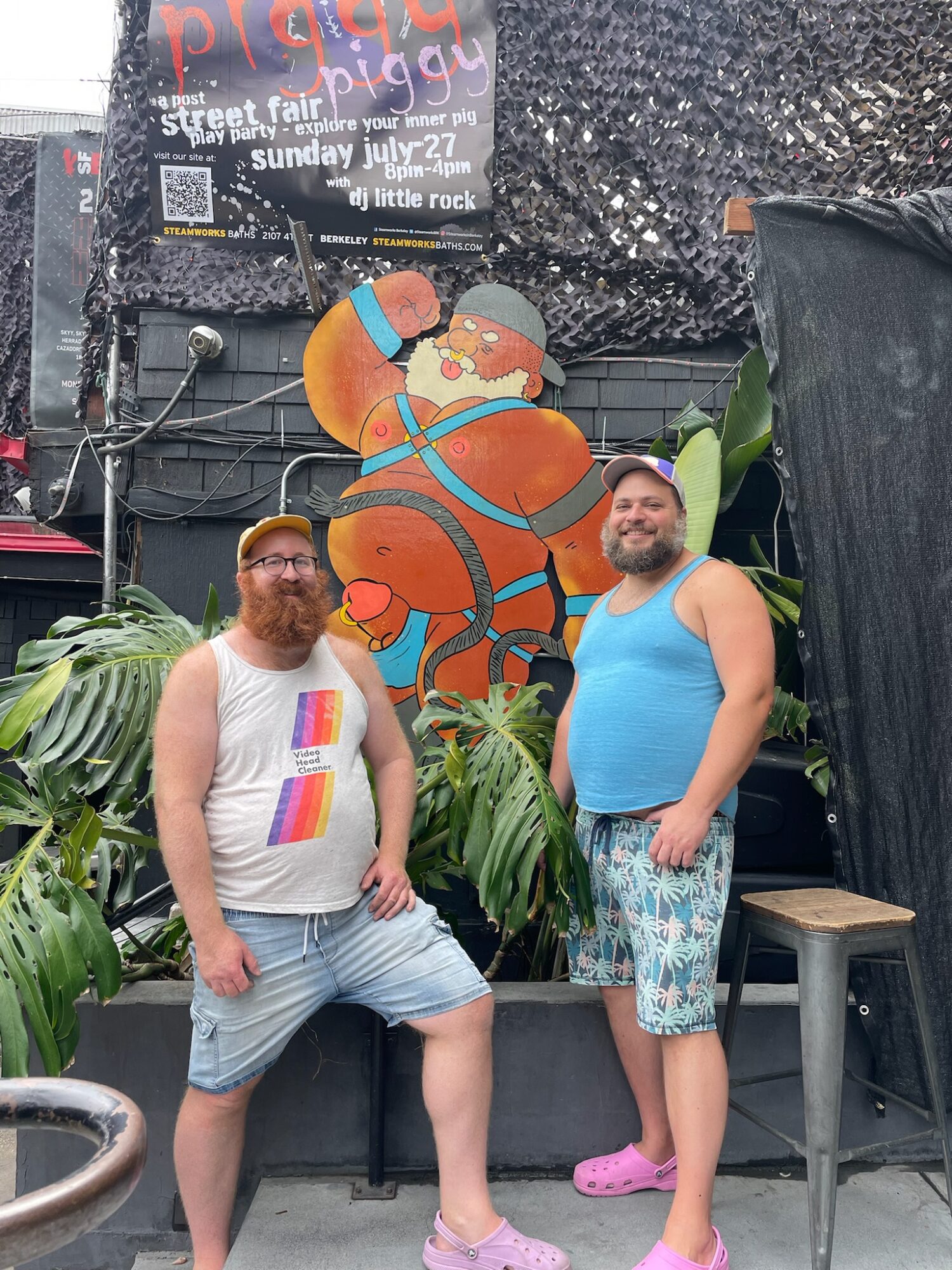
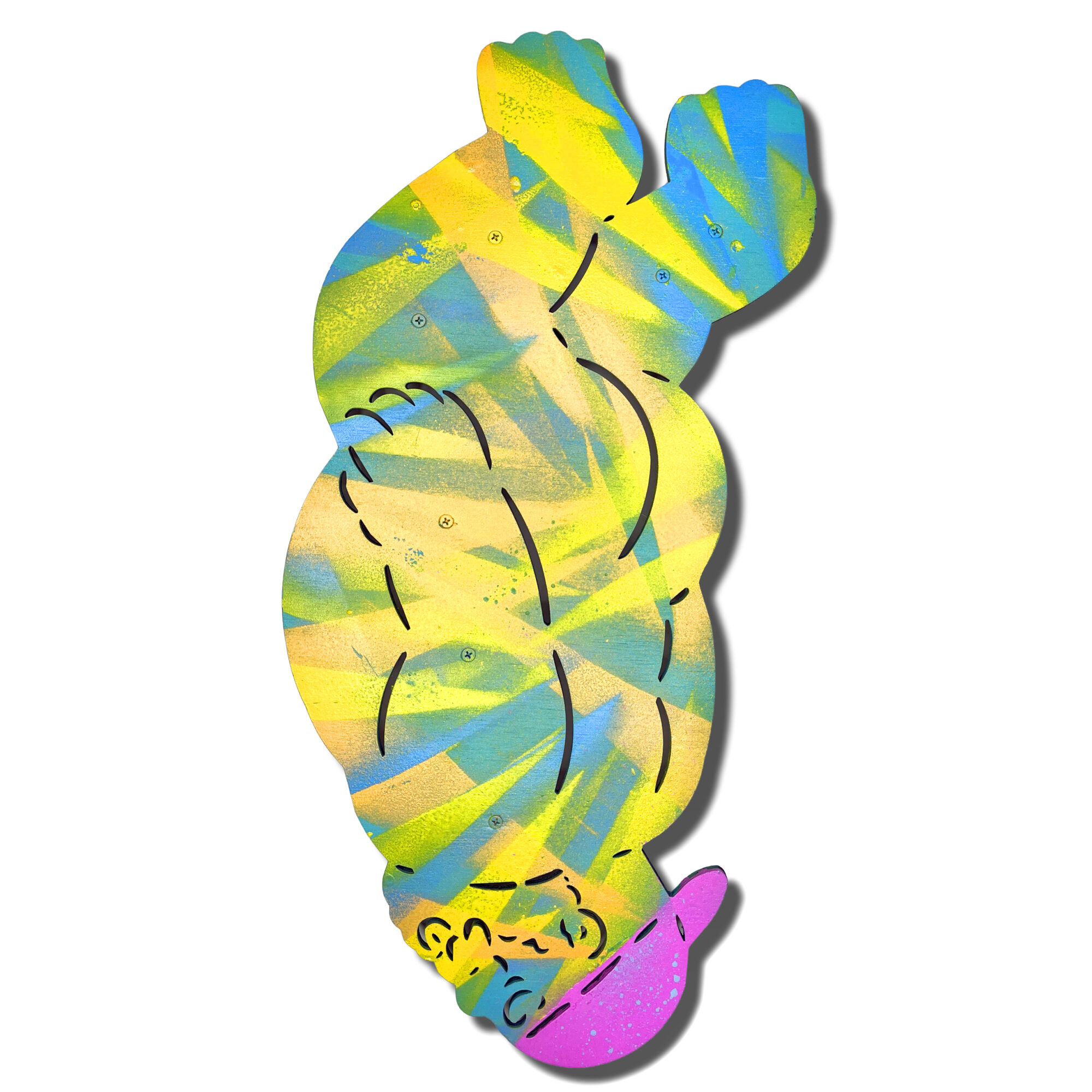
When you begin to see their work beyond the surface level and any piece of art for that matter, you’re practicing a core principle of art appreciation through critical thinking called semiotics. Why does this make you feel the way it does? What are the themes and motifs in what you’re looking at? How does this connect to the world around me?
Keep asking these questions, it will help you grown as a human and connect you with the world in a meaningful and purposeful way, especially in this new era of generative AI art. BearPad just gets it, and that’s why they’ve built such a huge following online and in real life.
I had the privilege of speaking with Patrick and Jordan about these things, their humble beginnings as artists, the impact of AI on our community and culture, and so much more. Check it out below!
Bryce Quartz: Hey there, Patrick & Jordan! Thanks for taking the time to speak with me about your work today. How have y’all been doing lately?
Patrick & Jordan: We’ve been pretty good! We went on a 45 day road trip all around the USA in a kind of spagetti-thrown-on-a-table route. We probably only stayed in hotels around 10 days or so out of the 45, and the rest of the time we stayed with both old and brand new friends.
We got to see how queer people are living and creating and relaxing and partying all over the country – in the middle of America, and Louisiana, and Chicago, and Kentucky – too much to summarize.
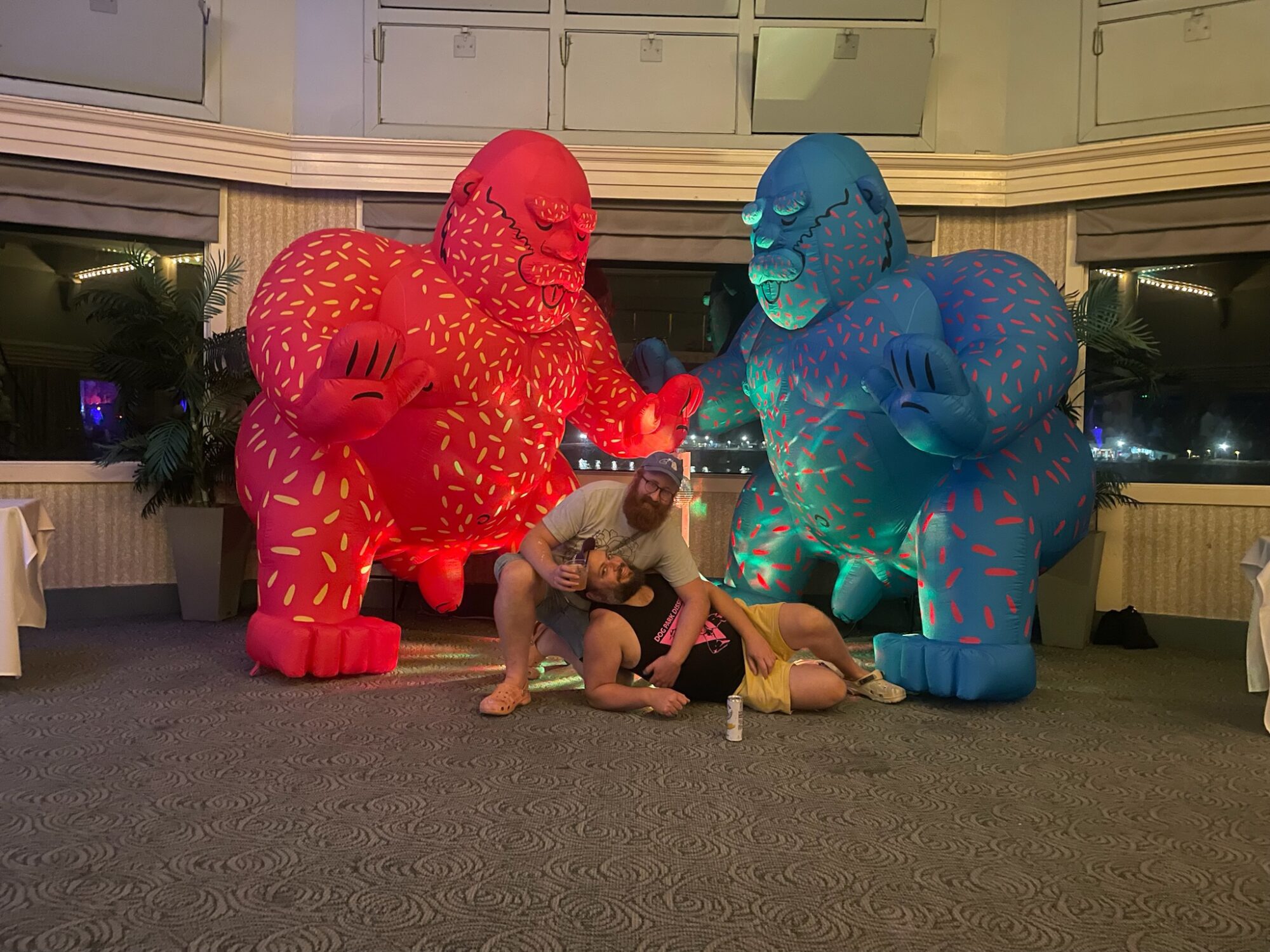
We are still exhausted after two months back now but we had to hit the ground running and we’re working on a sorta secret animation project with a buddy. We’re always working on various other art projects, and right now we’re finalizing another gigantic inflatable and all sorts of other stuff.
We’re busting our asses, but we understand how fortunate we are to be able to spend so much time creating artwork like this while spending most of our hours in community with a buncha cuties.
Bryce: I can see how hard y’all have been working and how much y’all have been traveling, so I can imagine you’re definitely tired after all of that!
I’m really excited to get to know more about y’all and your work under BearPad. I’ve been a fan for quite a while! How long have you been making art and what got you started in the space?
Patrick & Jordan: Patrick has been a graphic designer almost their entire life starting with doing posters and flyers for local theater events and shops in the small town he grew up in. After college, he worked in an office as a designer and the job was really chill with long spans where they had nothing to work on. So he had a lot of time to let his mind trail off and it wandered to cute fat guys that he ended up doodling with office pens, scanning, and posting to Tumblr.
He got some really positive feedback which pushed him to do more. They ended up collaborating with a friend named Rudy Bleu who was running Big Boy Vintage in LA and he wanted a shirt design of two cuties in bed reading zines and listening to cassette tapes. The shirt took off and when Big Boy Vintage shut down, Patrick took the idea and ran with it.
Each new shirt had another guy on it, starting with 3 as BEARPAD and now at 10 guys in a pile some 15 years later. He’s never been good at managing supply and demand, so around 2020, he was a bit too overwhelmed to keep going and thought seriously about ending the practice.
Around this time, Jordan saw his work before meeting him. Jordan was really moved by it. He was working in this sort of divey nightclub in Santa Cruz and was dabbling in a bunch of different types of things usually related to the bar including live visuals, DJing, and a lot of experimentation with analog technology.
We sort of bonded during the pandemic and ran a live streaming experimental video showcase on Twitch called Cuddle Chunk (www.twitch.tv/cuddlechunk/) with a bunch of friends across the country trying to bring folks together.
When we started hanging out, Patrick said that he wasn’t sure if he was going to keep doing the BEARPAD stuff. Jordan noticed how people would literally randomly come up to Patrick when we were hanging out, just like, on the street or at a bar or whatever, and say, “Hey, I want more of your artwork. When can I get a new shirt? When can I get some art from you?” And Patrick would just sort of, say, “Oh, yeah, I don’t know, we’ll see.”
Jordan mentioned to him that that was really unusual, that people don’t just come up to you and ask you for artwork as an artist. Jordan remarked how people are excited about Patrick’s artwork in a way he hadn’t usually seen.
So together, we decided to do this as a full time gig and see what happened. After we both got MFAs from UCSC, we started working on BEARPAD full time last year.
Patrick often says that when he was starting out so long ago, he just got really lucky – it was sort of the right place and the right time. He thinks at that point on Tumblr, there weren’t a lot of drawings like the ones he was doing and so he just gained a little bit of a following and just kept at it for a very long time.
There was no shortcut to where we’ve ended up now – it was just a very slow process, a lot of luck, and friendly cuties supporting these horny fever dreams over the course of 15 years.
Bryce: This feels like a gay love story about two amazing queer artists that would make for a great VICE documentary, HBO show, or A24 movie. They need to be reaching out ASAP!
Are there any artists that have inspired you to create what you do now?
Patrick & Jordan: When Patrick was a kid, his mom was really into this artist named Botero who drew chubby and usually naked people. At least half of the guys he drew were naked, actually. Those naked dudes were just kind of around the house and that was really cool.
That sort of maybe got stuck in his head at some point, but otherwise, he was inspired by a coworker that he had at his graphic design job. He was this really cute guy of certain proportions who was always there, just over the wall. But, yeah, otherwise, of course Keith Haring, Sol LeWitt, James Turrell, etc.
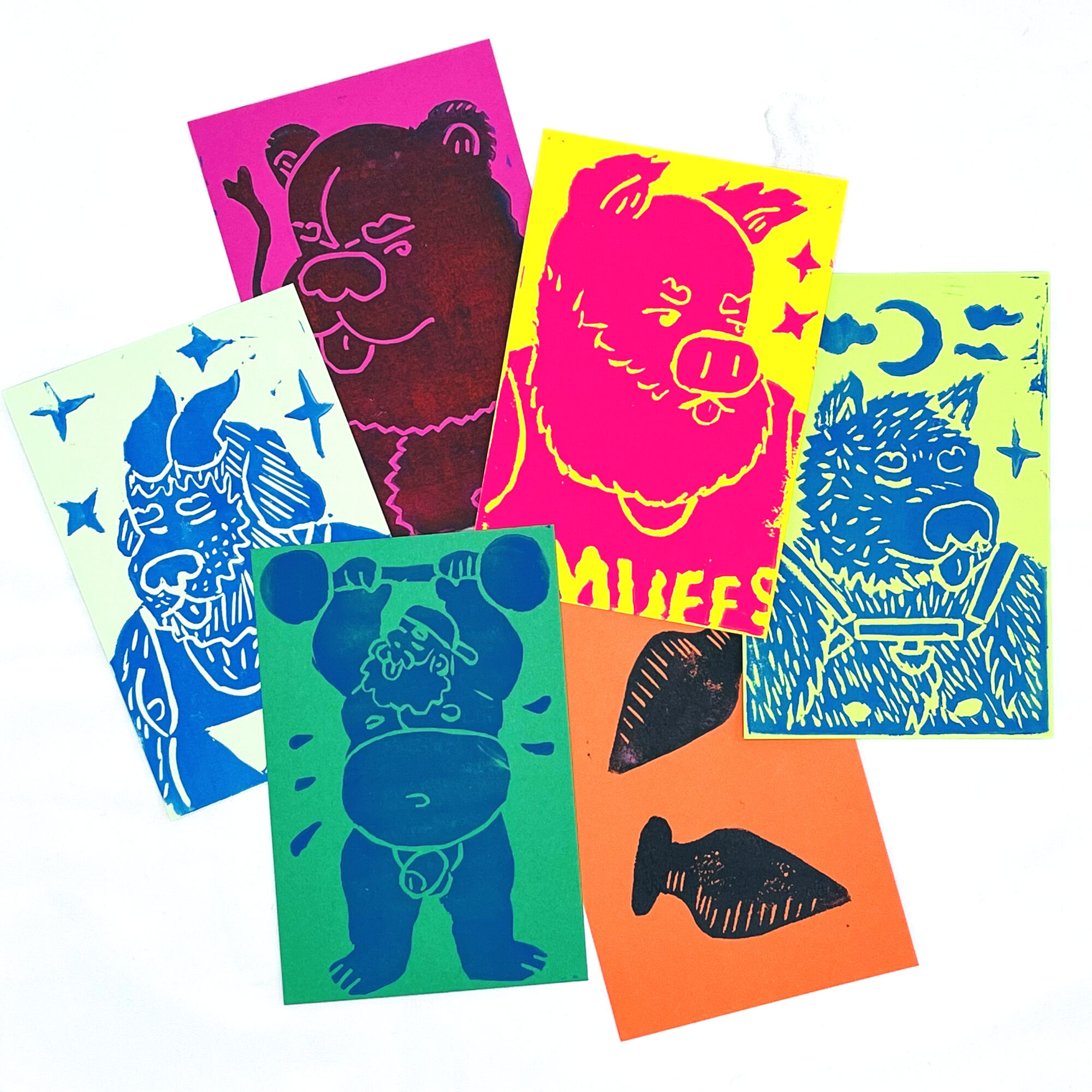
Also, our current practice, which revolves around wood cuts, is inspired by the art we would see growing up in gay bars and that kind of just stuck in the back of our minds. Charlie, the owner of The Lone Star in San Francisco, had seen some sketches of Patrick’s in an art show of a naked drawing group he had been attending.
Charlie asked if Patrick could translate those to wall art and that was a push to take the work more seriously into a medium that would function on a wall. Inspired by the woodcuts of decades past, but a bit more flamboyant, colorful, cuddlier, and affectionate.
After that, folks like West Fisher of Western Xposure commissioned us to make more, and it sorta snowballed on from there.
We’ve recently been working in the medium of inflatables and for those, Patrick is definitely inspired by Paul McCarthy who did this giant green butt plug, and also SAEBORG from Japan who creates psychosexual inflatable rubber performances in fetish spaces as well as museums.
Lastly there’s this one scene in a movie called Mister Freedom by WIlliam Klein that features the title character fighting a giant inflatable monster in a subway tunnel, and for some reason the scale of that just sticks in the ol’ mind palace.
Bryce: I am obsessed with all the different inspirations you take in from the world around you! That’s extremely cool, and now I’m going to be looking up some of the names you mentioned. I’ve seen your work that was done for Western Xposure and need to see it in person sooner rather than later in person.
Your work really speaks for itself too. It’s sexy, it’s fun, and it feels personal. What does the creation process look like for you when it comes to making something new?
Patrick & Jordan: Unusually to most people who make art, Patrick doesn’t tend to use a lot of references. Because of this, a lot of the stuff that he draws is from this weird headspace that’s just sort of an abstract amalgamation of all these experiences that he’s had, and people that we’ve met, but nobody really in particular.
So all of the poses and guys that he draws, he might sort of subconsciously be thinking of someone, but it always just comes from this imagined space. He tends to kind of just draw until it feels right and not necessarily draw until it looks anatomically correct or physically possible.
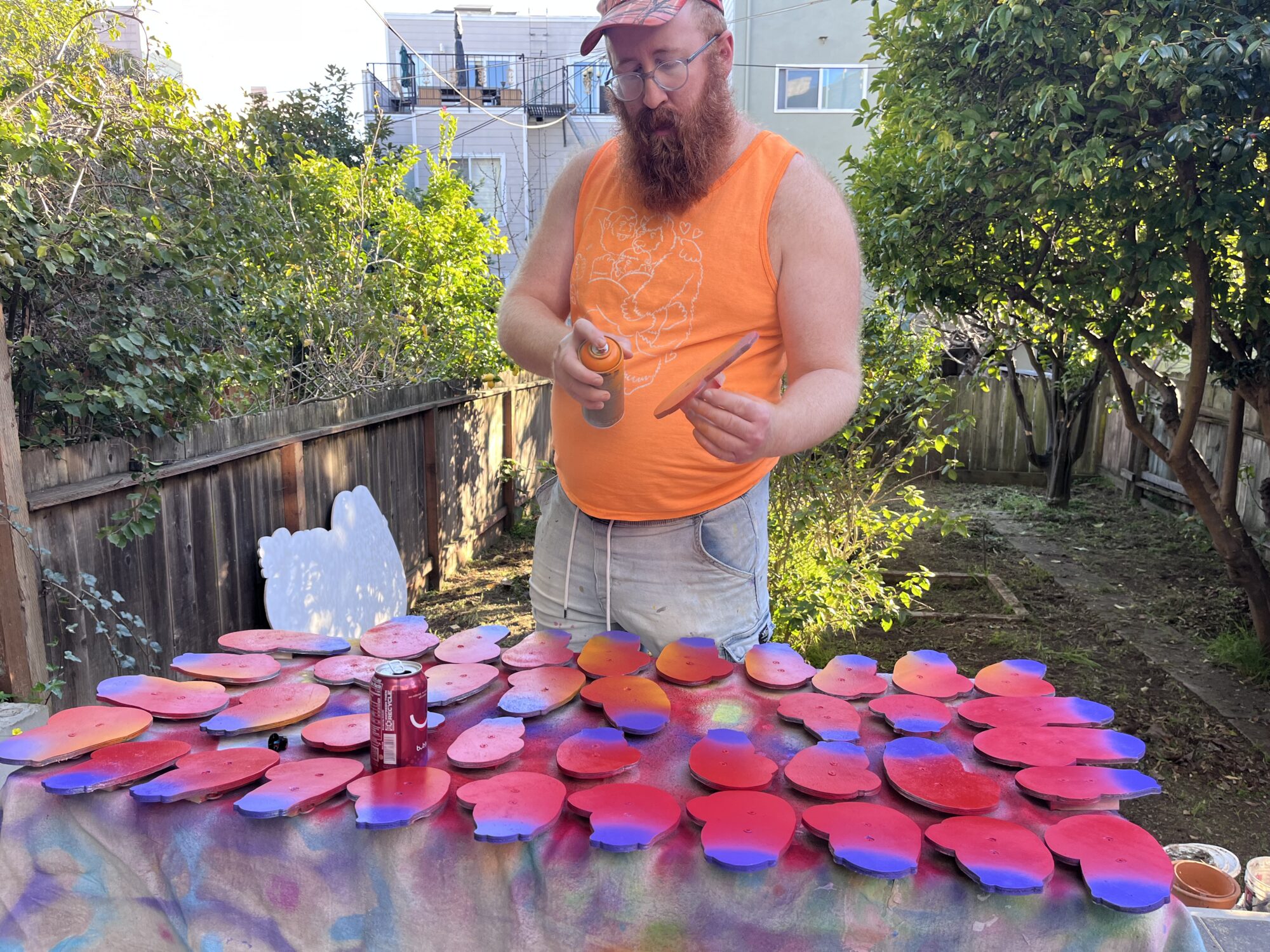
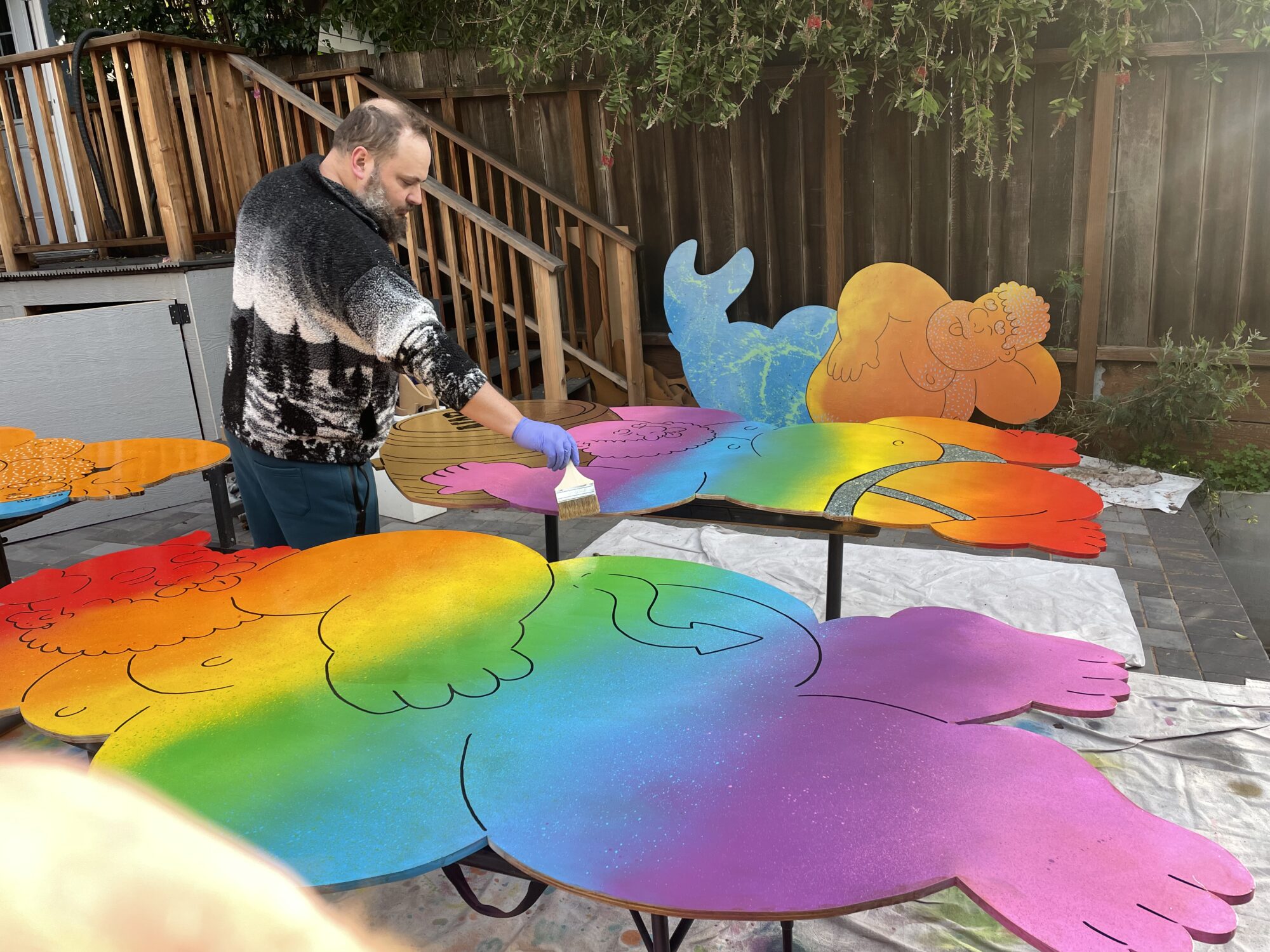
So, it’s sort of an unconventional process in that way, maybe. Likely his graphic design background also creeps in too, like thinking about color, shapes, and scale.
As far as the 3D stuff, when we were both in school, Patrick worked as a TA for a class about 3D modeling and picked up the basics. From there, he modeled the figures from the hand drawn art in a rough way, and then our buddy @archetypicalhusk (who’s way better at 3D modeling) helped polish and work on the figures that Patrick had made to make them more ready to produce.
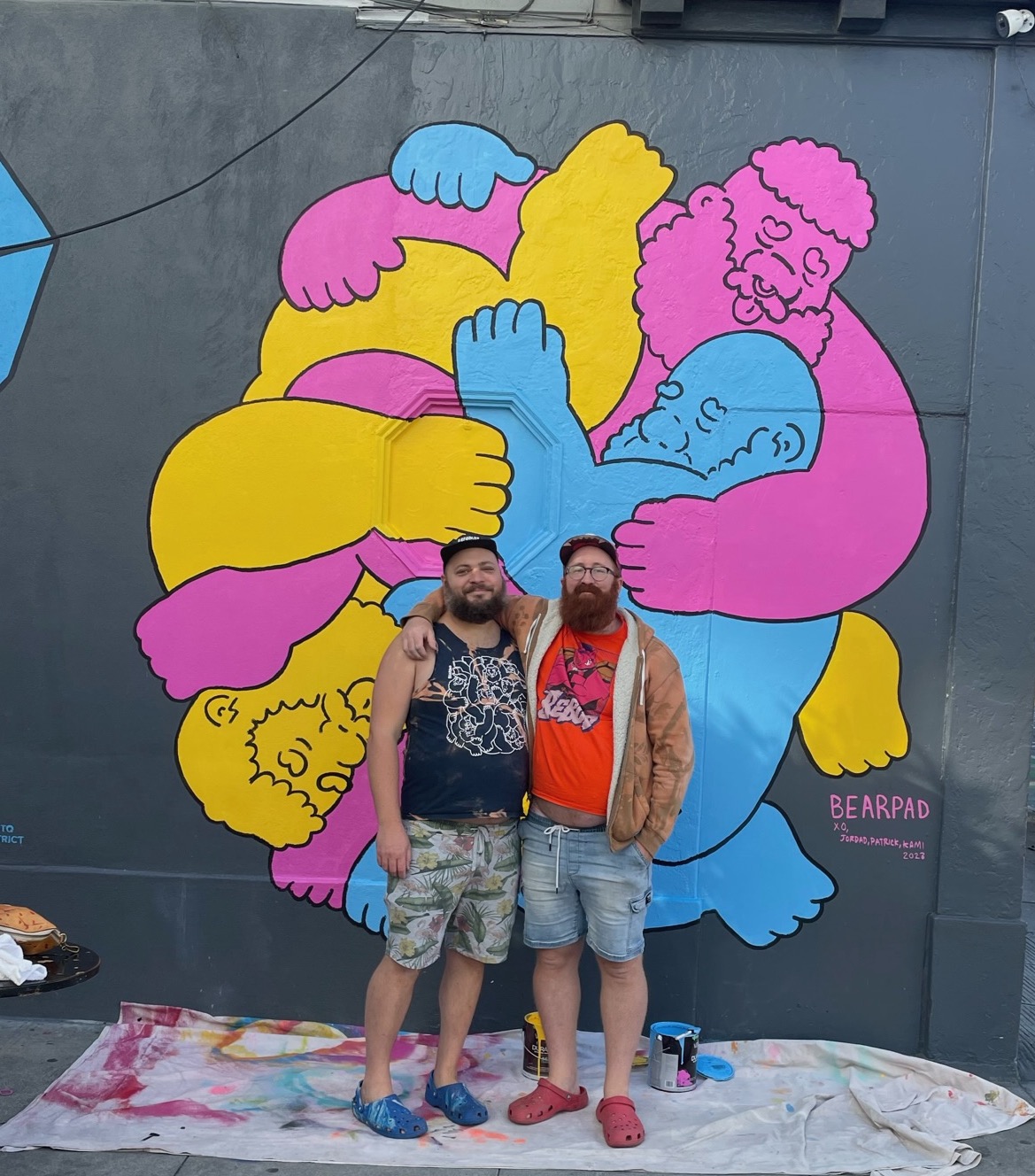
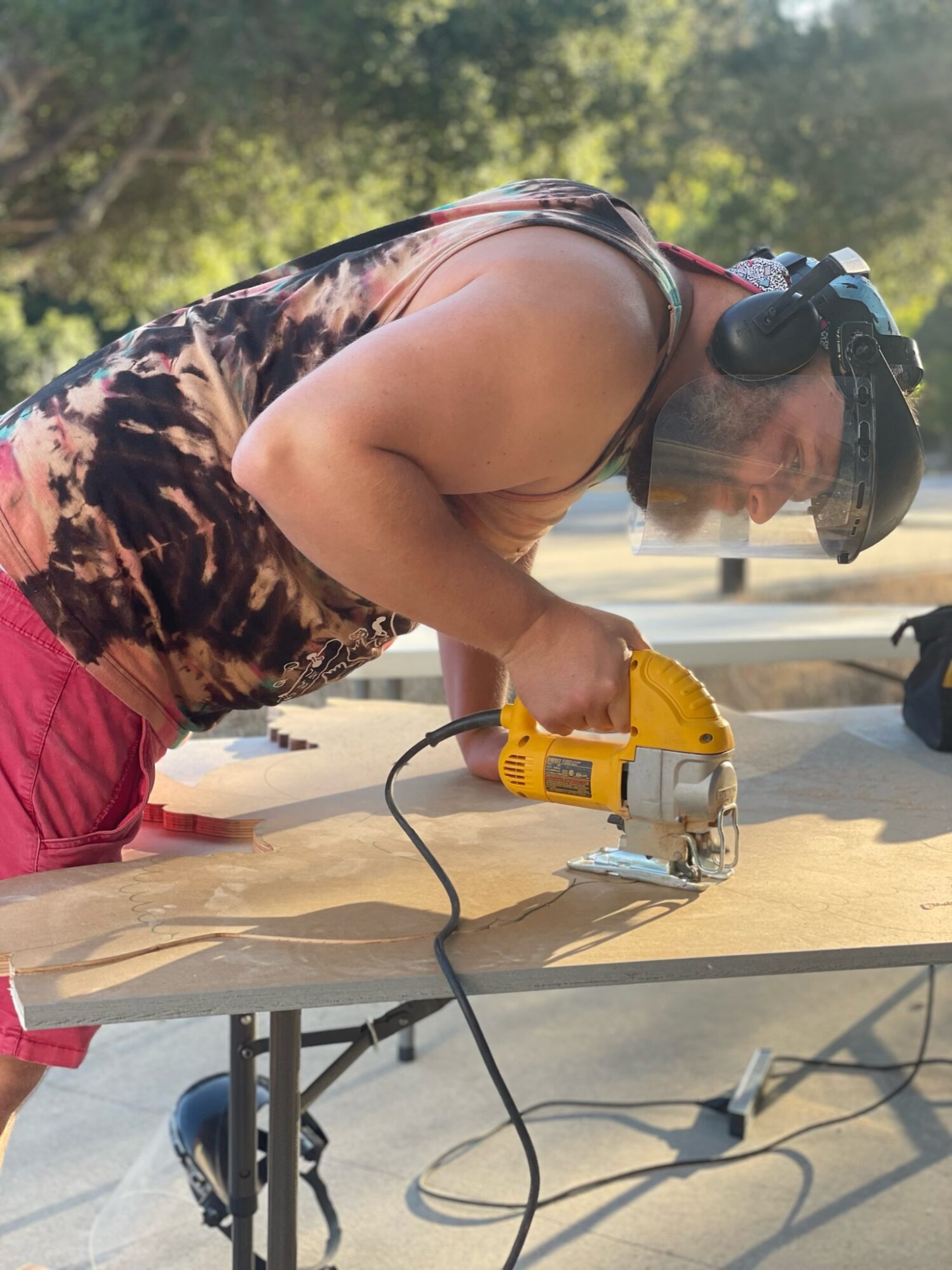
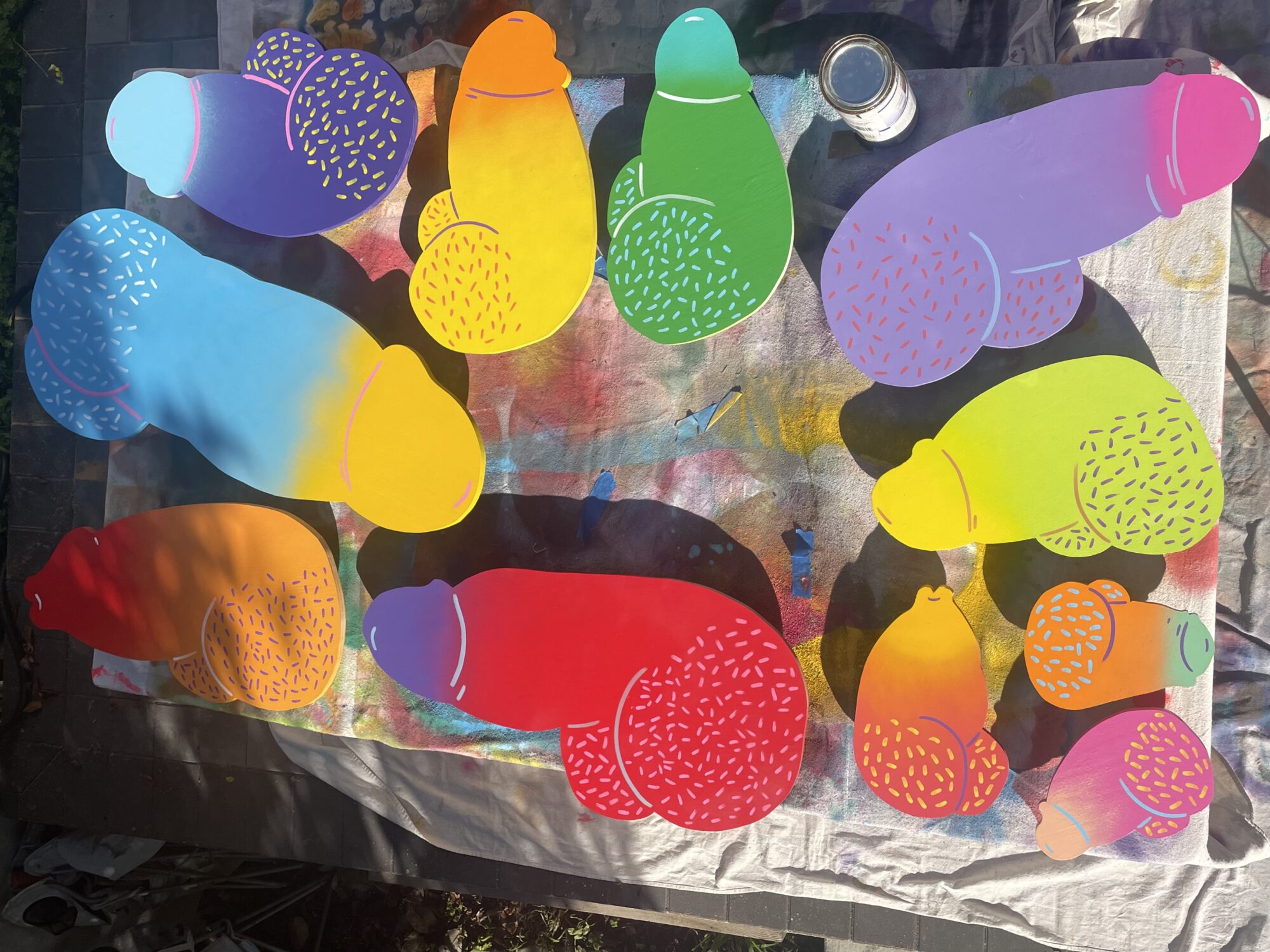
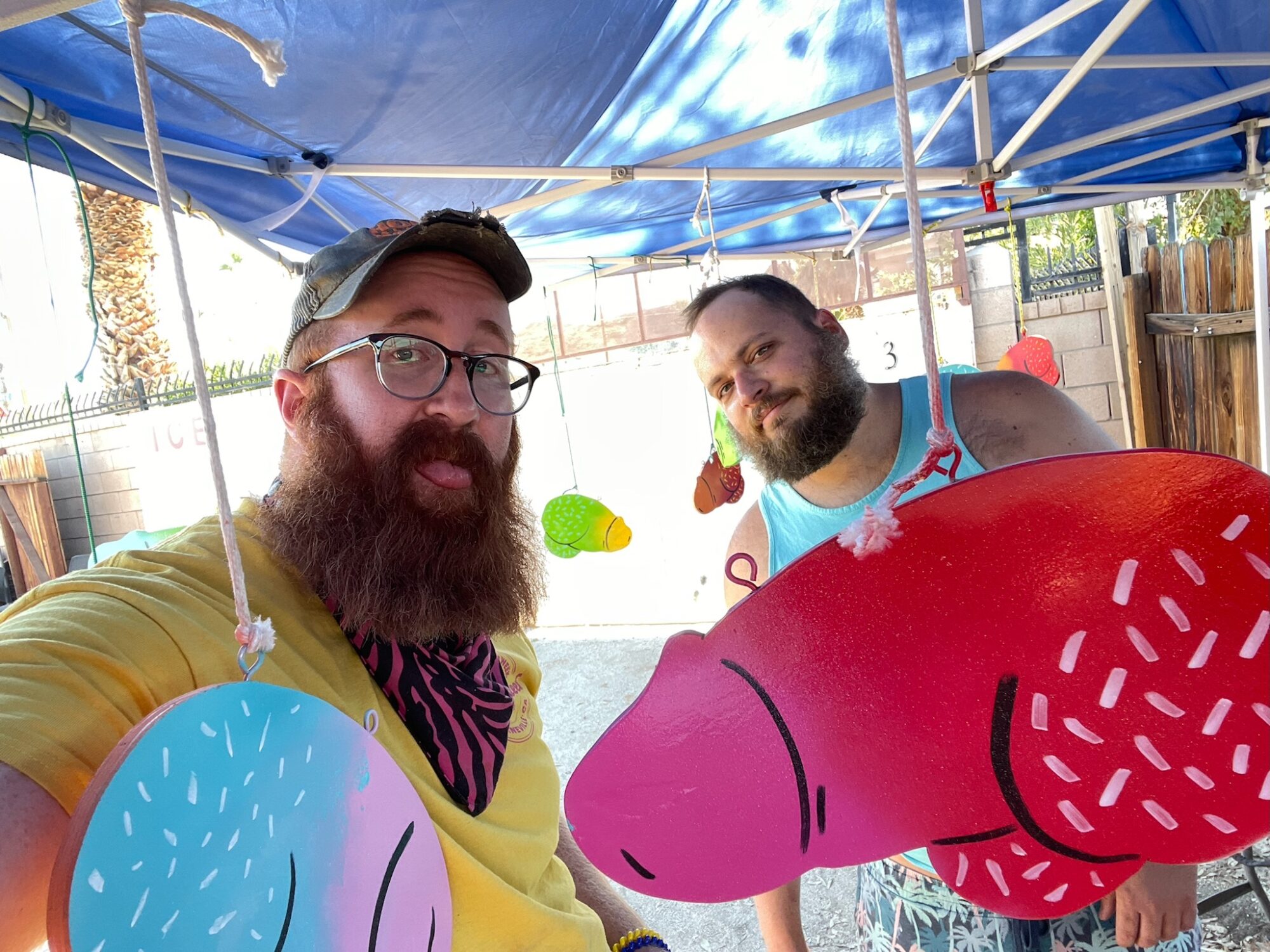
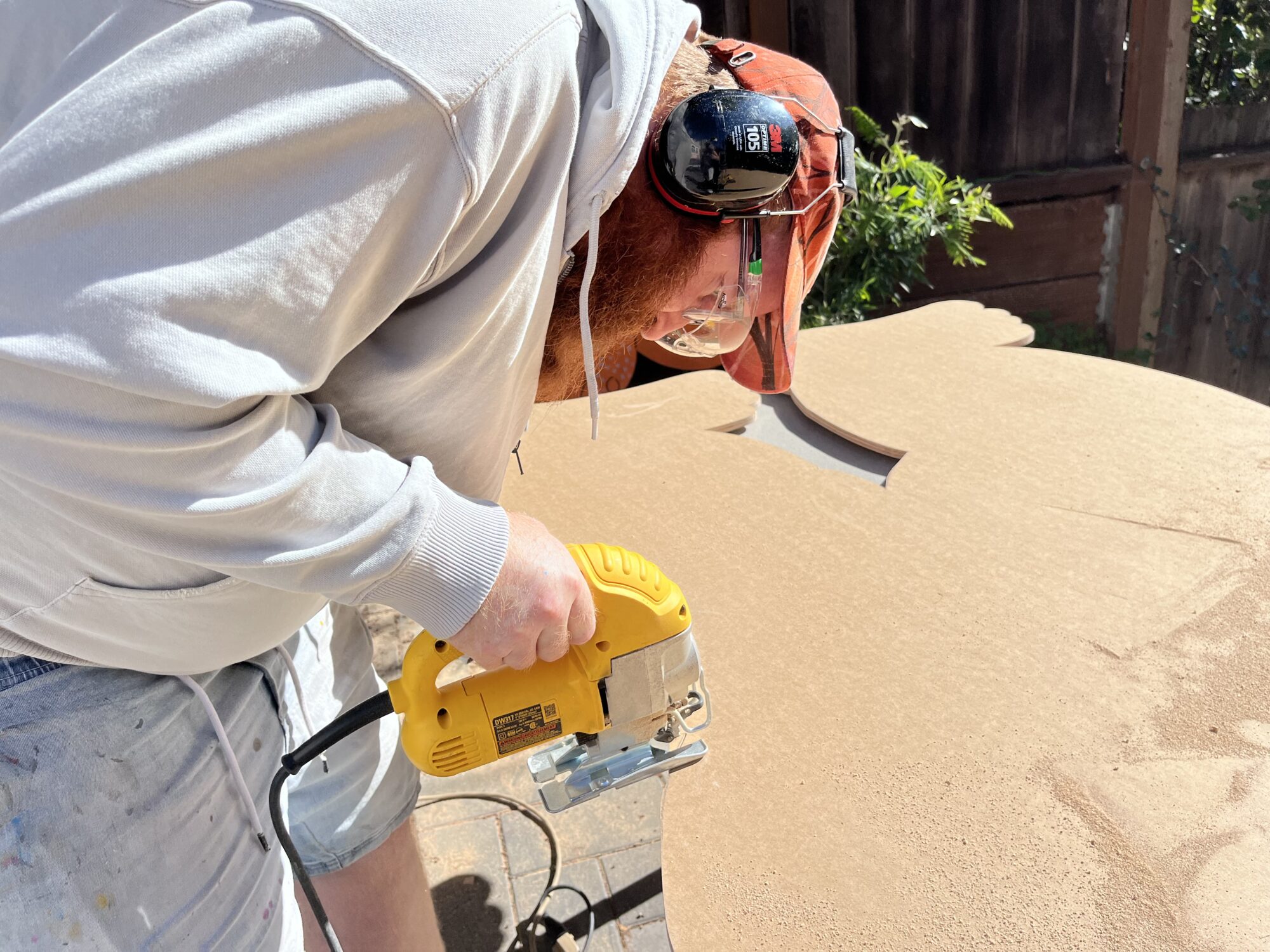
With the wood cutouts, Patrick does the sketches, and then we work together with a projector to enlarge it and then trace it on a big piece of wood and Jordan usually does the cutting. We choose colors and paint and mask it together usually. So it’s a multi-stage process that kind of goes back and forth between us, but it’s fun and always a challenge because we are always pushing to make things bigger and weirder every time.
Bryce: All the different mediums and the hard work y’all have put into making it a reality is so cool, I love hearing about this process. I bet there is some real cathartic energy after finishing something.
You have work that ranges from drawings to paintings to 3D art installations and more. The possibilities are endless when it comes to your talent! What are some of your favorite pieces that you’ve done over the years, and what’s it like translating your concepts from 2D form to 3D form?
Patrick & Jordan: Most recently, and something that we’re becoming more known for, is the 30 foot tall inflatable BIG BUB. It’s a Macy’s Day parade size object, and it’s of a naked guy on all fours, including his dick and his ass and everything. We’ve managed to put that up in almost a dozen places now. It’s been a lot.
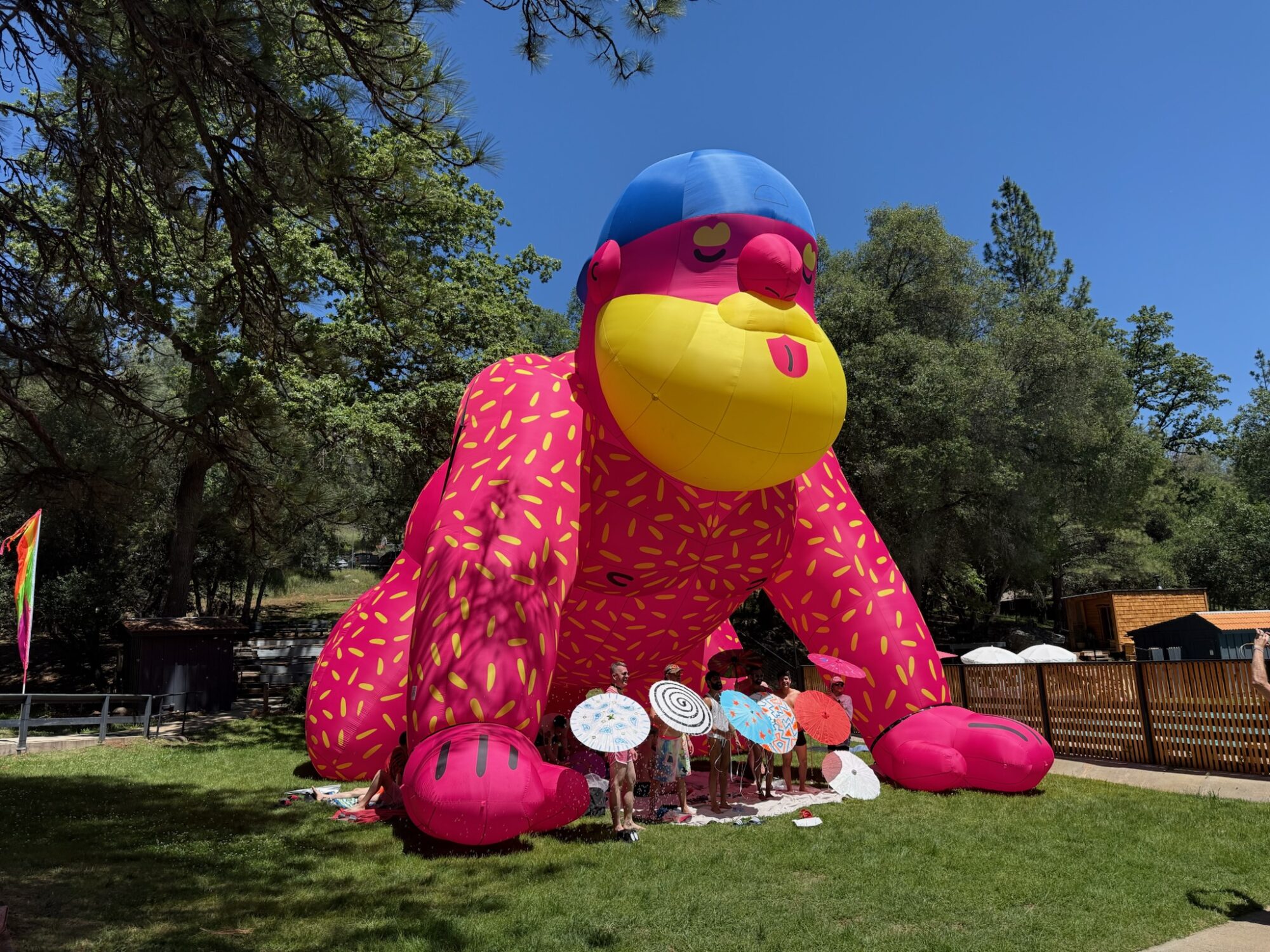
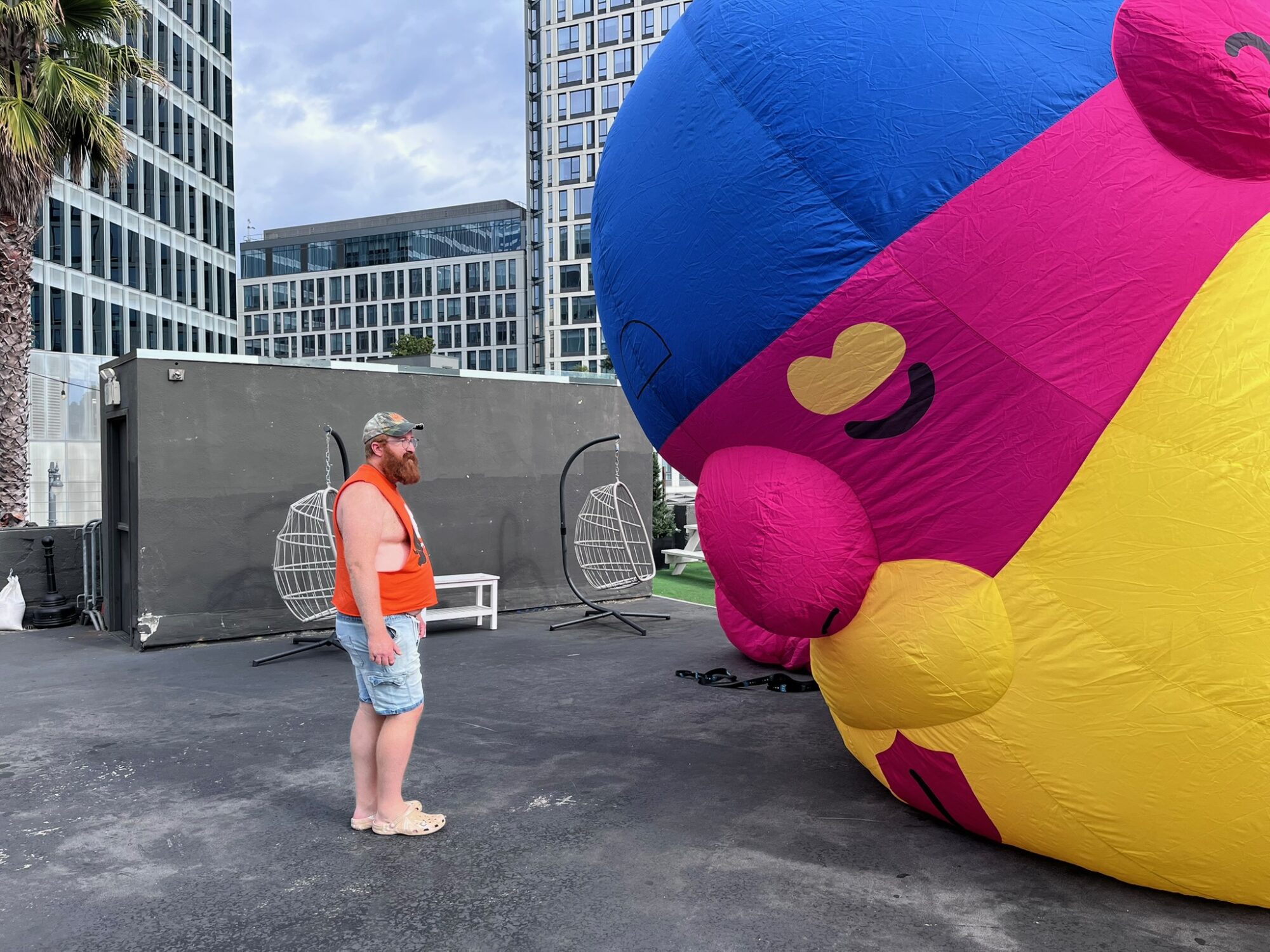
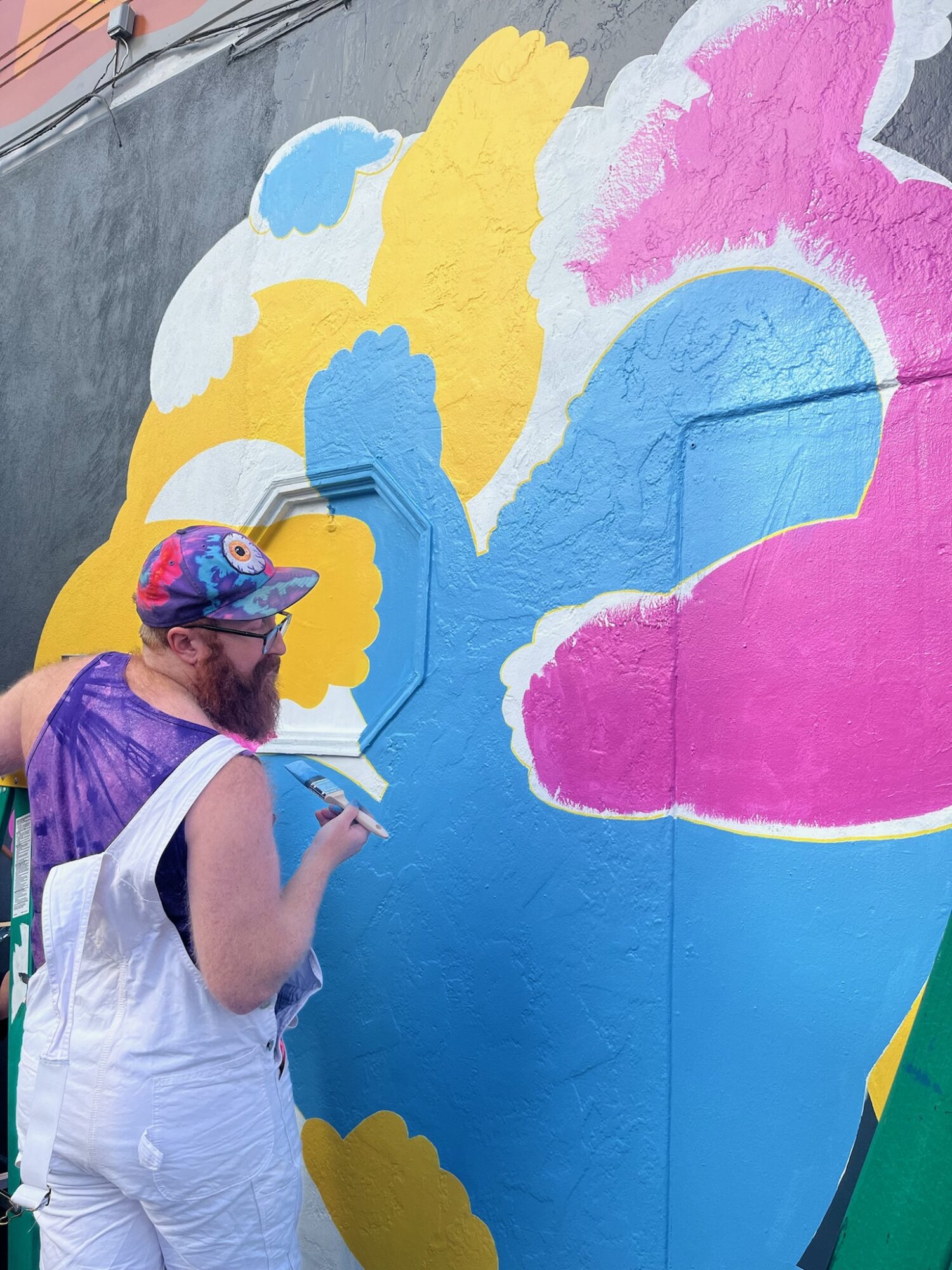
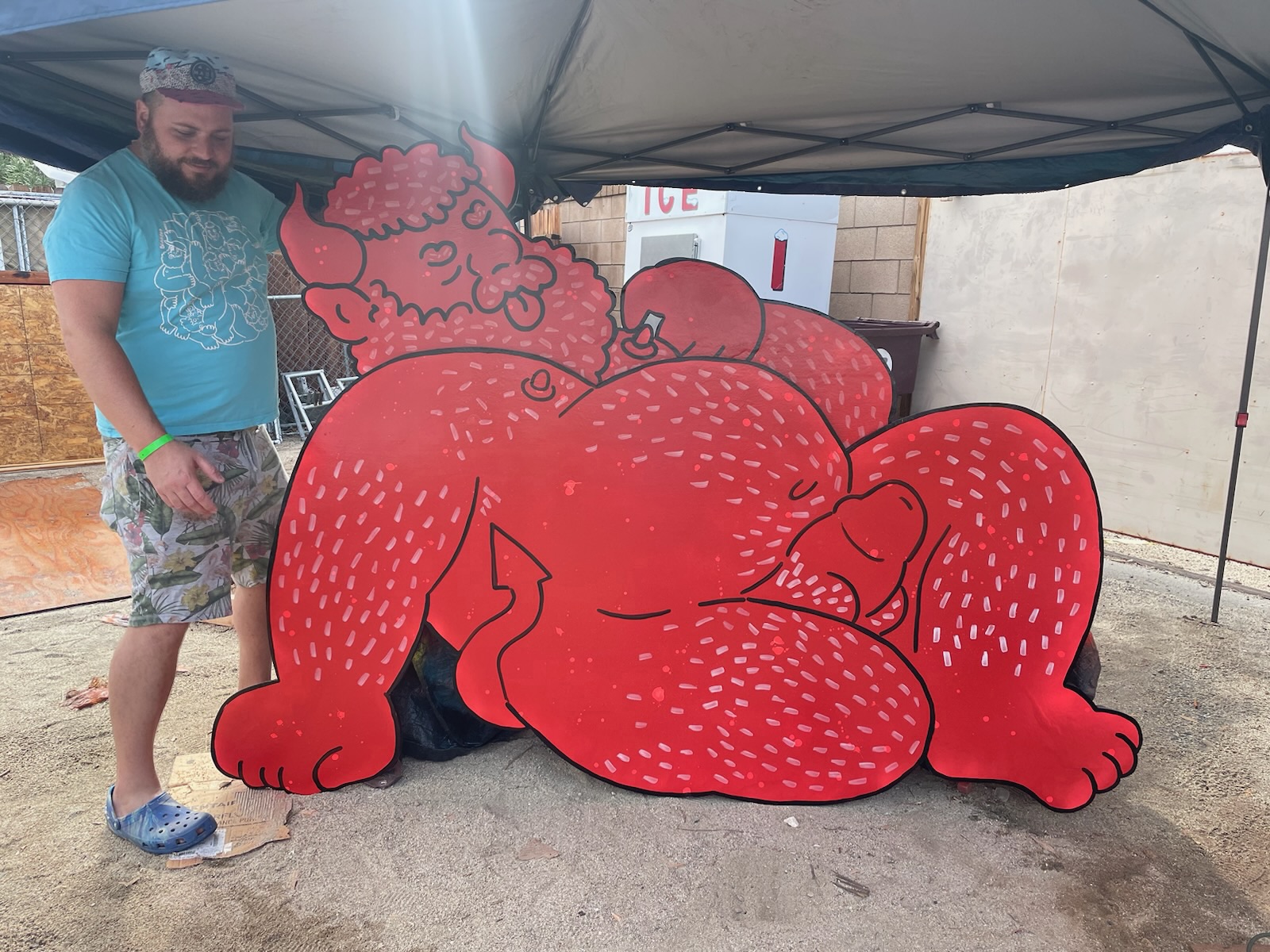
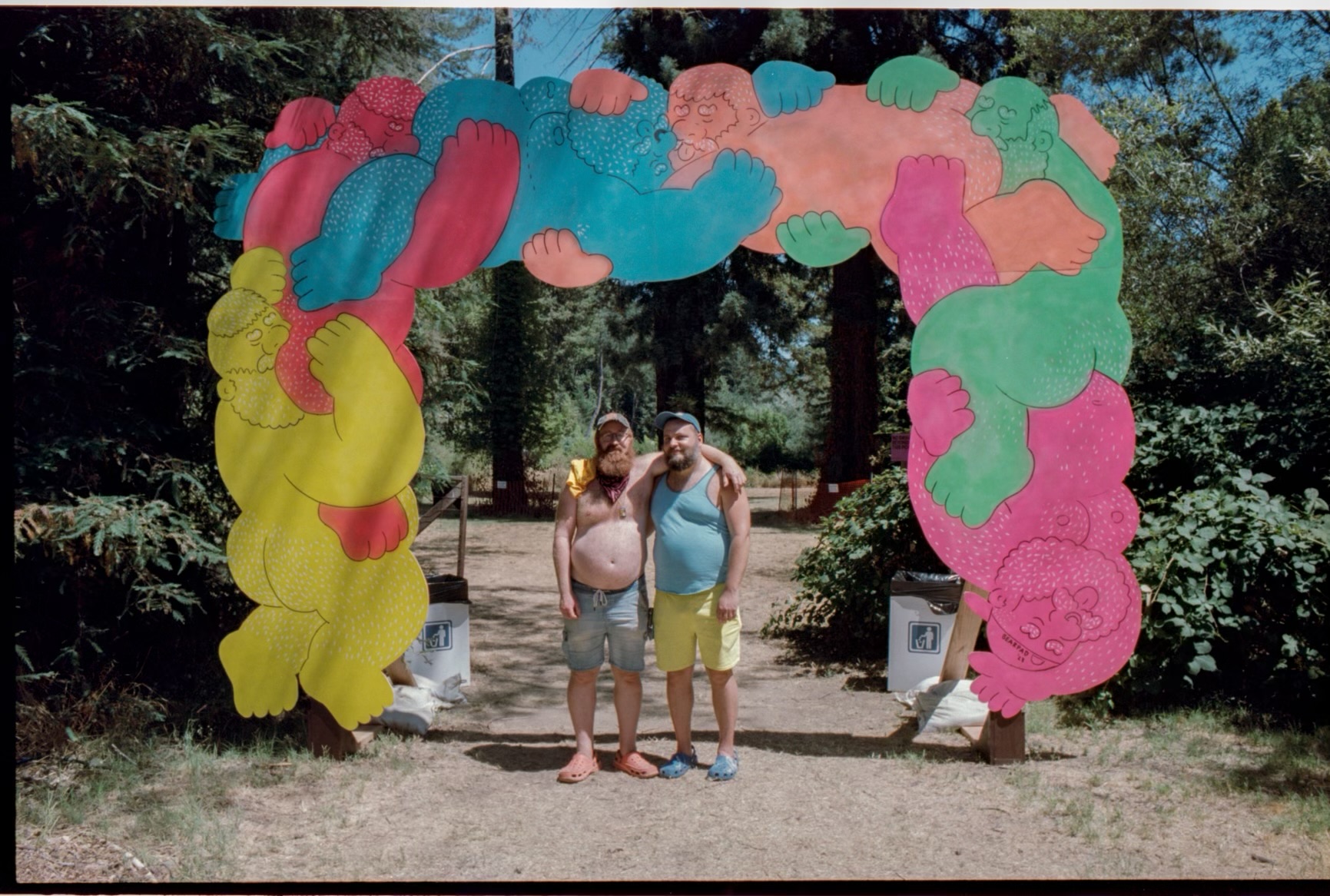
It just sort of appears in public and it’s very visible from all around because it’s so big. We’re always pushing to make the work as fun and bold as the people that influence it. It was generously funded by a grant from a really cool campout in northern California called Something Queer. It’s not a bear event, but they really like our artwork and have an incredible arts program that showcases a lot of unique installation art.
We’ve also made a big archway at Lazy Bear that’s been there for the last few years now, and it serves as a gateway into a hornier area of the Lazy Bear event that was usually sort of a secret. We made it to be this grand entrance at 16 feet wide and 12 feet tall. So at the time, that was the biggest thing that we made before this inflatable situation.
We also painted a giant mural on the corner of Dore and Folsom, which is a really historic intersection in queer history. It was really cool to have what seems to be a somewhat permanent piece of artwork out there on the street for anyone to see.
Bryce: Okay, so basically I need BIG BUB at the Macy’s Day Parade this year just to cause an international ruckus among Republicans hahaha I will be adding Lazy Bear to my ‘must-go’ bear event list, and need to see the mural in San Francisco while I’m in the area too!
I want to touch on something that’s been effecting the world the last few years, and feel its very relevant to our niche community too. With the era of generative AI underway, it’s taken over lots of our timelines and spaces in real life. Can you tell us about how this has impacted your brand and the community?
Patrick & Jordan: Living in San Francisco, we’re sort of ground zero for this AI boom, a bubble that we both hope will pop soon, but is still very much growing in ways that are disappointing. One of of the things we’ve seen is that almost every event poster we saw for a while was designed with generative AI. And so, because of that, the visual representation of all these events started to look the same in this kind of melted, disgusting way that’s brightly colored and shiny.
Once you learn how to spot it, which isn’t too difficult now, it’s just everywhere. That has been really annoying and a little heartbreaking because gay posters in particular can become these artifacts of place and time and community and parties and our shared history.
There’s even a shop in the Castro that will buy old posters like these for events at the Mine Shaft or the old Stud or whatever from years and years ago, even decades ago. But I can’t imagine any of the posters that are being designed with AI having that same sort of regard in history.
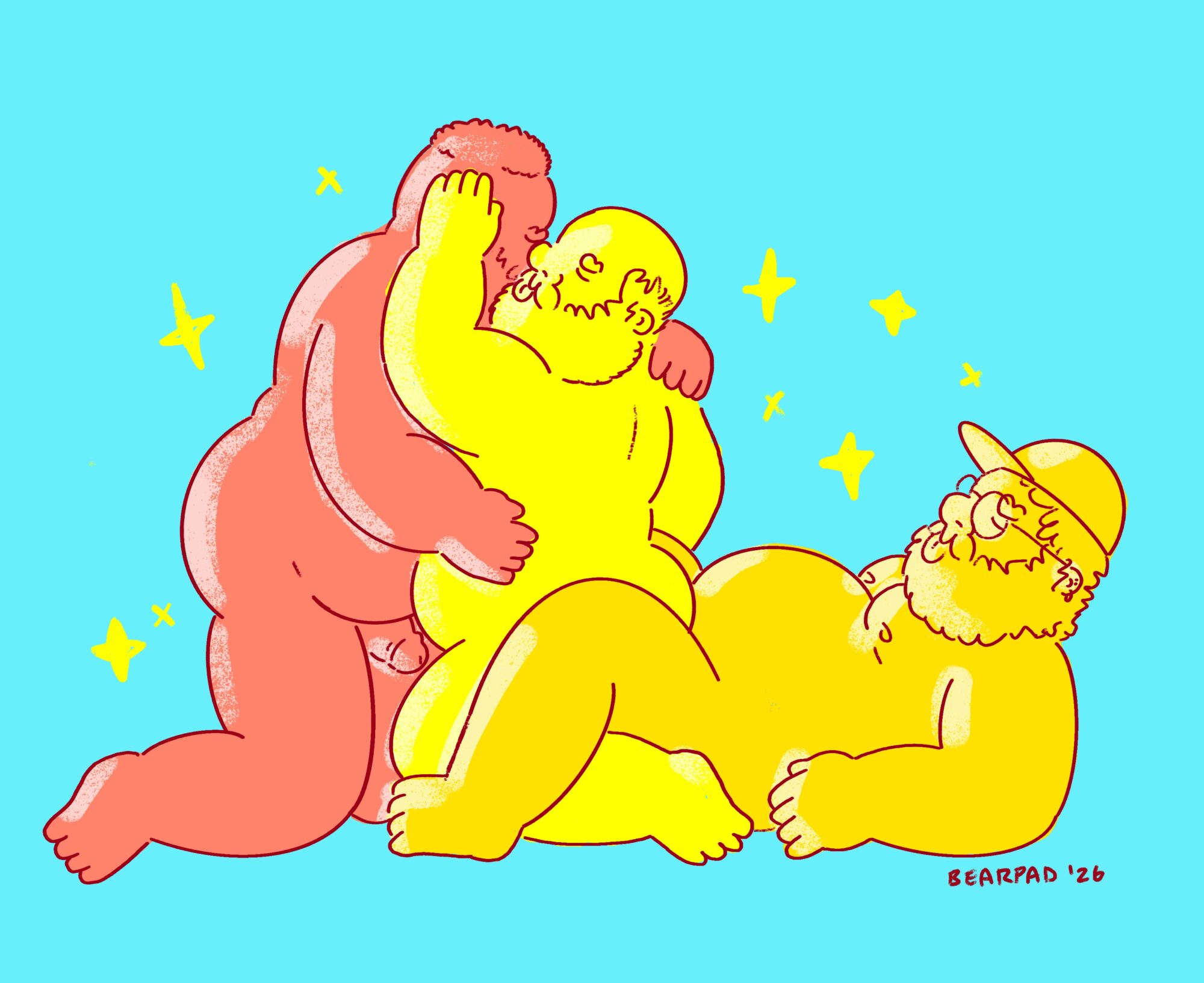
It feels like people who use AI to design these things are just creating forgettable garbage that has no historical significance, won’t be remembered by anyone, and isn’t even effective as a tool to advertise the party itself.
That’s been annoying, but we’ve been able to call people out on that, and it seems like the fight with AI is starting to go well for those on the side of human made art. When this sort of poster is put online on social media, more and more people are starting to call it out and dogpile on how gross it is. I think generally, people are beginning to recognize it as lazy, uncreative, and harmful to the community.
Generative AI is good at creating lots of little details, many of which are inaccurate. People tend to ignore some of the details in this kind of art because of the overwhelming amount of them which blur your sense of comprehension. It’s kinda like a gross and salty sugar rush.
Our work is more abstracted and simplified, and it’s much more difficult to do abstract simplified artwork with generative AI since every decision matters, and visibly, there are much fewer of those decisions on the page.
Human artists have the opportunity to share their own skills, their own experiences in life, and what they find beautiful.
Generative AI homogenizes queer artistic expression.
Through AI, what you’re seeing is the amalgamation of what the average of all culture deems beautiful or attractive, mostly of which is cishet/straight. With that, you end up with this almost fascistic representation of humans that tends to make people, you know, look thinner and more muscular and more white, and take away a lot of the uniqueness that makes our community so diversely beautiful and the imperfections that make us unique.
This is overall damaging because people are less likely to see themselves and their desires represented. As queer artists, we culturally have a habit of pushing beyond the norms of art and expression, and AI can only sort of grotesquely combine things that already exist without cultural context. It gives new combinations but not radical transgressive ideas that queers have been so vital in imagining.
As queer culture represents a minority in the grander scheme of culture, the majority is straight and white, and so AI is really leaning on this generic idea of what is interesting, which turns out to not really be very interesting at all.
It’s bad for our community because, most painfully, AI can generate archetypes of people that don’t exist. These sort of ideals that are impossible to achieve are leading to an even greater epidemic of issues with body dysmorphia.
We’ve had friends change their bodies already in response to AI “enhanced” photos of themselves, and this is only just beginning. AI is creating a standard that is unattainable. And when we have so many attractive people in our community that are willing to pose for photos, it’s strange to see so much that is fabricated when we could be seeing, like, our friends and our community members who would be empowered and celebrated rather than replaced by a prompt divined beefcake golem.
Bryce: You put this so beautifully and eloquently. I think every queer and marginalized community should read exactly what you’ve said here. I hate that its taken so long for this bubble to get to a popping point, but I am still happy the culture is shifting in the right direction towards the general disdain of its usage.
I think a lot of people just need to listen and learn from different perspectives, and what you’ve said here is such a great example of what needs to be heard.
Our community has so many amazing artists, including BearPad. What are some of the benefits people receive when commissioning art made from a human instead of using generative AI?
Patrick & Jordan: You’re getting something completely unique to the artist you’re asking and you’re developing a relationship with this person, and through them, your community.
When you look at this piece of artwork, you’re not going to think, ‘oh, this computer that I love made this for me,’ you’re going to think, ‘there’s this person I know that actually used their hands and made this thing for me. I supported this person to create this work, and through that support, they are off in the world making more.’
Also, though you can sort of converse with a computer, it’s really difficult to make changes on something specific once you get something back with generative AI. It’s always “ok, I guess this is close enough.” So it really is like a more personal experience to work with an artist and have this conversation that is very human because it IS human to collaborate back and forth to create something really wonderfully alive.
Otherwise, a lot of this kind of small time commission stuff is the first thing that many artists do. Like we mentioned, some of Patrick’s first paid art gigs were posters for community theater when he was in high school, posters for bars when he was living outside Los Angeles, posters for art shows.
If those posters were generated by AI instead of Patrick back then, he probably wouldn’t have developed as an artist and BEARPAD might not be here. An artist generally needs to experience this more low-level work, stuff that you do for a low rate / no rate, for friends.
Once you do that, you get better and better and you get more comfortable honing your craft, as well as being able to see your work valued and appreciated, pasted all over town. But without that sort of beginning, it’s difficult to gain the skills or meet the people who will help you take your artwork further.
When you’re commissioning art from a human, you’re putting money into the hands of an artist who is in your community and improving their life.
When you’re using generative AI, you’re using a tool that was built on stolen images while using energy that is actively destroying our world at a rate that no other digital technology is, particularly targeting black and brown folks in lower income areas of the country.
It’s losing opportunities for artists, at all skill levels, meaning there isn’t going to be as large of a generation of new artists.
You’re taking money away from the queer community and putting it directly in the pockets of big tech.
Also, it’s just bad for business with promoters and businesses to use generated AI art. People are recognizing it, and because of the ubiquity of the technology, there’s a reaction to it where it inherently feels cheap and lazy to the viewer, and they’re carrying that feeling over to whatever is being promoted.
When people see these posters out in the wild or online promoting an event or a product, they think to themselves, ‘oh, this person couldn’t be bothered. They literally just pushed a button.’
We spoke to a local bar manager who was talking about how disappointed he was because he spent a bunch of time on an AI ad and how he couldn’t use it because a bunch of people were upset about it. He was annoyed that he had spent a bunch of time and effort on creating it and paying someone, and he mentioned that it was just a tool.
We said, yes, it’s just a tool, but it’s just a tool that’s built on stolen artwork that is actively destroying our communities because of its environmental impact, and it makes your event and bar feel cheap and lazy. He stopped for a second, and he just said, ‘oh, OK.’ That’s literally all it took for him to get it.
I feel like most people just need a little education to understand the harm it’s causing.
We’re really at this turning point right now where people are speaking out on AI because they can still recognize that it is what it is. When it gets to a point, maybe in the future where it gets good enough or you can’t tell the difference, the fight will be more difficult.
Right now, we’re in a position where we can influence these companies. Various sectors of AI are really struggling to make money and operating at a loss in the hopes that they can turn around and charge for this ‘essential service,’ but if we don’t use it, then we will never have to pay for it or live with it.
Sam Altman dreams of a future where “everyone pays a utility fee for intelligence,” but we’ve lived for thousands of years without this, and we don’t need it or want it.
Every time you use AI, you’re losing an opportunity to engage with your community. The events we create as queer people are about bringing our human bodies together, and the way we make our art should reflect that. If you don’t have time for illustrated art, invite some cute friends over to take some photos, then slap text on top. It’s not difficult and will serve as a record for a place and time where people came together to create something.
AI by its nature is anti-human. As our community loves events that are all about bringing people together in a really visceral, juicy, human way, we should be using visuals that celebrate that messy beautiful humanity, and utilizes processes that favor human connection rather than having a computer generate a soulless false representation of who we are in an anti-human normative void.
Bryce: Again, you have left me speechless with how perfectly you’ve put this. I really appreciate both of you giving such insightful answers to such loaded questions, and hope our readers can also appreciate and learn from them too.
To follow up with that last question, what are some of the ways people can support the talented artists in our community?
Patrick & Jordan: Since AI generated images are currently flooding every social media stream that we have, it’s really important to try to counteract that by not sharing AI posts, not commenting on AI posts (unless negatively), unfollowing accounts that only post AI, and sharing and following artists who are making art with their own hands and minds.
Every action you have on the internet is sort of a vote in one direction or the other, and if you vote for humans, that’s a vote for a healthy art community and a future of people making art around you. We feel like that’s better than voting for a tech company that’s planning on charging you a fee for this gross and deeply anti-human slop service.
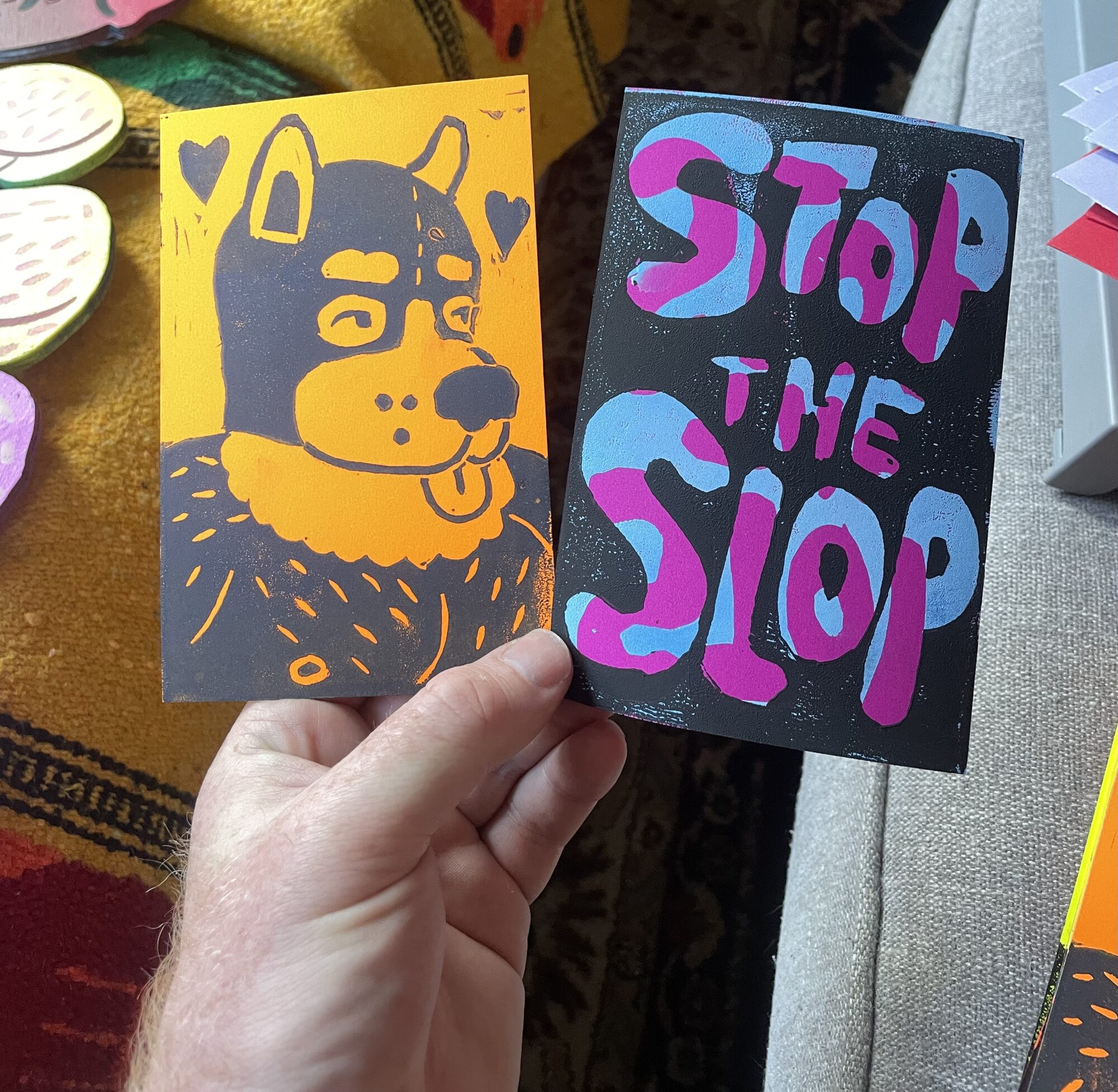
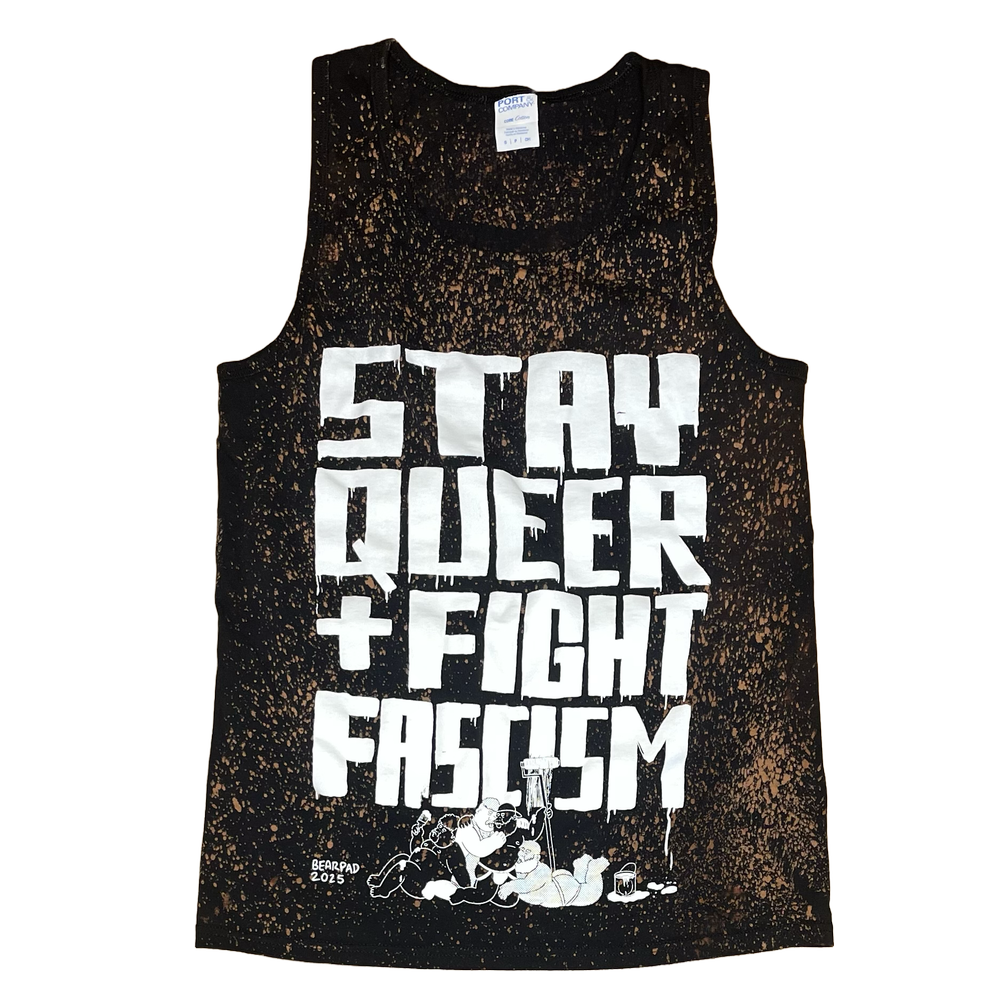
The best way to support talented artists in our community is just like, do what you can, you know? If they have a merch page, buy some merch for a friend as a gift or for yourself, go to local maker/art events for the queer community in your area and get to know who’s making stuff and how.
Most of us would be happy to get to know you and collaborate, so reach out to us! Get a commission as a gift. You’re asking an artist to see the beauty in someone and represent it, and it will be cherished forever. When you wear a shirt or get a commission, you’re contributing to the story of an artist, supporting them, and celebrating where they are in that moment.
If you’re hosting an event or have a friend who is, make sure that the promo work is created by a person, and ask whoever you hire to not use generative AI images. Honestly, if all you can do is slap a like on a piece of art or leave a comment on social media, that can be so encouraging
Just whatever feels right for you to show that you appreciate and value artists in your community.
Bryce: Beautifully said. I’ll also encourage our readers to check out this list I made several months ago about artists in our community, many of which are open to commissions and sell merch.
Both of you have toured the country sharing and displaying your work at several different bear events and more. What are some of the events BearPad has been at in the past and do you have any plans to be at more in the future that you can share with us here?
Patrick & Jordan: Since we’re California-based, we try to attend as many events as we can in California, which usually includes San Francisco Pride, Lazy Bear, Dore Alley, Folsom Street Fair and a number of events in Palm Springs, usually related to Western Xposure.
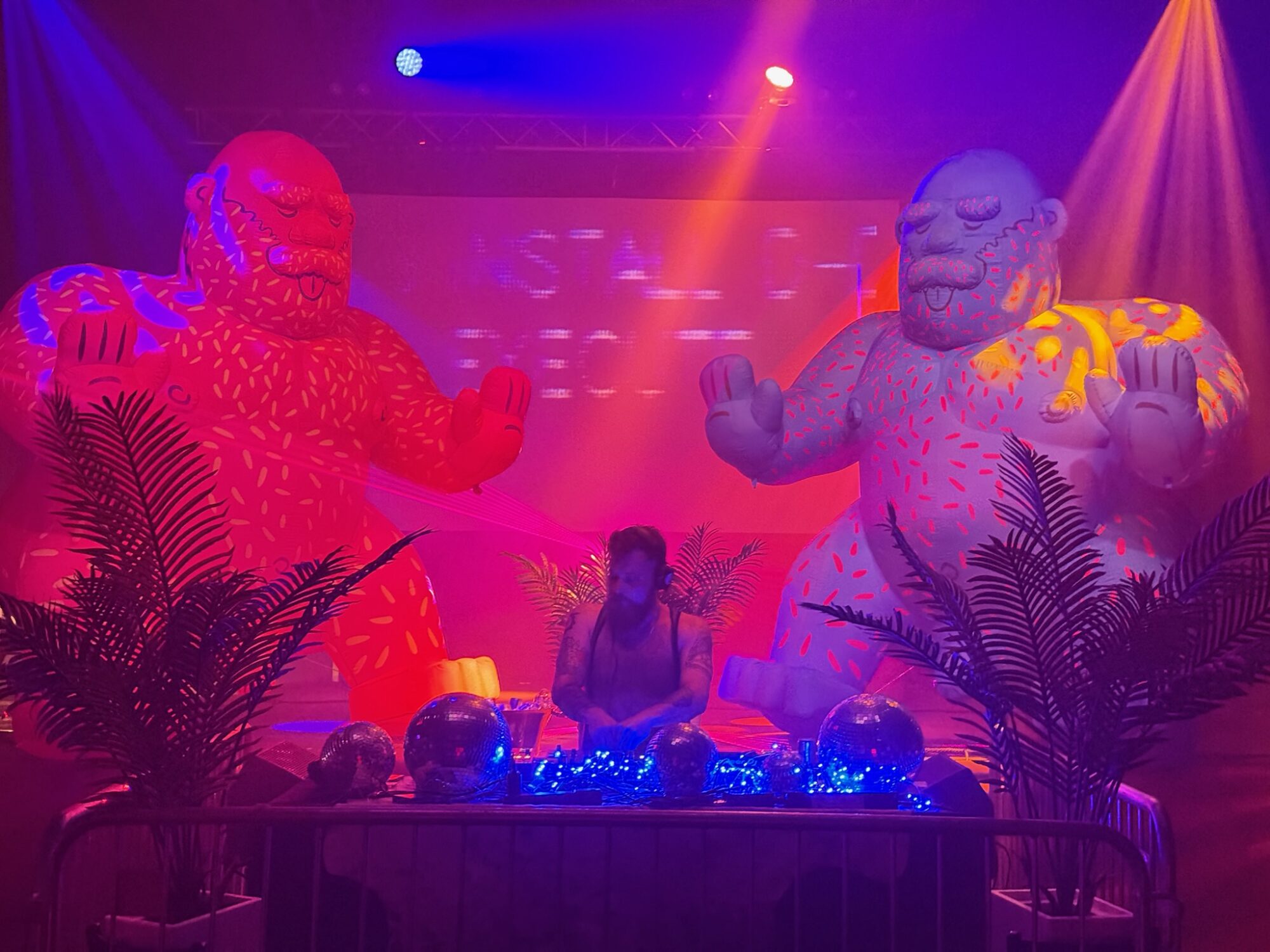
We also make it to BiggerVegas when it happens, so that’ll be next year. We recently toured the entire country and hit up North American Bear and Texas Bear Round Up, and we will probably be returning to at least one of those next year.
Patrick lived on the East Coast for a while, so he used to attend Provincetown Bear Week, but that’s just ridiculously expensive now, so we can’t make it unless someone has a kind of arts grant for us or a place to stay, wink wink.
We’d also like to go abroad, so if there’s opportunities in the UK or Australia or Japan or anywhere else, we’d love to travel.
We also managed to stop in Austin and do a couple installations. We installed some original artwork at the Austin Eagle and at a private residence, and it’s really fun for us to be able to make these large scale wooden cut outs, and install them in a bunch of different places. It gives us an excuse to drive around and meet new people.
So if you’ve got a bar or a house that could use a couple big friendly bubs somewhere, please hit us up! No idea is too wild. The bigger and weirder the better!
Bryce: I am hereby starting a petition to have your work displayed in at least one bar per state. It will be a lot of work for you two, but I’m selfish and want BearPad art everywhere!!
I’m a huge fan of the t-shirts y’all have designed. That Halloween design from last year is amazing, and it sold out fast! Where can people purchase your work and what’s the best way to stay informed for when you drop something new for sale?
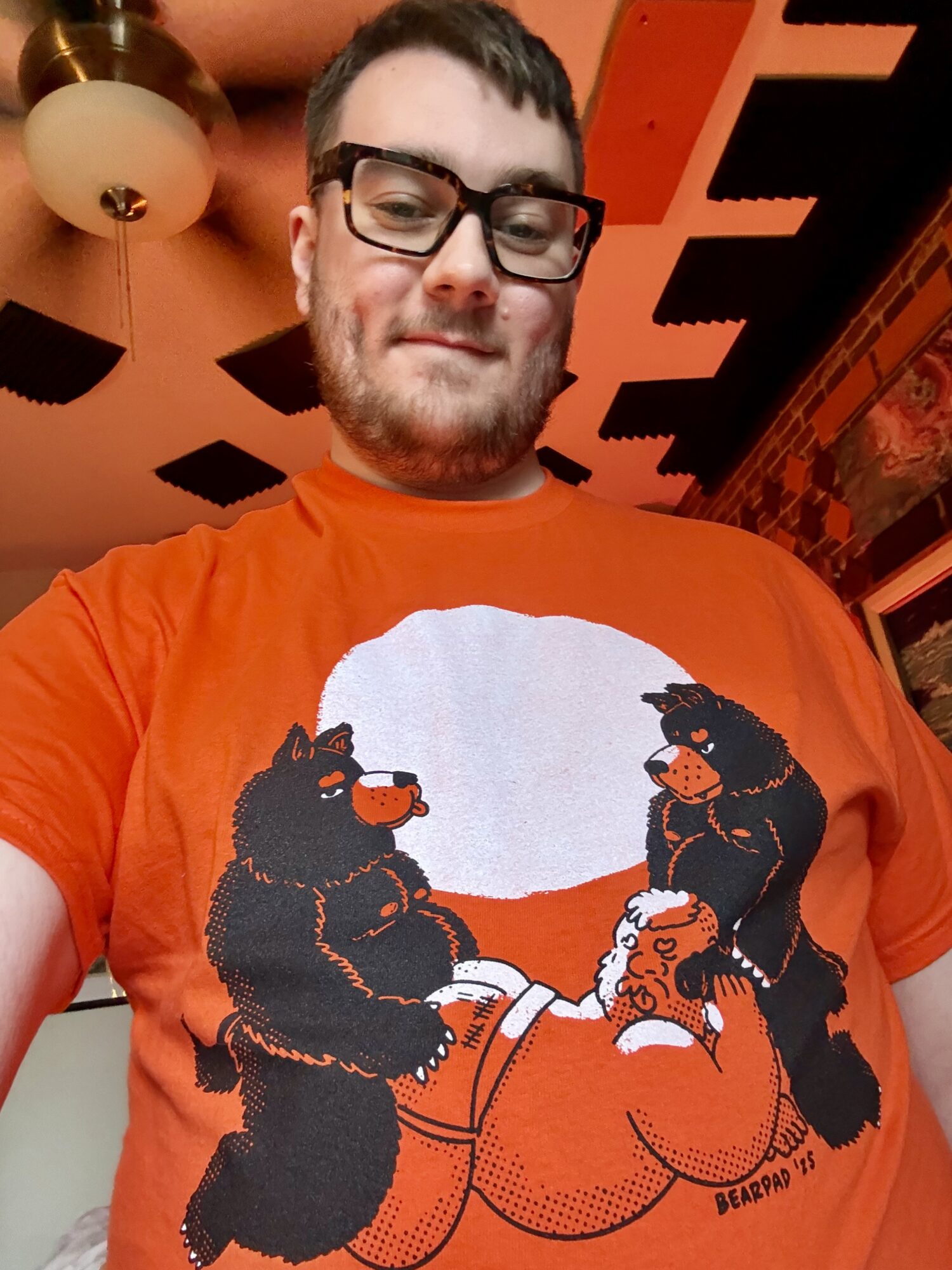
Patrick & Jordan: Unfortunately, the best way to see a wide selection of our stuff is still in person. We prioritize meeting people in our meat bodies together at street fairs and campouts and larger bear runs and stuff like that. Seeking us out when we’re at these events and meeting us in person is still the best way to get our merch.
But if you can’t do that, which is totally understandable, we do have a website that has a smaller stock, but still usually includes art, t-shirts and tank tops, and maybe some pins and magnets and other fun goodies.
We also have a Patreon where we send out physical rewards to your mailbox every month, including a new colorfully fun original wooden dick to hang on your wall.
We’ve got a ‘mystery’ tier with a surprise every month, which allows us to really experiment with things that we’ve been thinking about. Our Patreon supporters really give us the space to play, and that’s essential in coming up with new stuff. It’s also a great way for them to get some original BearPad stuff that you can’t get anywhere else. It’s like a loot box for chubby horny guys.
Generally, the best way to stay informed is to follow us on social media sites under the username @bearpadart. Instagram is sort of our most curated professional social media account, so that’s probably the best way to stay on top of what we’re up to including fresh merch drops. We also have an email list that you can subscribe to on our website. Otherwise, you can also find us on TikTok and Bluesky.
Bryce: I’m going to have to take a look at your Patreon when payday hits because that sounds very enticing. Also, thank you both for taking the time to speak with me! It’s truly been an honor. Is there anything else you’d like to share with our readers today?
Patrick & Jordan: Support your local bear artist! They’re out there. Feel free to pick up a pen and do it yourself too. Drawing is fun, especially when you’re drawing something that you love, and it’s easier the more you do it. So make a mess and have fun with it! Host a crafting night and learn together! We think a lot of people, including us, would much rather see something that looks and feels like it was made by a human, even if it’s not perfect.
If you’re making a poster for an event, just taking a cute photo of your friend and slapping some text on top with the bar or the venue in the background that you’re going to have your party at is so much better than asking a computer to imagine what that space looks like.
The best person that can do that is someone who has been there and that person is you or your friends. Make stuff about the places you know and don’t ask a third party robot to do it for you.
Also, kiss your friends more often. Hug, and fuck, and stuff. We’ve been doing a lot of cuddle piles and movie nights at our house and we would highly suggest just inviting friends over for some unstructured hangouts and snuggles. It’s been wonderful. Definitely cuddle. Less computers, more sweaty bellies!
Be sure to give BearPad a follow on their social media to show them some love, and check out their Patreon and website for merch and updates on where they’ll be next!
BearPad’s Links – Website – Patreon – Instagram – Facebook – Bluesky – Twitter – TikTok