
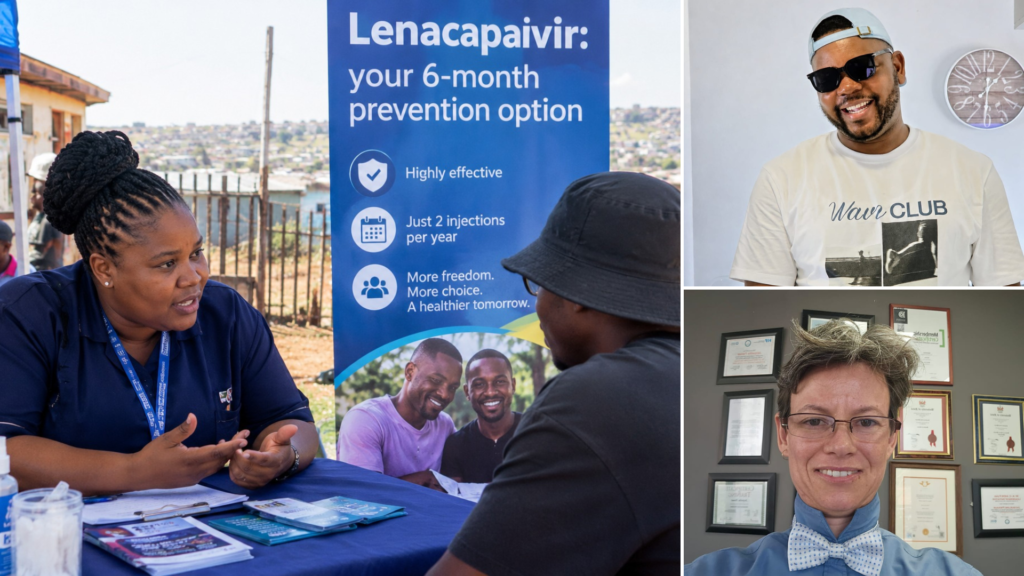
From the Gay Plague to a Jab: HIV Prevention in South Africa
Staff writer Navin deep dives the evolution of HIV treatment in South Africa with educational interviews, history, and more. Check it out below!
It was a June afternoon, and the first clinic had already turned him away. The nurse who gave the injection had knocked off for the day.
Most people would have gone home and tried again next week. Happiness turned to the colleagues with him and said, “Let’s go to the next facility. We need to get this injection.”
That sentence is the whole man.



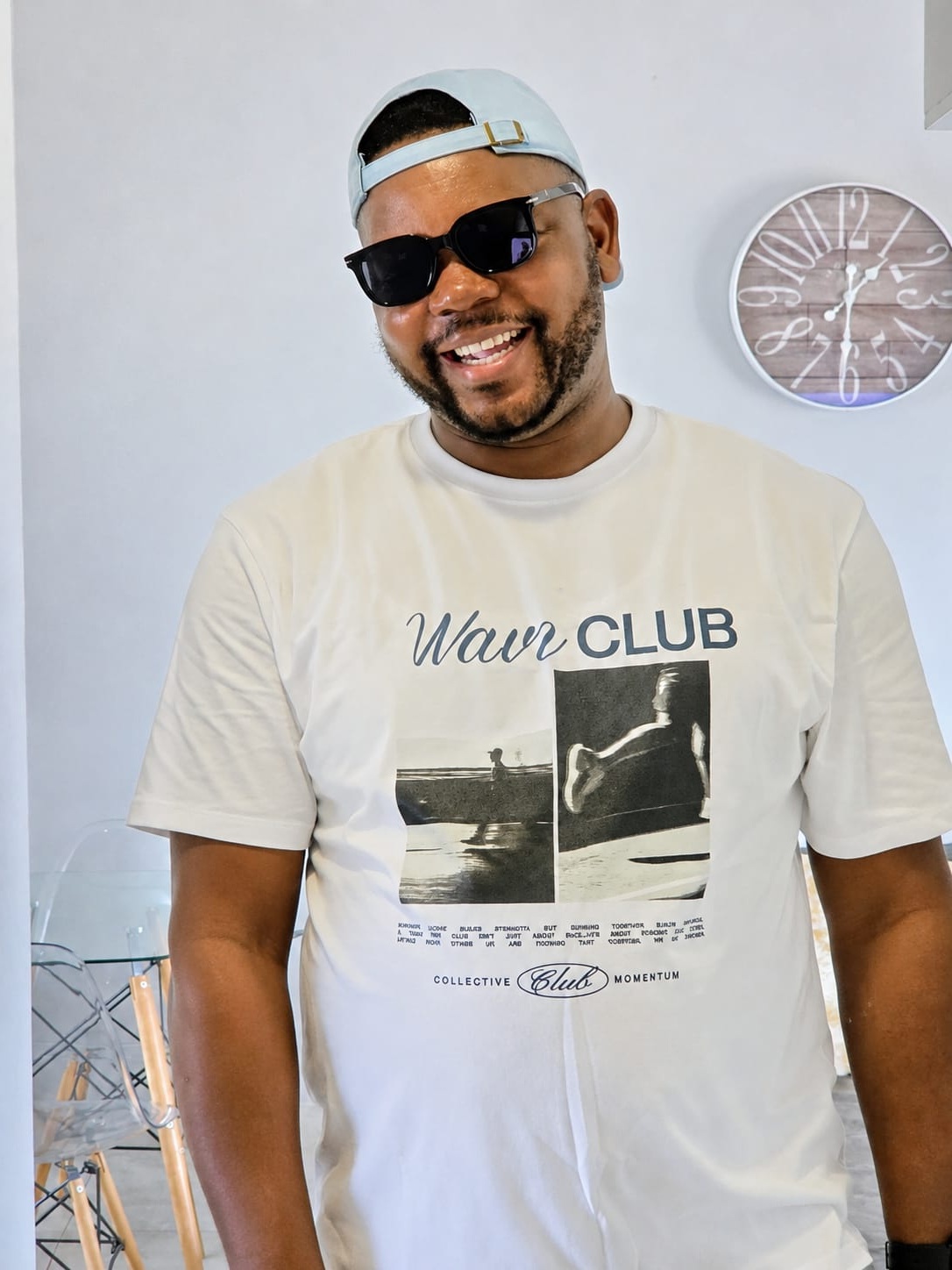
He’ll let you call him Happy if you like, but anyone who calls him Happiness gets a seat at the front table at his wedding. He was born and raised in Hammanskraal, north of Pretoria. He is uncle to eight nieces and nephews, and describes himself, without a trace of irony, as a giant teddy bear.
His community work at the Aurum Institute keeps him on the road “every other second day,” in corners of South Africa most people never see. He believes every community deserves its own Pride, not just the big one that comes around once a year.

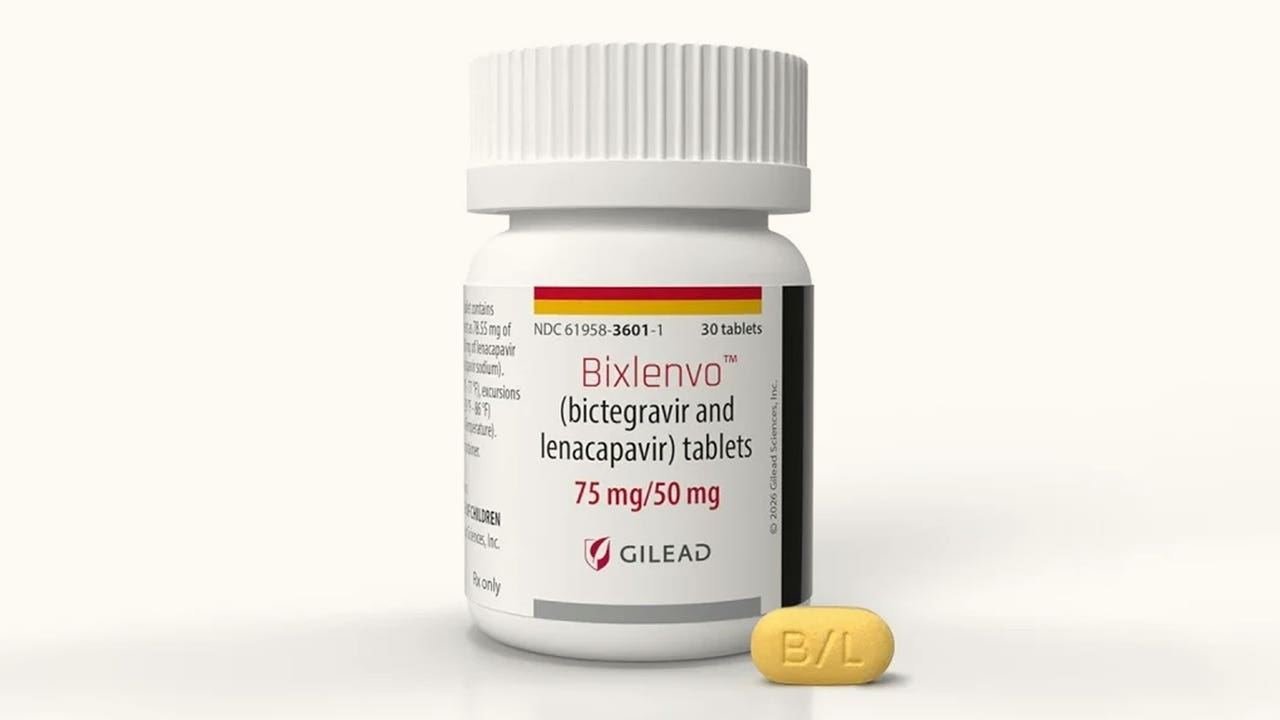
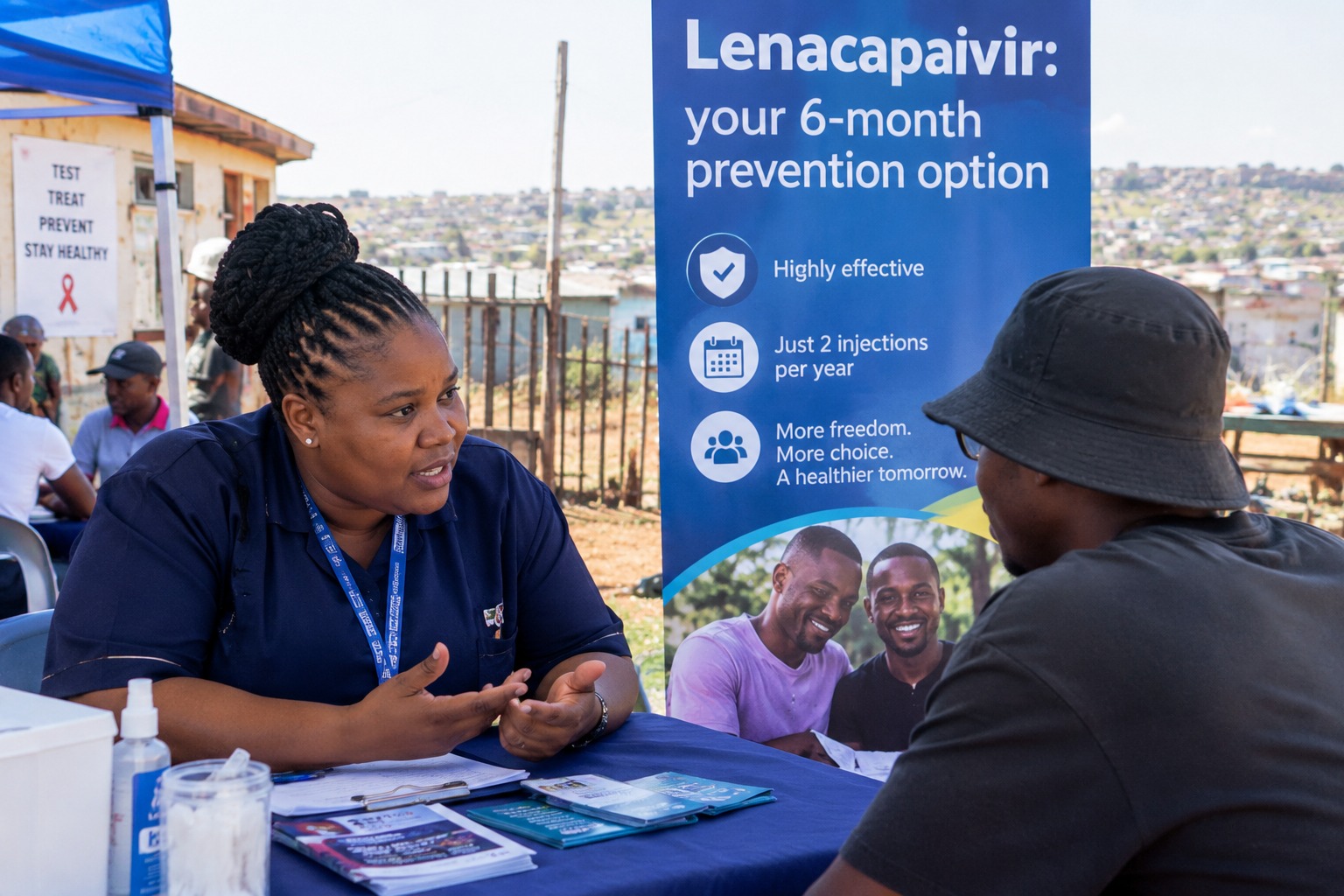
What he was chasing that afternoon was lenacapavir, known to everyone who works with it simply as Len: an injection, given twice a year, that protects against HIV for six months at a time. No daily pill. No alarm on your phone at seven in the evening. Twice a year, and that’s it.
“For me,” he says, “it was complete freedom.”
SIX MONTHS, ONE JAB: HOW LEN WORKS


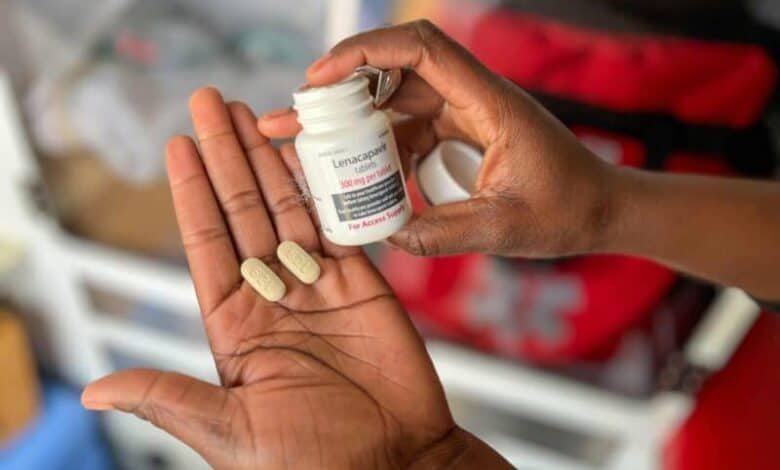
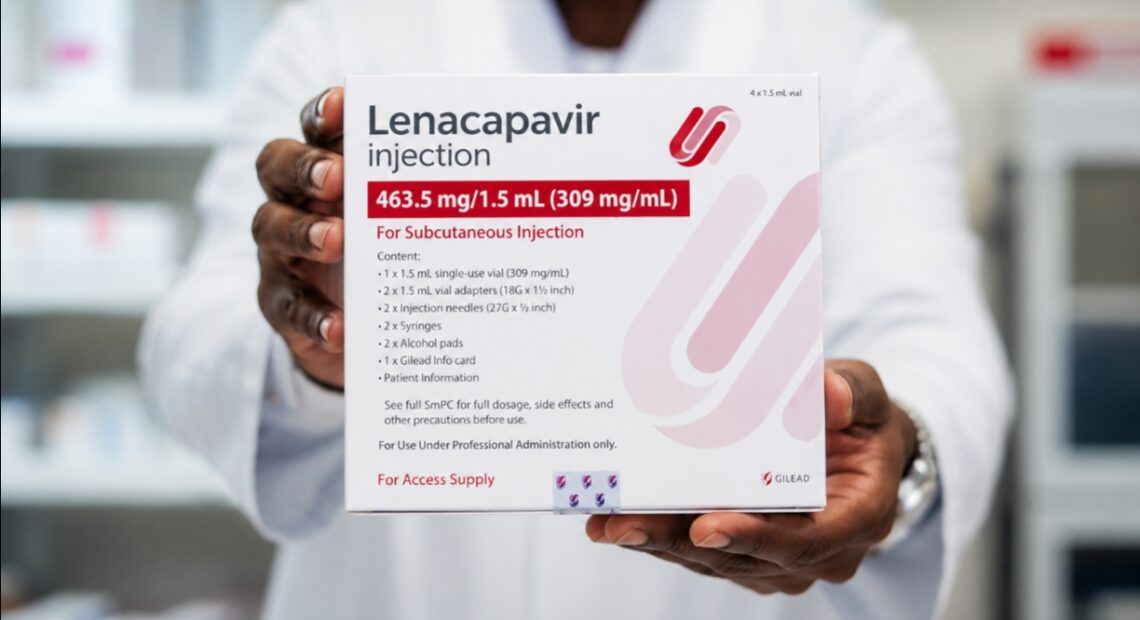
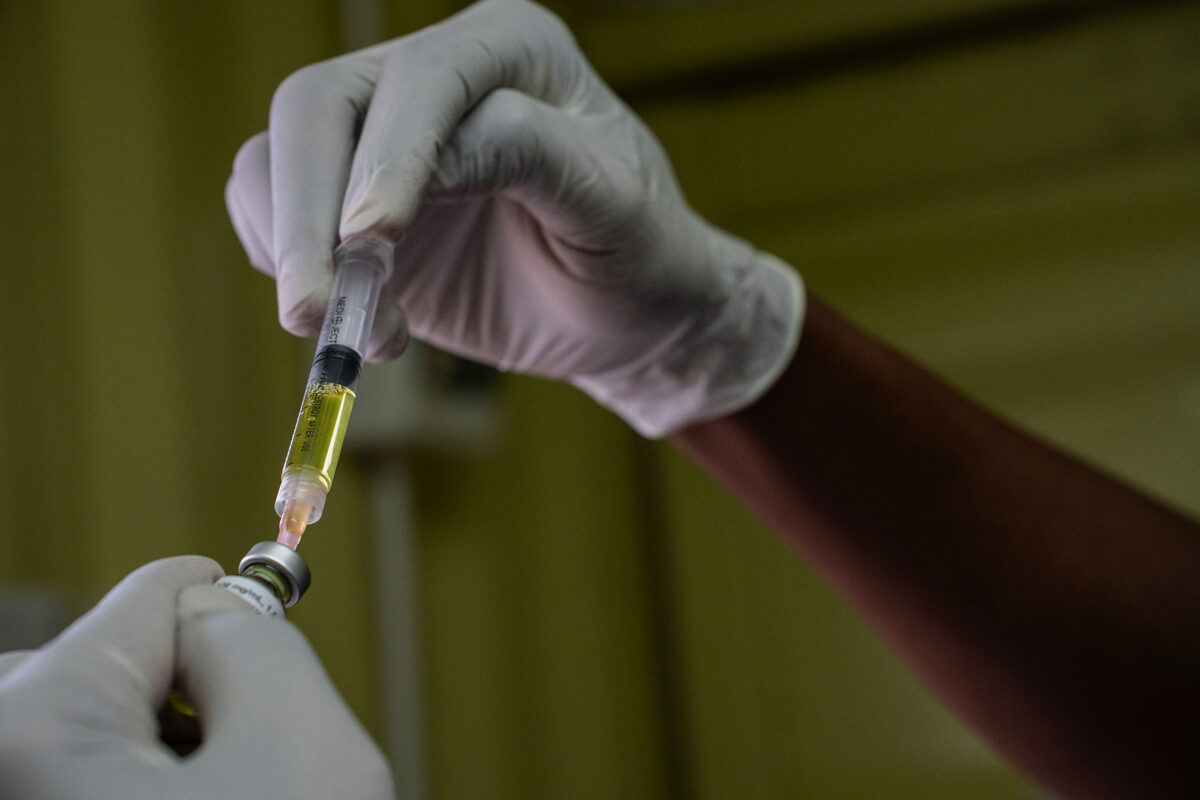
Think of Len as a slow-release shield. A nurse gives two injections just under the skin of the belly, at the same visit. Instead of being used up in a day or two like the daily PrEP pill, the medicine seeps out gradually, keeping you protected for six months.
It works differently from the pill too. HIV carries its genetic material inside a tiny protective shell, and Len interferes with that shell, stopping the virus at several points before it can take hold.
You’ll be tested for HIV before every injection, and when you first start, you’ll also be given two tablets to take.
The one catch? The shield doesn’t disappear overnight. It slowly fades. So, if your next appointment slips, you’re less protected than you think. Mark the date and go back on time, and if you do miss it, talk to your clinic before having unprotected sex.
One more thing: Len protects against HIV only, not other sexually transmitted infections, so condoms still have their place.
THE WALK HOME
At the second clinic, the nurse began drawing up the medicine, and Happiness caught sight of the needle.
“I’m like, what is this? Where are you going to put that in my body?” he laughs. The nurse explained it was only for filling the syringe; she would swap it for a smaller one. “I was about to say I’ve changed my mind.”
He didn’t. There was an ache afterwards, the ordinary kind. “The excitement was superseding the pain.”
What he remembers most is the walk home. “I got a little bit emotional. It felt like more than just a clinic visit. I felt proud. I was relieved. I felt a little bit liberated.”
It’s a big feeling for one injection. To understand it, you have to go back.
TWO MEMORIES OF ONE EPIDEMIC
In the mid-1980s, a newly qualified doctor, Dr Ezio Baraldi, stood at the bedside of Pretoria’s first patient with a new and frightening illness: a 23-year-old man nobody knew how to treat. “We knew what it was and could already test for it,” he says, “but had no idea how to prevent or treat it.” It already had a name, borrowed from America and heavy with judgement, and it stuck in South Africa too: the gay plague.
“There was little I could do to help this very sick young man,” he recalls. “He died a few months later. It was a traumatising experience.”
Dr Baraldi, a family physician, never left the work. He treated patients through the early days of AZT, went on to do clinical research into antiretroviral drugs, and today prescribes treatment and PrEP in his own practice.
Happiness grew up in the long shadow of that name. In his community, there was one thing everybody seemed to know: gay men had HIV, and gay men were spreading it.
He also watched the virus move through his own family. “We’ve seen some of our uncles, some of our aunts, some of our brothers and sisters getting HIV. Some not being able to manage. Some even passing away.”
He decided young that he would be the one to bring the information home. He started with loveLife, teaching young people about prevention, and never really stopped.
So when Len arrived, he didn’t wait to see how others got on. “As a health champion, it was important for me to lead the way,” he says. “We shall be the first. And we shall go and tell others that it’s working.”
A Black bear from a township outside Pretoria, first in line to protect himself. Everything he was told about men like him turned quietly on its head.
THE QUEUE
But this isn’t a fairy tale, and Happiness is the first to say so.
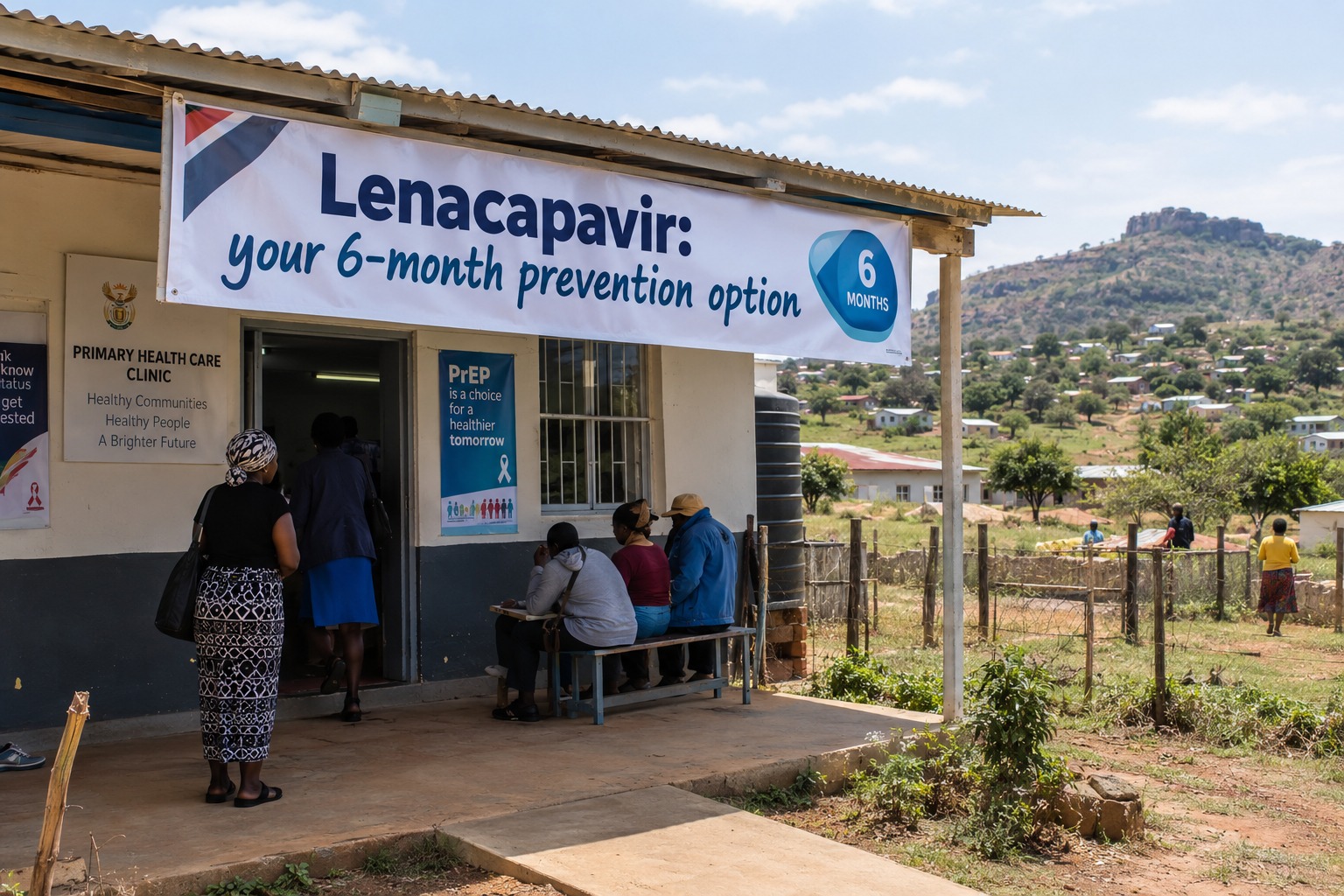
In South Africa, Len is now offered at 360 government clinics. The country runs two health systems side by side: state clinics and hospitals, which serve most people, and a private sector used mainly by the roughly one in six South Africans with medical aid (private health insurance).
Every clinic in this story is a state clinic. Len has not yet reached the private sector, where patients book appointments rather than queue, and the experience is very different.
What happens in those 360 clinics matters well beyond South Africa. This is the largest rollout of lenacapavir anywhere in the world, and every country waiting its turn is watching to see whether men come through the door — and whether they come back.
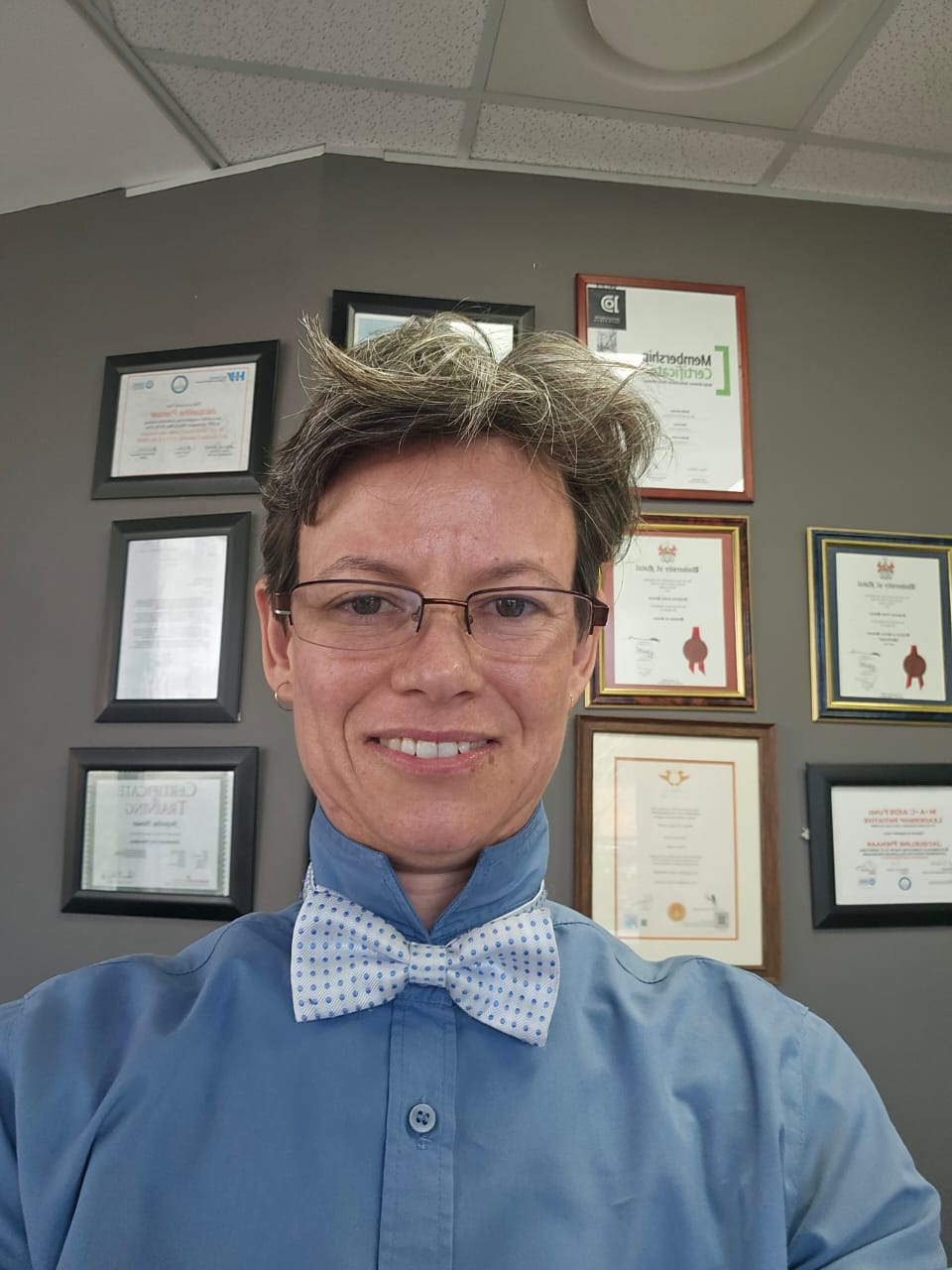
Jacqueline (Jacqui) Pienaar, Senior Technical Director at the Aurum Institute, leads what she says is the world’s largest HIV programme for key populations — gay and bisexual men, sex workers and transgender people among them — across several countries. She sees that question play out every day.
“Getting healthy, well individuals to go and queue at a clinic with TB patients everywhere, sick patients vomiting, kids screaming, is a tall order,” she says. “None of us wants to be standing in a queue surrounded by sick people just because we want a prevention jab.”
Her real fear is what happens next. A man waits for hours, nervous about the needle, then goes home and tells his friends it wasn’t worth it. “And while they wait [for the jab],” she says, “they’re not going to stop having sex.”
Happiness sidestepped the queue by telling the front desk, plainly, that he was there for Len. “I could be walking into a facility looking all fine,” he says, “but I could be an emergency.”
Not everyone has his confidence, or his years of navigating clinics for a living. And not everyone can afford a wasted trip. He talks about people who can’t find the taxi fare to reach the nearest clinic that has it. “You find people having to choose between petrol and milk. And they choose milk.”
Happiness was luckier than he knows. Hammanskraal sits in Tshwane, in the province with more Len sites than any other — 133 of the 360. He still had to try twice. Drive two hours north, into Limpopo, and there is nowhere to try at all.
Jacqui points to a painful irony: the communities Len was meant to reach first, gay and bisexual men among them, are largely not the ones making it through the clinic doors. “Mostly because marginalised groups like sex workers and gay and bisexual men have had such bad experiences at government clinics,” she says, “that they are not prepared to face the emotional and mental trauma experienced due to stigma and attitudes.”
Part of the problem, Dr Baraldi believes, sits on the other side of the desk. From his work with medical graduates in Pretoria, he has seen how rarely young doctors are trained to talk openly with patients about sex. “If a doctor feels embarrassed to talk about sex with their patient,” he says, “we have a very big problem.”
SIX MONTHS IS A LONG TIME TO REMEMBER
Then there is the question every man on Len will eventually face: what happens when the six months are up?
The protection doesn’t switch off like a light. It fades. And nobody is going to text you when it’s time to go back.
“I can’t even remember what I ate last night,” Jacqui says. Her worry is for the very first men to trust this injection, the ones who might believe they’re still protected when they aren’t.
Dr Baraldi explains why that matters. If someone picks up HIV during those months when the drug is fading, there is just enough of it in the body for the virus to learn to resist it, but not enough to stop it. The safeguard is simple: an HIV test before every Len injection, and going back on time.
Happiness has already sorted that out for himself. The clinic gave him a card with his return date, and he keeps a copy on his phone. “I don’t know where life will throw me in the next six months,” he says. “My health journey is extremely personal.”
THE ‘I’ POLICY
So what does he say to the men on the fence, the ones who heard a bad story from a friend of a friend?
He uses what he calls his “I policy.” No lecture. He simply tells them what he did. “It’s easy to encourage people when you have actually done it. I’ve done it. And I do not have doubts.”
He believes South Africa can raise an HIV-free generation, if people are brave enough to reach for what is already on offer. “Yes, there are doubts, there are fears,” he says. “But I think we are better than that.”
Bear culture has always been about looking after each other: the hug at the door, the friend who makes sure you got home. Len asks us to turn a little of that care inward.
Forty years ago, a young doctor watched a young gay man die of something nobody could name without shame. This year, a bear from Hammanskraal walked out of a clinic with his whole life ahead of him.
He felt proud. He felt relieved. He felt liberated.

WHERE TO GET LEN
Len is currently available at selected government clinics. Dr Baraldi and Jacqui expect it to reach the private sector in early to mid-2027, once the generic licences take effect. They say there are good indications medical aids (private health insurance) will cover it if the price is favourable.