Chris Colfer & Glenn McQuaid talk on bears and more in new film The Restoration at Grayson Manor
We spoke to Chris Colfer & Glenn McQuaid about The Restoration of Grayson Manor, a horror movie filled with bears, familial trauma, and more! Check it out below.
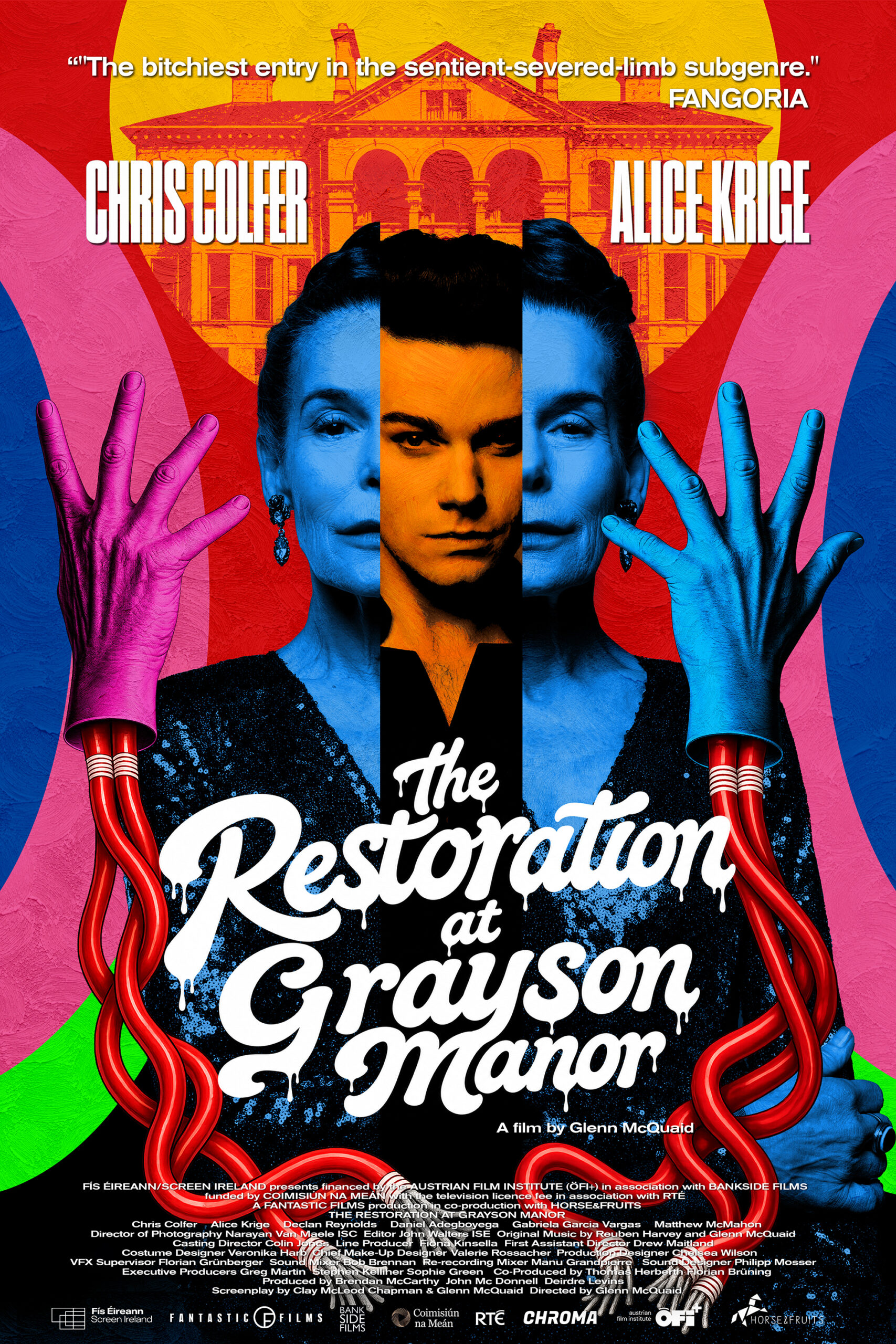
What happens when you combine familial trauma, handsome bears, killer hands, and Chris Colfer all into a melodrama horror movie? You get The Restoration of Grayson Manor, an unforgettable film with well deserved rave reviews!
Boyd Grayson, played by the amazing Chris Colfer, delights in bringing men home to his sprawling family estate for sex, taunting his legacy-obsessed mother with the cruel reminder she’ll never have the grandchildren she craves.
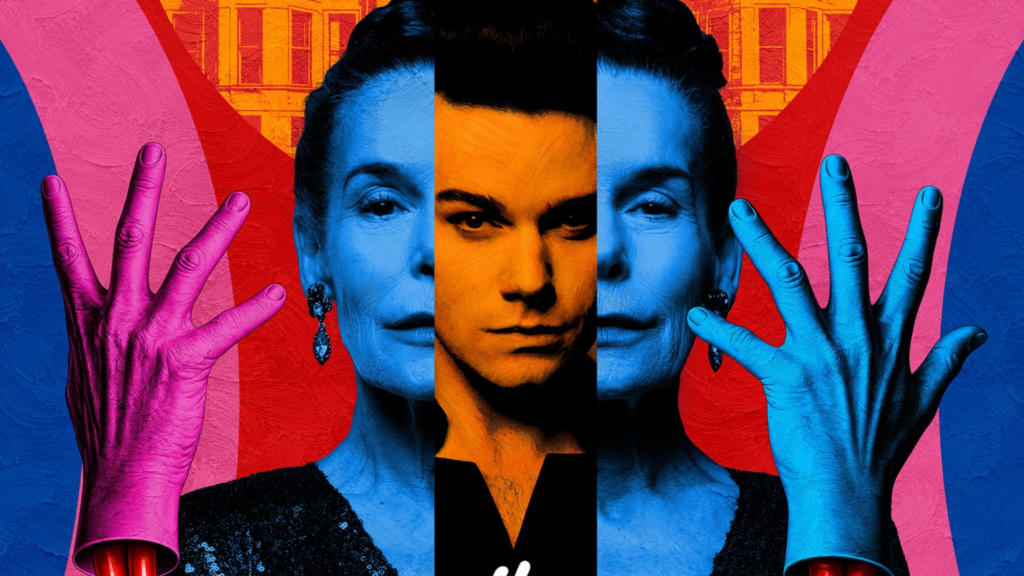
When a freak accident leaves him handless and helpless, Jacqueline seizes the opportunity to mold him into the heir she always wanted, outfitting her son with experimental prosthetics wired directly to his subconscious, a gift that comes with a terrible cost for all who enter Grayson Manor.

Upon my watching this film, I found myself falling in love with not only the cinematography, but the writing of the story as well. The entire cast played their parts extremely well too, and was pleasantly surprised to be blessed with some light nudity of handsome bears. The main bear lead, Declan Reynolds, can get it!
I am a huge horror fan, and love movies that give me a touch of anxiety along with a story that keeps me guessing on what will happen next. I also love media that highlights huskier men in ways that portray them as actually desirable without it feeling forced.

The Restoration of Grayson Manor delivers all of that, leaving me wanting more by the end of the film. I thoroughly enjoyed how the premise was executed and especially adored the underlying themes addressed in the writing.
It’s not often that we are blessed with a magnetic horror movie delivered through a queer lens, and Glenn McQuaid did exactly that.
I had the privilege to interview both Chris and Glenn about the movie’s premise, bear representation, and so much more. Check it out below!
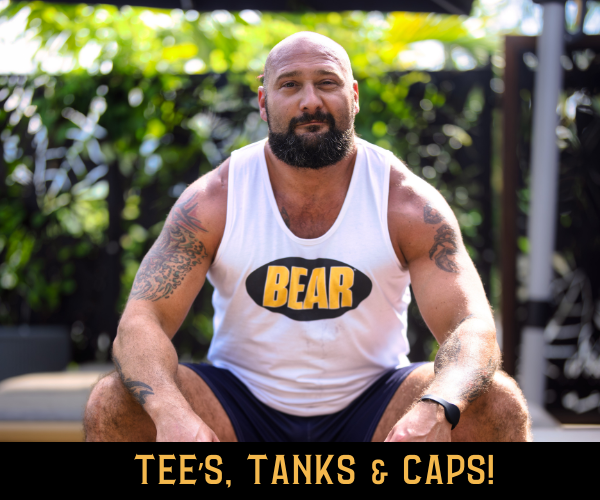
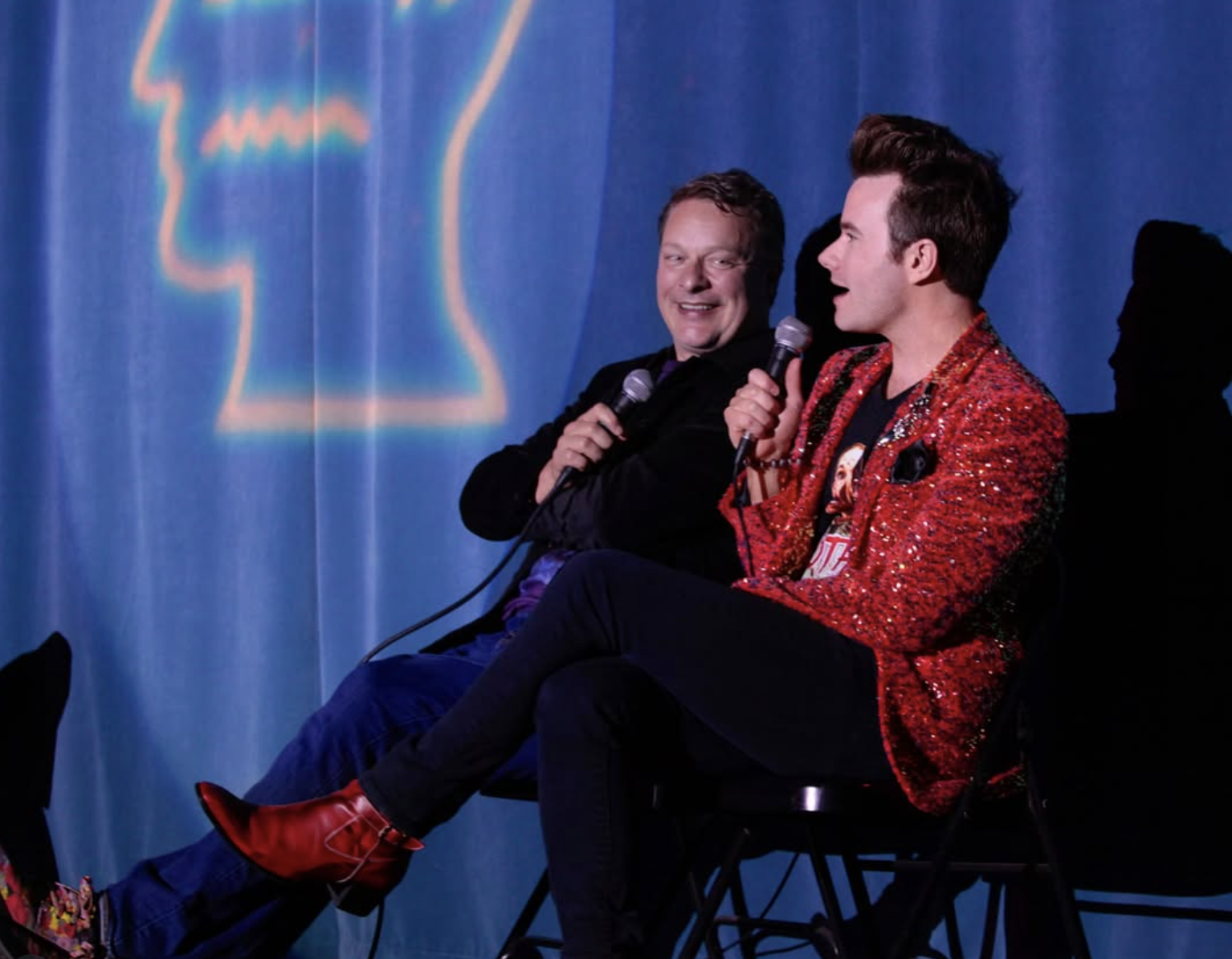
Bryce Quartz: Hey there, Glenn and Chris! Thanks for taking the time to speak with me.
I just want to say, I’m obsessed with the premise of this film and the story being told through a queer lens. I personally connect so well as a queer person that’s dealt with the weight of heteronormative expectations within my own familial dynamic as I’m sure many other queer people often do.
Glenn: Thank you! And yes, I think it’s a pretty universal situation that affects many of us, whether we recognise it or not.
I’ve often had people say to me over the years, “Gosh, you’re so straight-acting!” It was always intended as a compliment, but I took offence. I’m not acting, this is who I am! But the more I’ve thought about it, the more I’ve realised that I learned at a very early age to act a certain way to protect myself, both physically and mentally. So there’s an uncomfortable truth there for me.
The film centres around Chris’ character, Boyd, who refuses to bend to a society that wants to change him. He’d rather cut down his family tree, with all its lovely generational trauma tinsel, than bow to those pressures.
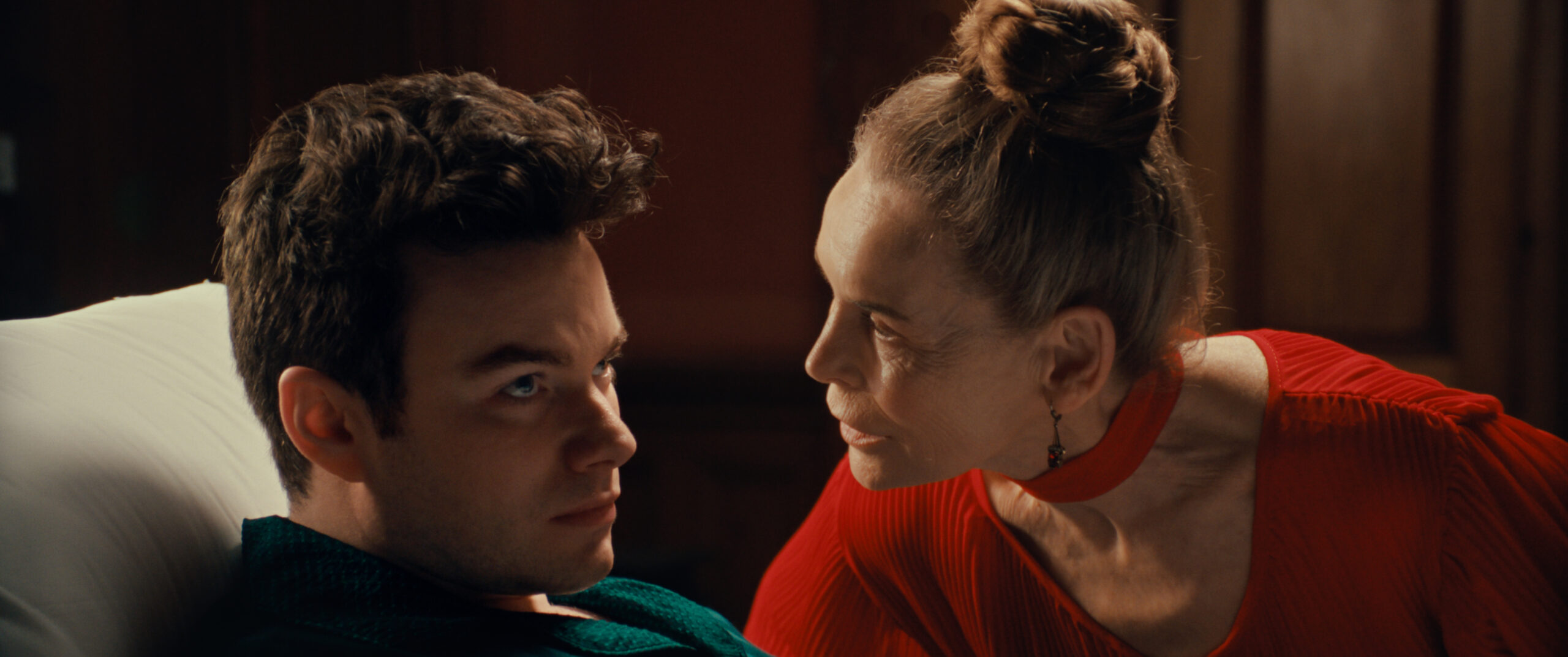
It also plays around with the idea that procreation somehow makes us better people. That’s something I’ve fielded over the years: “You’re not going to have children?!”
And then there’s the idea of a queer person in physical recovery, someone who has to rely on the kindness of heterosexuals. There’s a particular paranoia that comes with needing human connection and care from a society that has marginalised us, attacked us, and even murdered us simply for living our lives. And God forbid we should express admiration or attraction towards any of them!
So, to that extent, it’s actually a very heterophobic movie!
Bryce: For Glenn; I know you co-wrote this with Clay McLeod Chapman, but I also know that you specifically connect to every character within the manor personally.
Was it difficult for you to write this script because of the connections to your own life or was it rather cathartic to pour your heart into the story?
Glenn: I found it very cathartic that, within this incredibly pulpy scenario of killer hands running around an old Gothic mansion, I got to talk about so much through each of these characters.
I don’t think there are too many movies out there that explore alternative psychedelic medicines for grief and trauma, narcissistic parenting, fear of heterosexuals, bodily autonomy, abortion and, eh… poppers.
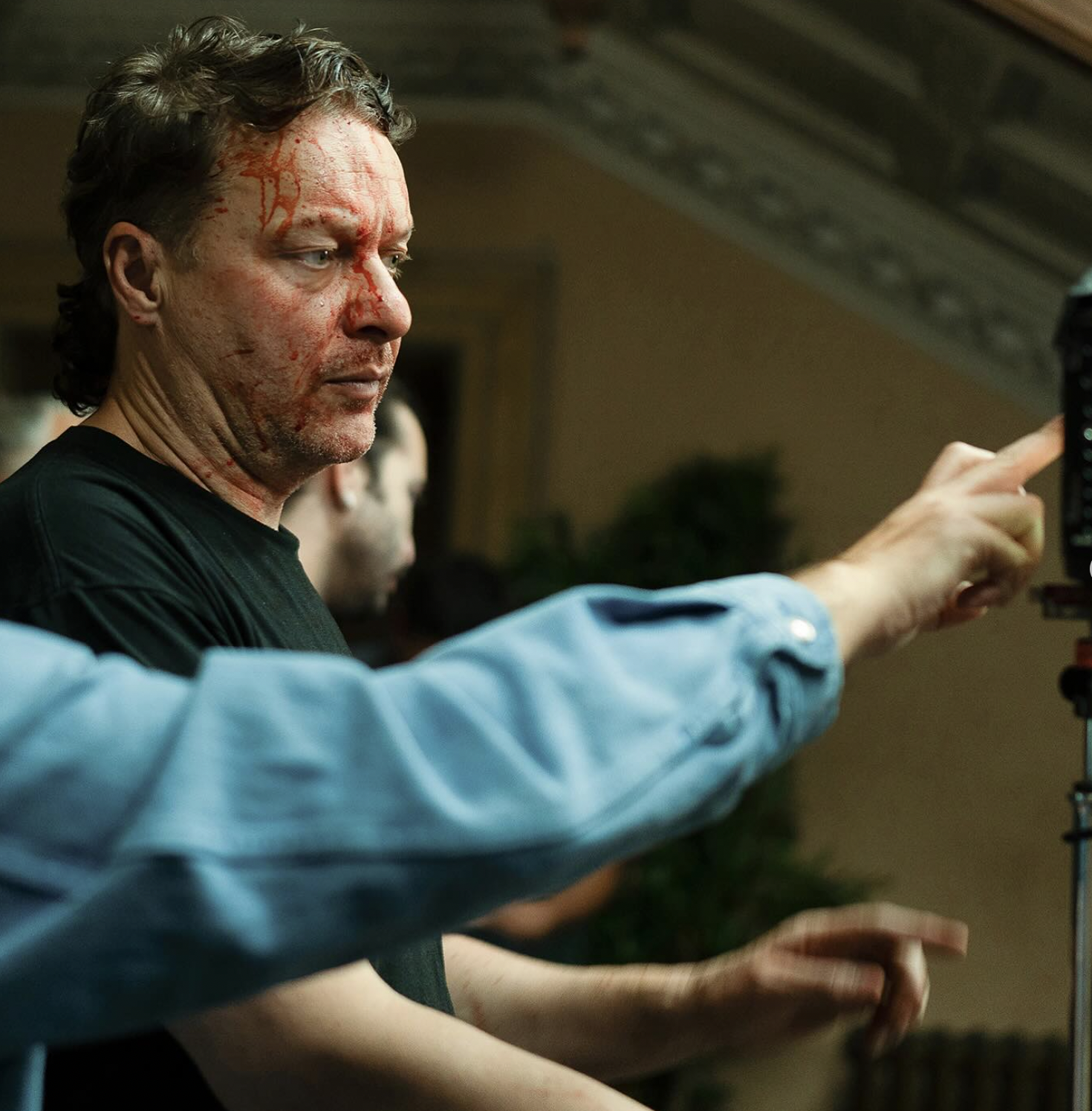
I will say that I handed my co-writer Clay a bunch of these ideas, and he just ran with them, delivering a draft that nailed so much of what I was going for. From the barbed relationship between Boyd and his mother, Jacqueline (Alice Krige), to the dry, almost soap-opera tone, it was an absolute joy to see Clay bring to the script what I couldn’t have brought to it myself.
Bryce: For Chris; It is a fact that you’re an experienced and amazing actor that can bring any character you play to life. In this film, you don’t fall short at all bringing the emotions of Boyd to the forefront of every scene eloquently!
I know that Glenn used Meisner techniques on set to bring honesty and freshness to each scene for all the actors, but I am wondering if there was any Method acting for you personally as a queer person that might have felt connected to Boyd’s story?
Chris: Oh, I’ve never had the discipline to be a method actor. (Laughs) It probably would have been unhealthy to live in Boyd’s rage and pain full-time. But I do think every queer person has a level of anger and hurt from living in this crazy world. So I had a lot of emotion and personal experience I could draw from and exaggerate to get that pain across.
The Meisner exercises Glenn did with us were super helpful, though. They were like improv games to warm us up and they also taught us how to work with one another and develop the chemistry between our characters. Alice and I especially had a lot of fun spewing insults at each other right before Glenn would call action.
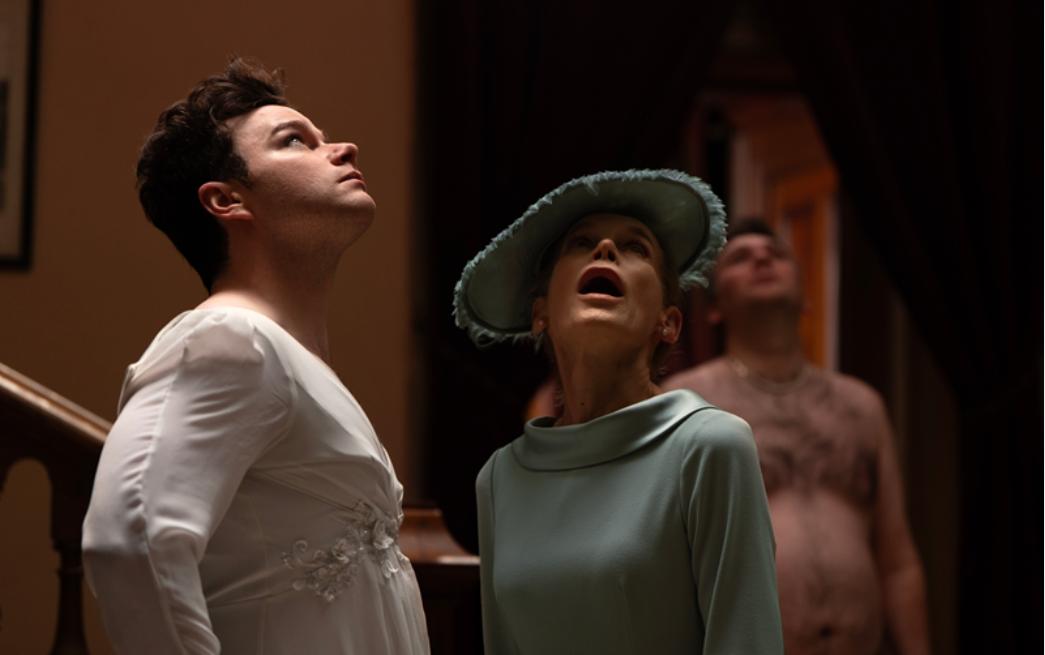
Bryce: The representation and themes this story brings to the horror genre is immaculate. It’s got generational trauma, wit, brutal honesty, queer paranoia & romance, physical & emotional grief, sex, drugs, and… horny bears?!
For both of you, what are some of your favorite moments and themes within this movie?
Glenn: I think the theme of going through recovery was important to me. I’ve had a few injuries over the years, and it’s a funny space to dwell in. And again, it’s odd to find yourself in the hands of strangers, at their mercy.
Another theme that’s very important to me is letting down one’s guard, what it means to open your heart, and the absolute annoyance, upset and vulnerability that comes with that, especially when it involves crushing on a straight person, which ultimately Boyd finds himself dealing with.
That’s a very, very dangerous place to be for a queer person. We can all roll our eyes when we see it happening to someone else, but I think it’s something most of us have experienced. And it can be such a potentially life-altering situation to find yourself in. People have been murdered for even suggesting there might be an attraction to a straight person, so I wanted to lean into that fear a bit too.
Again, it’s all very heterophobic.
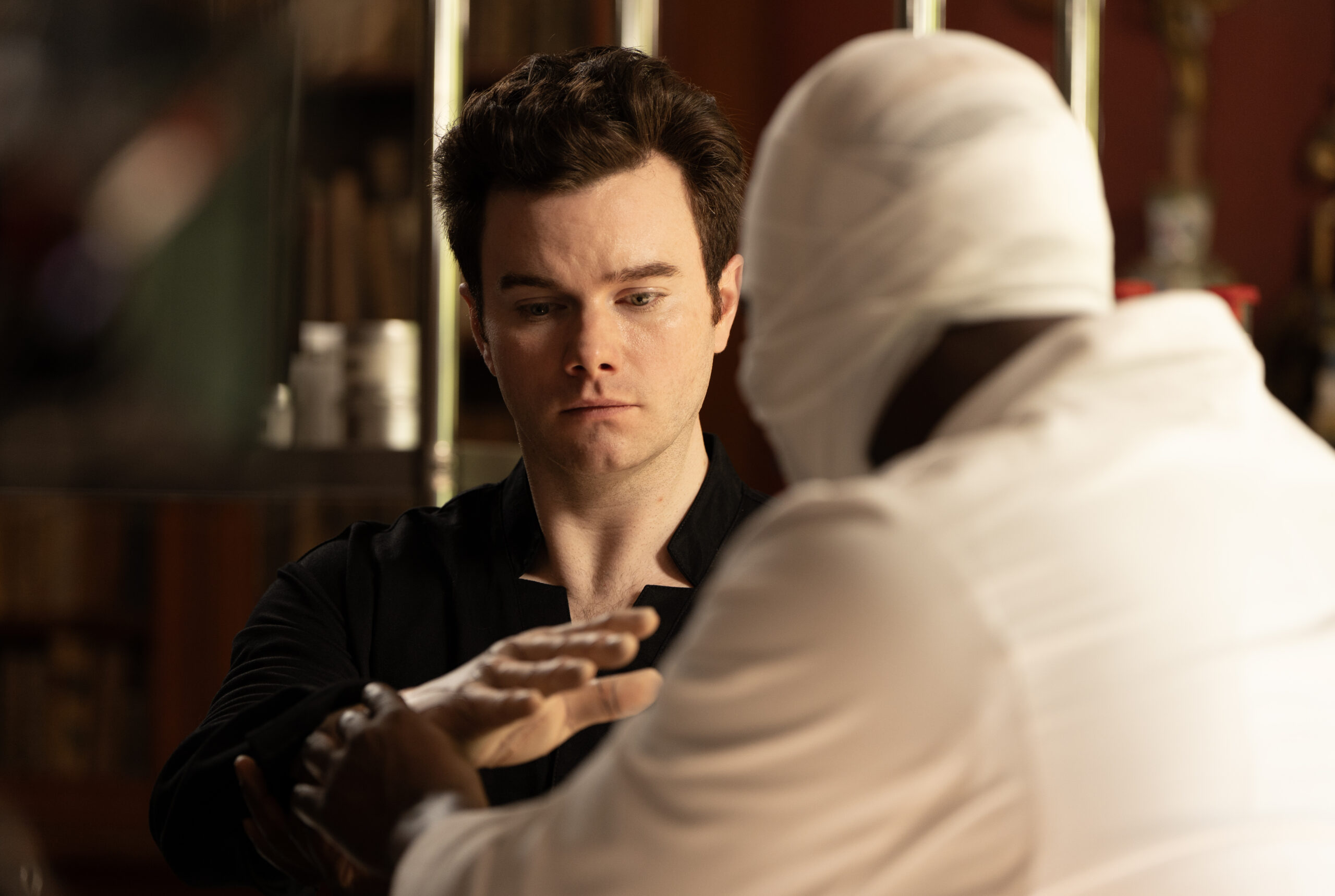
Chris: One of my favorite films of all time is Whatever Happened To Baby Jane? And Glenn and Clay’s script reminded me so much of that dynamic. And I thought showing that kind of caretaker relationship between a hateful mother and gay son was so interesting.
I also loved how Boyd losing his hands represented losing all his agency and freedom. Audiences have been really surprised how much depth and symbolism a movie about killer robot hands can carry.
Bryce: Horror is my favorite genre in both film and television. I love discussing with people about why queer people love horror so much, too. Why do you two think queer people tend to love and connect with horror so much?
Glenn: Horror has always understood the outsider as a scapegoat. And my first crumbs of queer representation came through horror.
Early Universal films, particularly Dracula’s Daughter, were thinly coded stories about the horror of being alone, unlovable and shunned, all things I personally believed I was when I was younger. But even a blood-sucking vampire gave me hope.
Horror offered me escapism, and then, moving into the ’80s, I began to see more obvious, though still coded, references to homosexuality in movies like Fright Night.
With Grayson Manor, I really wanted to throw the queer code into the fire and put the characters out, proud and front and centre.
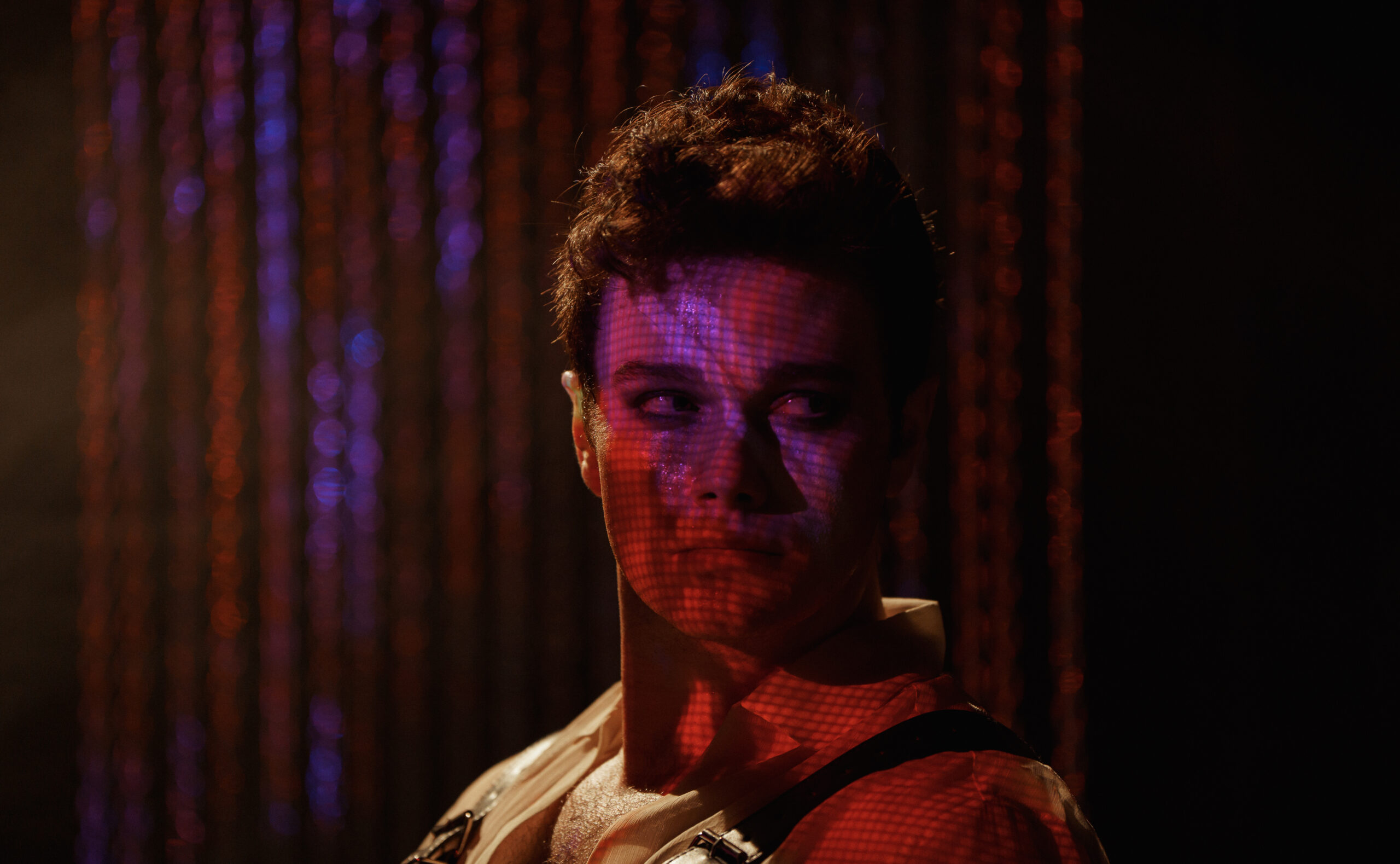
Chris: I think all horror is queer horror. The elements of secrecy, theatricality, and safety are experiences the queer community deals with every single day. So, whenever someone sits down to watch a horror film, I believe they’re subconsciously having a queer experience.
That’s probably why I was so drawn to the horror genre at such a young age. There was something very familiar about it even when I couldn’t pinpoint what it was.
Bryce: The film embraces melodrama quite beautifully, though this can be seen as camp through a queer lens despite the fact that it’s just tradition within the history of the horror genre itself.
Can you both share why you both feel that the melodrama in this film is emotionally powerful rather than campy?
Glenn: Thank you for the question! I love camp, but I think it’s a word that gets thrown around a lot, and it can be a bit of a dead end when it comes to talking about the work.
I much prefer melodrama when describing the movie. It’s a beloved style of filmmaking from yesteryear that can get glossed over in favour of simply calling it camp.
Melodrama is a very sincere style of writing and acting. It might be perceived as funny by contemporary audiences, but it also takes incredibly talented people to pull it off with a straight face. And I think that’s where its emotional power comes from. The characters aren’t winking at the audience. Their feelings, however heightened, are absolutely real.
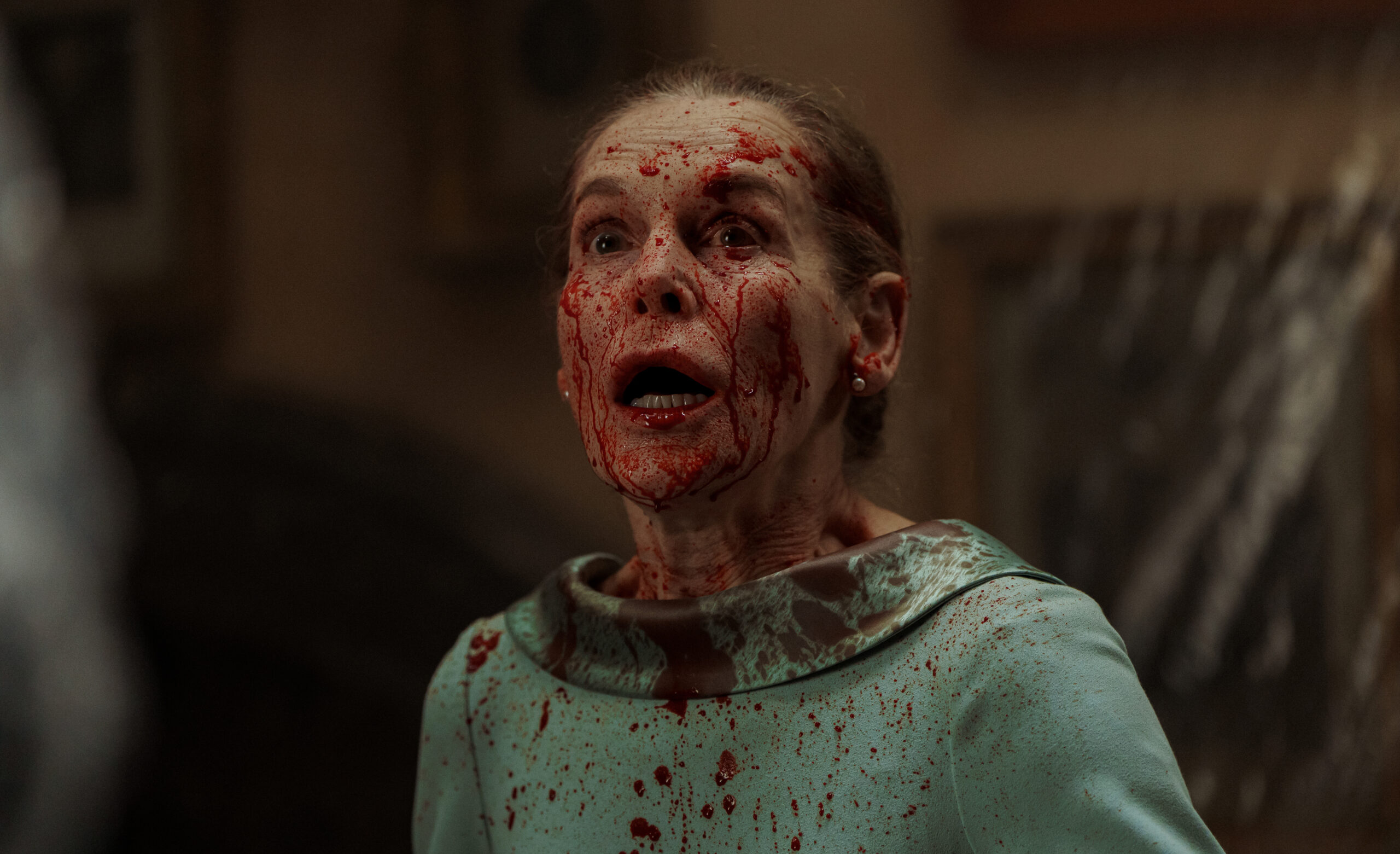
Soap opera was a huge influence, too. Dallas Season 1, Dynasty Season 2, Falcon Crest Season 3 were all real touchstones!
But you can see that same melodramatic tradition in a lot of ’70s horror, too. House of Dark Shadows and Burnt Offerings, for example. Even the original Friday the 13th leans heavily into melodrama.
I love that tradition, and I wanted to embrace it.
Chris: I absolutely adore camp and melodrama. It’s a very under-appreciated art form. But it has to be intellectual in order for it to work. When there’s no substance or truth to it, it doesn’t land.
As a gay man I’m also just naturally campy and melodramatic, too. And most of my queer friends and family are as well. So I think there is an authenticity to camp and melodrama that sometimes gets overlooked. Some people just have dramatic lives. And as an actor it’s absolute heaven to dive into.
Bryce: I really love the “killer hands” at the center of this story. It’s a beautiful addition to the wave of body horror we’ve seen in recent years, and brings such a unique flare to the movie!
What was it like working with the prosthetics and how did you bring them to life as their own character of sorts?
Glenn: The hands were a sort of multimedia endeavour. We had a gloved hand actor, animatronics, and we also used CGI. It was great fun bringing them to life and giving them their own personalities, but probably not quite as much fun for me as getting to go deep with all the actors and their characters.
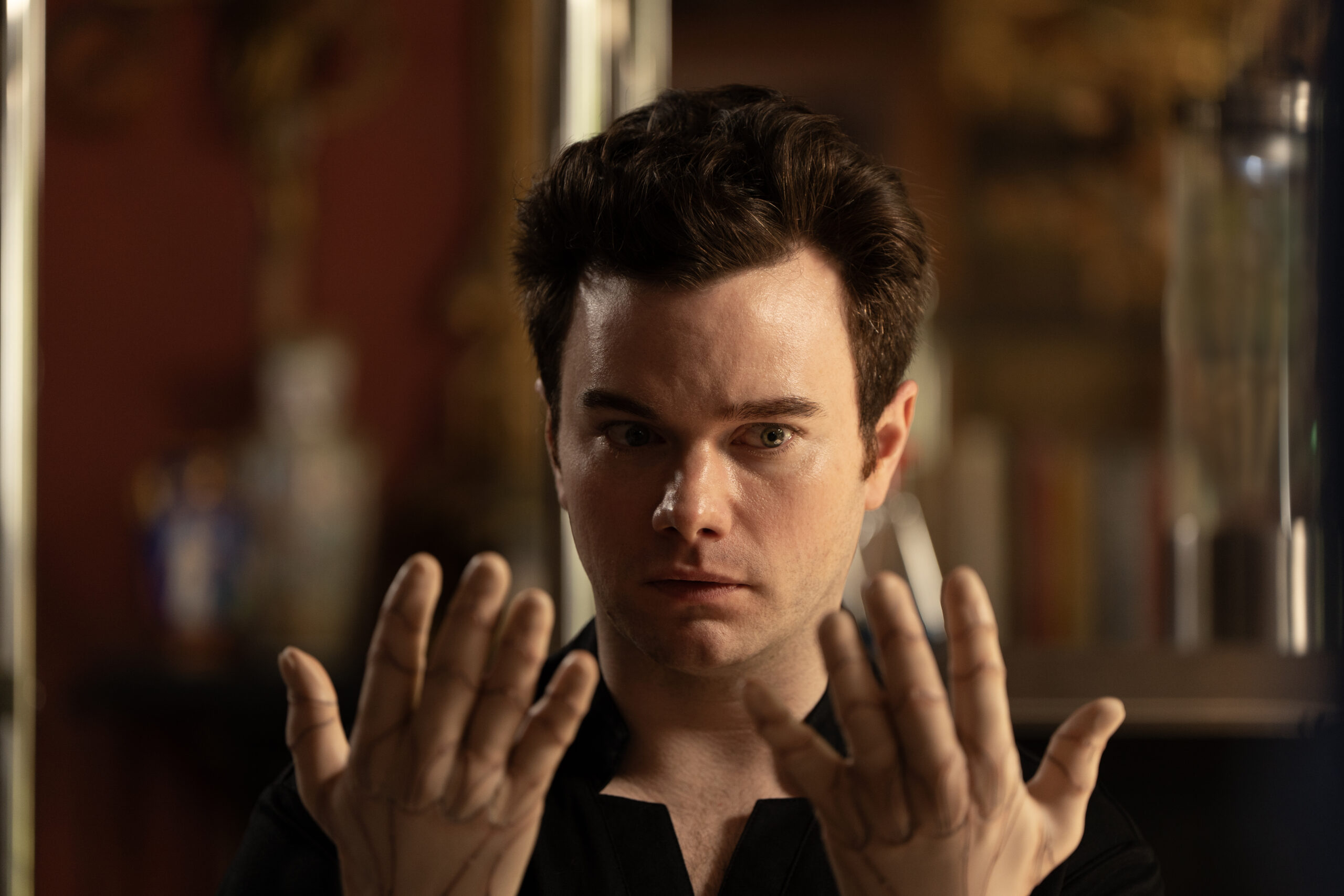
Chris: I think I was so focused on getting the accent right that it wasn’t until I was first strapped into that hospital bed that I realized I wouldn’t have hands to act with. I felt like such an idiot. (Laughs) I had to get every emotion across with my face and my face alone.
The prosthetics were the biggest divas on set. Sometimes they would work beautifully and sometimes they had attitudes. I named them Ricky and Lucy for “right” and “left.” It took between three and four hours a day getting in and out of them — depending on what the angle of the shots were.
Sometimes my real hands were under blankets or under a table and sometimes I had to be sewn into my wardrobe. Our VFX, prop, costume, and makeup departments were absolutely phenomenal. It took a village.
Bryce: Back to the horny bears… I think our readers will be happy with how much skin and fur is in this movie and how many intimate moments there are too. It’s so refreshing to see bears in the spotlight as romantically and sexually desirable in queer media!
For Glenn, as a gay bear yourself, why did you personally feel it was important to cast bears as Boyd’s romantic leads?
Glenn: Well, just to be clear, I’m not actually a bear, but my husband is! And I resent being called a chaser, thank you very much!
For some reason, my attraction has always been to chunkier guys. As far back as I can remember, I’ve always gravitated towards larger men. I mean, I thought Santa Claus was hot!
And truthfully, it was really important to me to showcase a different type of aesthetic within a queer horror movie. It was about showing that there are all sorts of beautiful male bodies out there, and whether you’re thin, chonky, smooth or hairy, you’re so beautiful. It’s a miracle we exist let alone are so HOT!
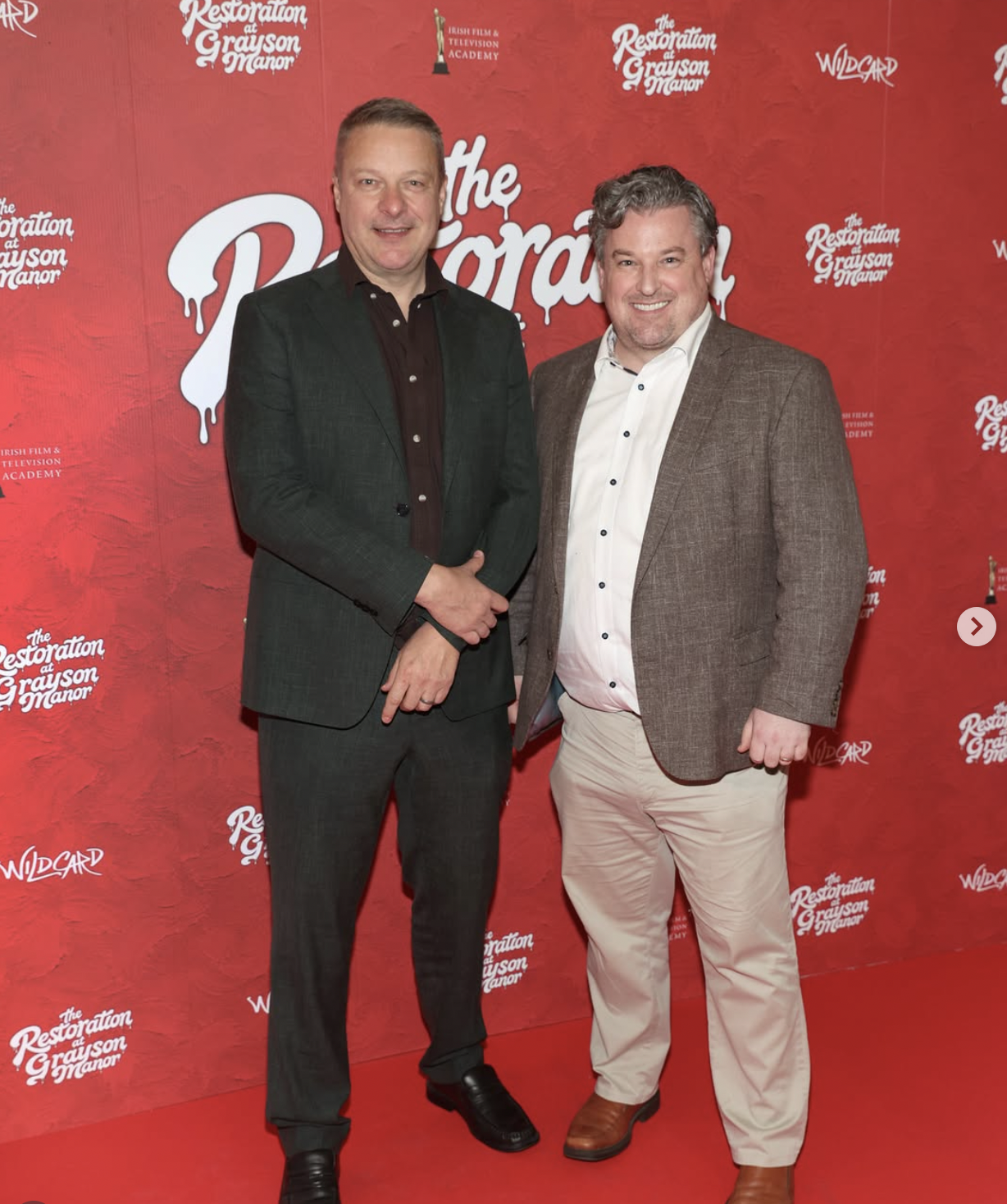
It’s been lovely getting reactions from stockier men. I’ve had some really touching conversations after screenings with guys telling me it was the first time they’d seen themselves represented in these kinds of movies, in these kinds of romantic and sexual situations. That means a lot to me.
I met my super cute, bearish husband when we were playing rugby for the Gotham Knights Rugby Football Club. He was a prop, I was a lock, and the rest is history!
Bryce: For Chris, what was it like for you personally to work with such handsome bears as your romantic leads in the film?
Chris: Oh I loved working with those guys! And I also love how this movie showcases different body types. I think that’s especially important in the queer space right now.
I bet Matthew and Declan are going to get a lot of spicy DMs.
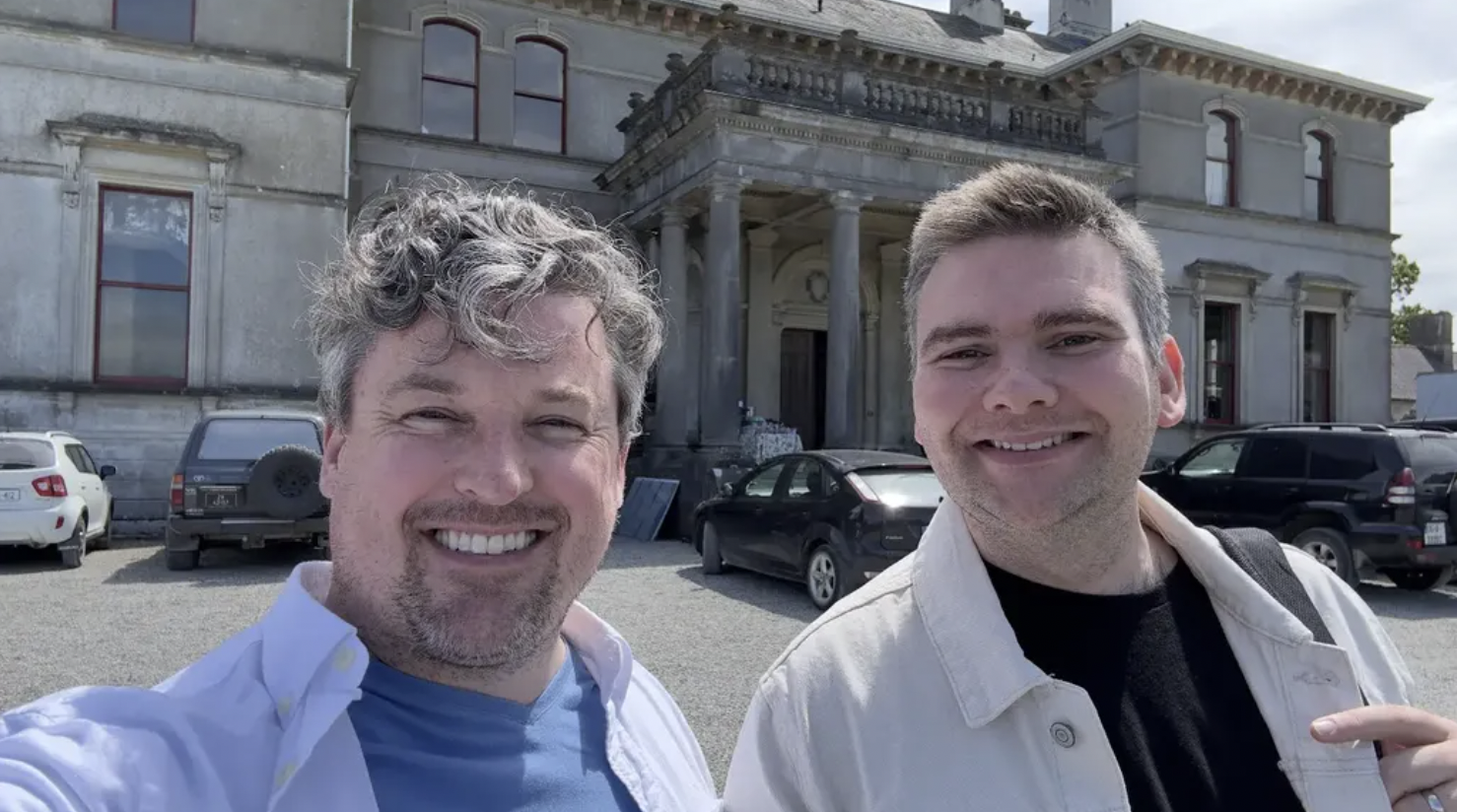
Declan Reynolds & Matthew McMahon
Bryce: For Glenn, what are some things you hope stay with the viewers after they watch the film?
Glenn: That killer hands are something we need to start taking seriously. That heterosexuals are weird. That not all our trauma needs to be treated with toad venom. And that every single actor I had the pleasure of working with on this movie is at the top of their game!
Bryce: Thank you both so much for speaking with me today! Is there anything else you’d like to leave our readers with?
Glenn: Sounds cheesy, but life moves pretty fast. If you don’t stop and look around once in a while, you could miss it.
Take care of yourselves and be very, very tender.
Chris: I would say getting queer horror sci-fi comedies like this made are absolute miracles and very challenging to promote. So I hope people “lend us a hand” and help us spread the word.
The Restoration of Grayson Manor is available to rent or purchase digitally now on Amazon Prime Video, Apple TV, and Fandango. You definitely won’t regret watching it!