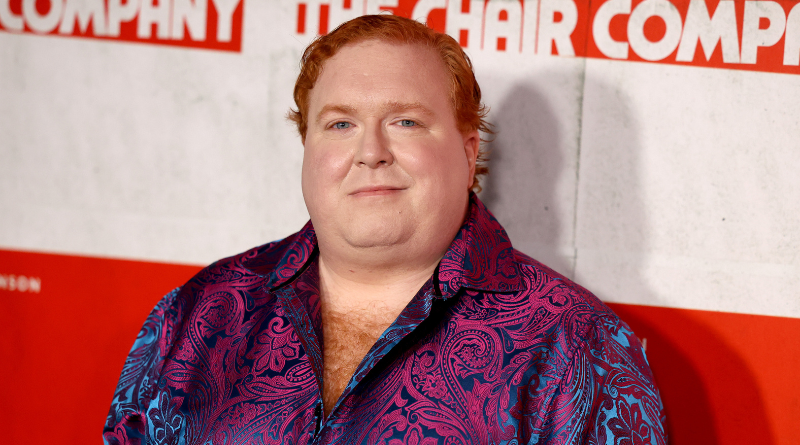
From Indie Hustle to HBO Scale: An Interview with Joshua R. Pangborn on ‘The Chair Company’
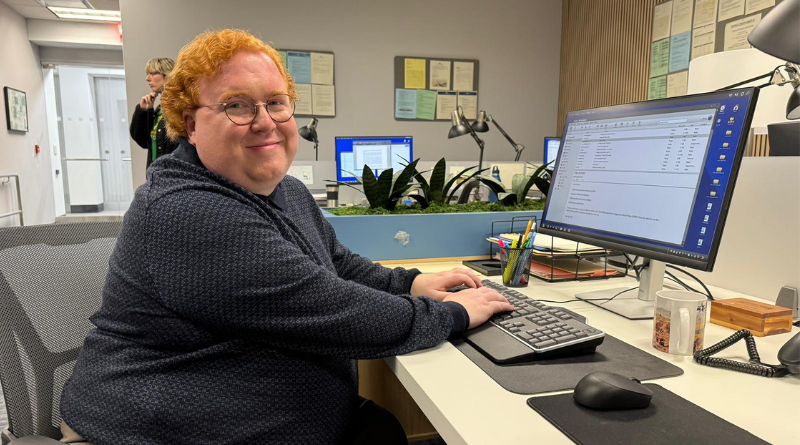
Actor and producer Joshua R. Pangborn (JRP) is no stranger to the hustle of independent filmmaking, where he runs his own successful company, SideKick Productions, with an ethos of championing actors of size and queer voices. But with a recurring role on the new HBO Max show, The Chair Company, Joshua has made a significant leap into the world of major network productions.
In this exclusive chat, writer Richard Jones (RJ) sits down with JRP to discuss the massive shift from indie sets to the big-budget scale of HBO, the joys and challenges of a recurring role, the importance of a fat-positive wardrobe department, and what the future holds for his own exciting slate of projects.
Pangborn gives us a peek behind the curtain of The Chair Company‘s set—from the “game of spotting” what made the final cut to the surprising downtime he experienced on a major set. He also shares a heartwarming story about the supportive crew who helped him feel comfortable and seen as an actor of size.
Will we see more of JRP in upcoming episodes of The Chair Company? What were the biggest lessons he learned from his time on set? Read on to find out!

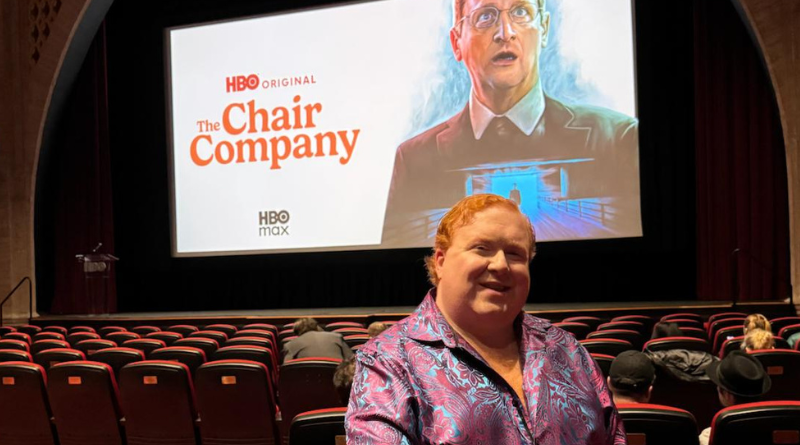
Richard Jones: Joshua it’s great to sit down with you and chat about The Chair Company, the new HBO Max, show that started couple of weeks ago. You pop up a couple of times in episode one and it’s great to see you. Will we see you in more episodes?
Joshua R Pangborn: Oh, that’s a really great question. My answer: I sure hope so! I know I filmed several episodes for the season, but at the end of the day, the editor will decide what stays in. The exciting thing is I’ll find out when everyone else does! It’s always a surprise when you see the final cut of something and it’s almost like a game of spotting what stayed in and what didn’t. I know there was a scene we filmed for the pilot that ended up not being used, but I didn’t know that until I saw it at the premiere. I completely understand why it wasn’t used (almost always it comes down to pacing and/or run-time). But hopefully the stars will align and you’ll see me a bunch for the rest of the season.
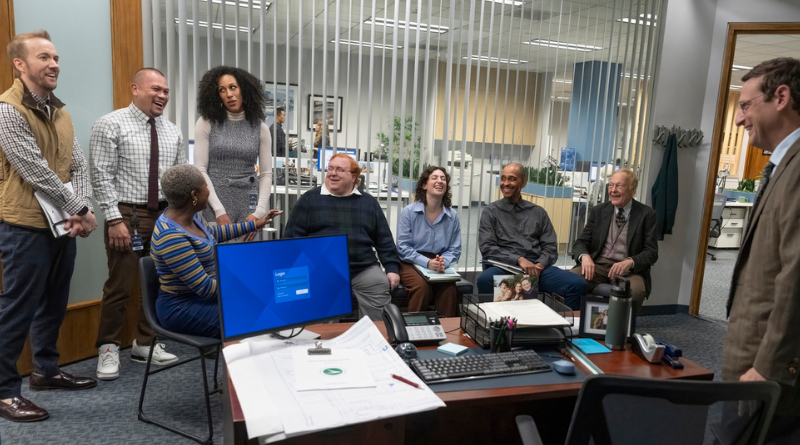
RJ: Our audience has seen you in several things now, your own produced shows and indie movies, and you were in an episode of Poker Face, was this a different experience, a bigger role?
JRP: So different! You’d think after over a decade working on independent sets, I’d know how set-life works. Then you do something like Poker Face, and it’s a lot (in the best ways) — you have four or five people just putting microphones on actors, three people running the camera. Hair, makeup, and wardrobe all coming in before cameras roll to do last looks. With independent film — you have people doing audio at the same time they are applying makeup, the director is also running the camera, an actor is also helping with food. There’s no end to the hats you wear in independent film. And that can be a blessing and also a curse, and you see on a higher-budget set how more crew can change the whole experience. But even seeing how Poker Face operated did not prepare me for the sheer scale of a production like The Chair Company and having a recurring role on it.
At the first table read, I sat with people I grew up watching in the movies, people who were having their first major credit (like me), producers and casting directors. And then once we got into production, there were multiple visits to the wardrobe department where I’d try on dozens of costumes each time (most of the time with independent film, costumes consist of what you have in your closet). The crew seemed endless as people kept popping up here and there to do a variety of tasks. And when you’re just the talent, there is a great deal of waiting. That’s probably where the biggest difference was for me: I’m so used to being on a set and having zero downtime (even during meals). With this show, I just went where they told me to go, went back to my dressing room when they didn’t need me, and then came back to set when they did. Even though my role is not very large, every day on set was a long day — and I used this as a chance to soak up what was happening around me. And I learned so much! I saw more intimately how different departments work together to support each other and fulfill specific tasks. I watched how our 2nd AD created the atmosphere of the world around the core office team, choreographing the background performers to offer a sense of realism as you’re watching the scenes unfold. And these are all skills I’m excited to bring with me to independent sets (and will help me be even more prepared for these larger projects when I am fortunate enough to be there).

RJ: part of Your ethos with SideKick productions is to showcase bigger bodies on screen and champion actors of size, was that a factor in taking this role.
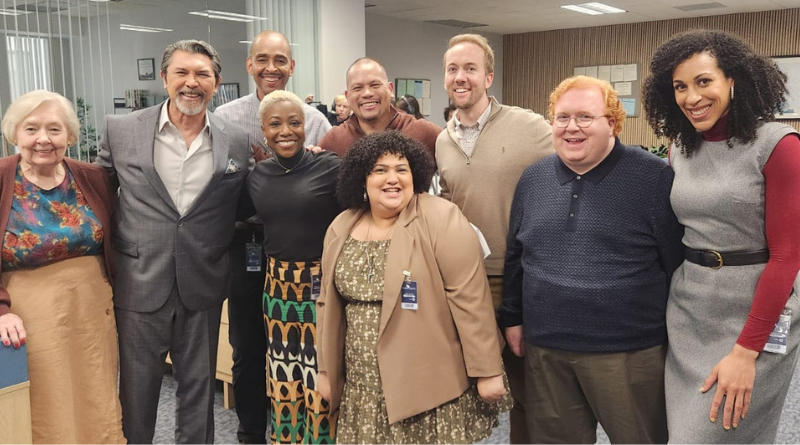
JRP: Anytime a mainstream, big-budget project chooses to cast a bigger-bodied person in a role that doesn’t specifically require it, I consider this a win. Among our core office, you’ll see two of us who would be classified as performers of size, and I think that’s incredible. It’s important to me that bigger-bodied characters are played by bigger-bodied performers (meaning, please don’t use fat suits!), but just as important is casting bigger-bodied performers in roles that can be played by someone of any size. And the casting on this show is incredible — there is so much diversity represented on screen at all levels, and given my personal mission of amplifying queer voices, it’s particularly impressive to see this happening here.
RJ: As an actor of size what was the experience like on a major show like this.
JRP: I’m used to fat-positive sets (mostly because I run my sets that way!), but I’ve heard horror stories over the years about how performers of size can run into conflicts with the wardrobe department, and I was genuinely worried about this. Fat-positivity isn’t mainstream, and I’ve had my own share of experiences where costumers would try to squeeze me in things that were too small, and how uncomfortable I’d be for the rest of the production. But from the first moment I stepped into the wardrobe department, the entire team made me feel at ease. As I tried on clothes and they discussed what alterations they would need to make, my first instinct was to apologize for the extra work they’d have to do because of my body. It was a reflex, but one born out of past experiences. These wonderful people shut me down immediately — they insisted it was their job to make me comfortable in the clothing they provided me, and they did not need to hear me apologize for my body because there was nothing to apologize for. I don’t think they realized how comfortable they made me when they said this, how everything changed for me in a way at that point. I felt safer in making requests for things I needed when normally I’d just accept what was happening to me and not say anything. For instance, I asked if we could switch from belts to suspenders for comfort reasons — I don’t typically wear dress pants at my natural waist, and especially not with a belt (and if you know what i’m talking about, you know how painful a long day like that can be). They not only said yes, they went the extra step of sewing elastic into the pants themselves so I could be more comfortable. I’m not sure if people realize how much a body-positive/fat-positive wardrobe department can change an actor’s experience on set, but I count myself lucky I got to work with some pretty incredible people. And the rest of my experience on set was so positive too. HBO is really dedicated to making all their employees feel safe, supported, and seen.
RJ: I know the show has only just come out but can you share any behind the scenes info, gossip or just some clues as to what its all like working on this type of show?
JRP: There are so many moving parts on a show like this, and it helps to find your people and work together to make sure no one gets left behind or misses out on something. Right as we were finishing the pilot, the core office team put together a group chat to stay in touch — we didn’t know if the show was going to be picked up, or if we’d even be asked back for more scenes. So from July 2024 to March 2025, we stayed in contact, talked about other things we had going on in our lives, shared rumors about theories about what might happen — and then when we were picked up and we were all brought back, it was like coming back to college and seeing your friends again. We help each other out when an e-mail comes out, or share news, photos, laughs. Two people even bought my book when it came out! It might feel easy to get lost in a big production like this, but if you find your crew, you’re set!
However, it’s also important you listen and pay attention to your surroundings. While there is the whole “hurry up and wait” philosophy at play, once things are in motion, they don’t slow down. There isn’t a lot of room to repeat instructions, so it’s vital you stay alert and attentive when on set, and when off, you need to be ready for them to call you.
The producers were so kind too — always looking for ways to thank us for the long hours. The last day of filming the pilot, we had an ice cream truck waiting for us when we wrapped! And when I say this was one of the nicest, most pleasant, kindest sets I’ve ever been on, I am not being hyperbolic. Every crew and cast member was so supportive of one another. There were no egos or attitudes, just a group of talented people who were coming together to make a really fun show come to life.
RJ: What’s coming next for you across performing and producing?
JRP: Outside of The Chair Company, I have a lot of things going on. We just released our first piece of physical media, The Brooklyn Butcher, on BluRay. We have our first spinoff of Skeleton Crew coming out, Skeleton Crew: The Edward Chronicles, and the second season of our mockumentary, The Art of Blowing It is also coming out later this year. We’re working on releasing our first feature film, A Taste of Youth, and will hopefully have information about that soon! Also, the hardcover and audio book versions of Homo Phobias, my horror short story collection, are coming out before the end of the year as well. We are also about to start production on the sixth season of Skeleton Crew, which is something I know folk have been waiting for. We’re also starting up the next season of SideKick Power Hour in a few weeks. And I’m always releasing tidbits and extra content on the Patreon (which you can join for as little as $3 a month at thecrewniverse.com).
The biggest thing on my plate though is post-production on my next feature film, The Contract — and when I tell you this is the kinkiest, queerest film I have ever made, I mean it. This is a different movie for us in so many ways; we’ve brought on an incredible DP who has made several queer horror features (Meat and Hollow Lake), and thanks to him I can confirm The Contract is visually unlike anything we have made before. I’m hoping to have that out and ready for festivals by early 2026 (and if folk are interested in supporting this project, head on over to thecontractfilm.com and you’ll be able to watch the trailer and see ways you can donate to get us through post-production).





