
Why Your Cheat Meal Is Doing More Harm Than Good (And What to Call It Instead)
Robert of Munky Fitness on why sustainable health has nothing to do with perfection, and everything to do with understanding yourself.
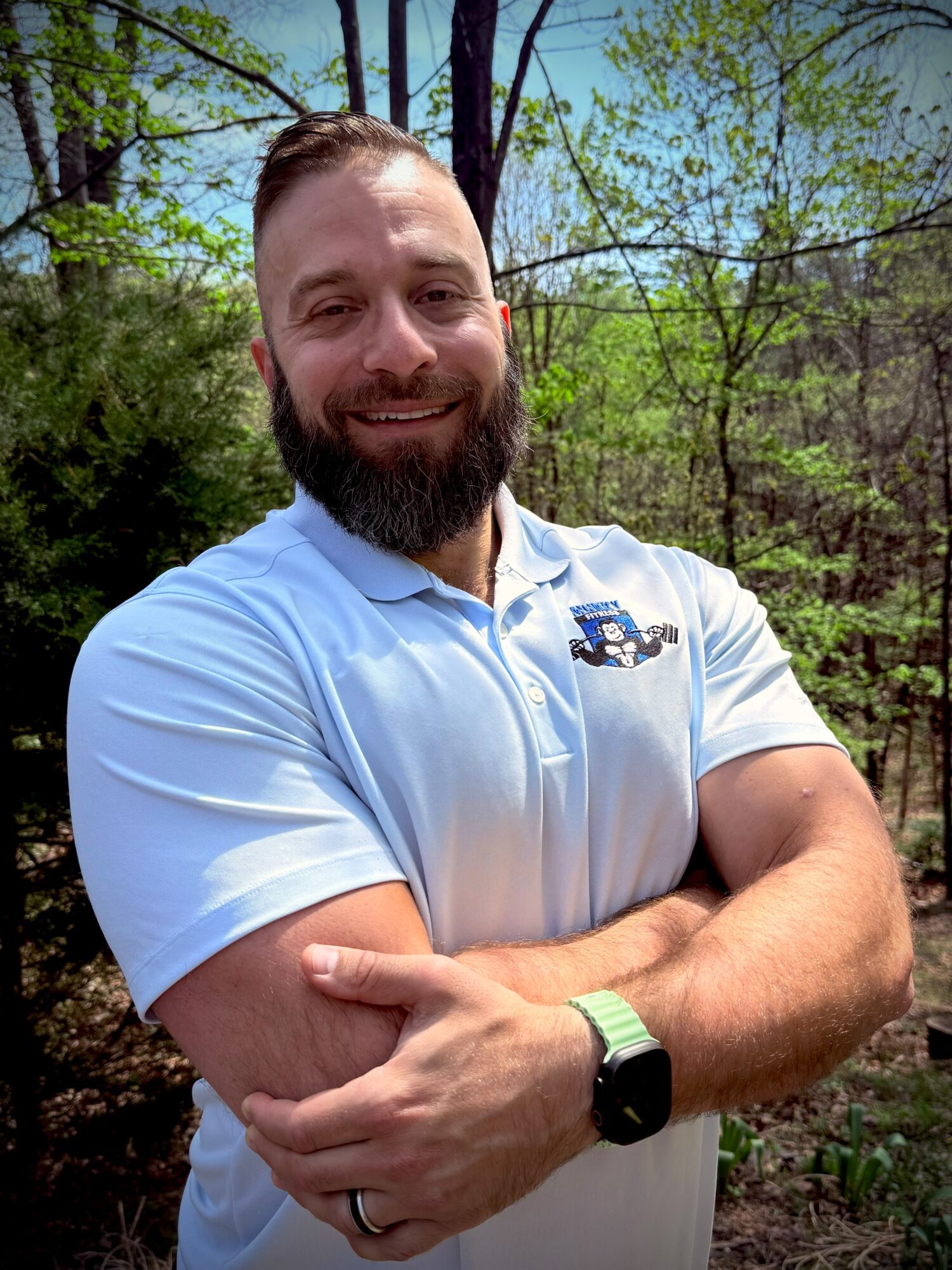
Robert is not your typical nutrition coach. Before founding Munky Fitness, he spent years working in homeless services, supporting people through some of the most difficult chapters of their lives. That experience, he says, shaped everything. It taught him the skill he considers most essential to his practice: meeting people exactly where they are. Now, with an NASM nutrition coaching credential, a published research background, and over a decade building data-driven systems to improve human outcomes, he has channelled all of it into a coaching programme built on one core belief. The right structure, applied consistently, changes everything.
Bear World sat down with Robert to talk about body shame, the problem with perfection, and why the best health plan is simply the one you can actually stick to.
You come to nutrition coaching from quite an unusual background. Can you tell us a bit about the journey?



Before Munky Fitness, I spent years in homeless services. What that work taught me, more than anything, was how to truly meet people where they are. Not where you think they should be, not where a textbook says they need to be, but where they actually are in that moment.
When I moved into nutrition coaching, I realised pretty quickly that the skill set was the same. People weren’t failing at their health goals because they lacked information. They were failing because nobody had ever taken the time to understand what they do and why they do it. That’s the work I know how to do.

What I kept seeing was stressed-out professionals who genuinely wanted to change but didn’t know how because they were travelling, they couldn’t meal prep in a way that fit their life, they didn’t understand why timing and portions matter. And honestly, nobody had ever helped them get to the root of why they were eating what they were eating in the first place.
“Perfection is the enemy of progress. The best plan isn’t the most optimised one. It’s the one you can actually keep doing when life gets hard.”
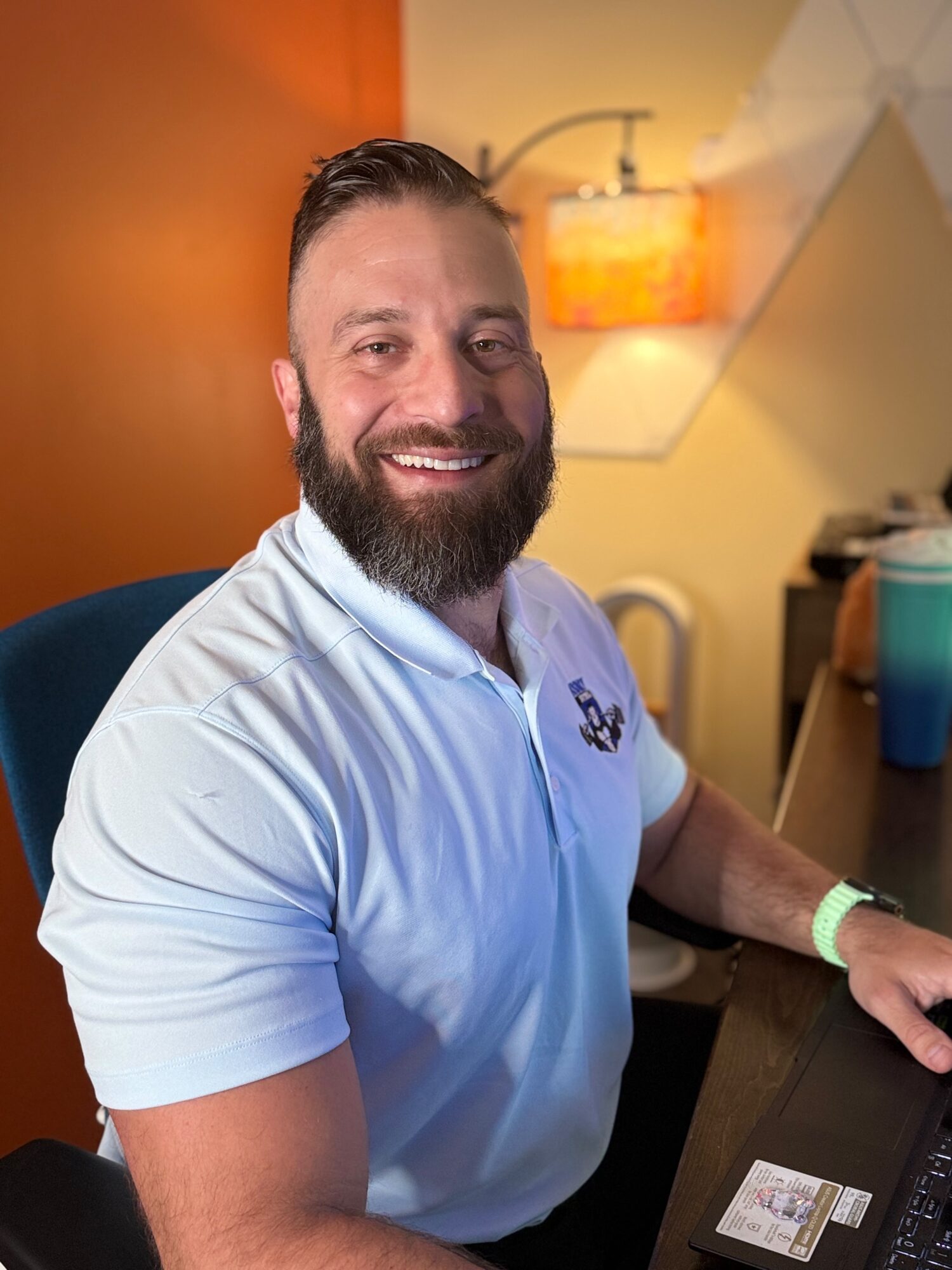
Many Bear World readers are happily bigger guys with no desire to lose weight. What’s the number one thing they can be doing just to stay healthy?

I think most people are waiting for the perfect answer, the perfect diet, the perfect workout. What I’ve learned working with busy people is that perfection is the enemy of progress. The most important thing you can do is build habits that survive your real life, not your ideal life.
If I had to pick three things that move the needle for almost everyone, regardless of goal, they would be these. First, protein. Most people are significantly under-eating it. It stabilises your blood sugar, keeps you fuller for longer, supports your metabolism, helps your energy and mood. If you do nothing else, make sure you’re getting enough protein every day.
Second, sleep. I don’t hear this talked about enough. Sleep is, in my opinion, one of the single most powerful levers that affects everything else in your body. Your hunger hormones, your stress response, your ability to make good decisions: all of it is downstream of your sleep. You cannot out-discipline poor sleep.
Third, understanding why you eat what you eat. Not just what to eat. If you don’t understand your triggers, your patterns, and your emotional relationship with food, then any plan you follow is just a temporary fix. The moment life gets hard, the old habits come back.
If I had to wrap it all into one thing: show up consistently, not perfectly, not heroically, just consistently. The person who does small things every day will always outperform the person who does something perfect once a week.
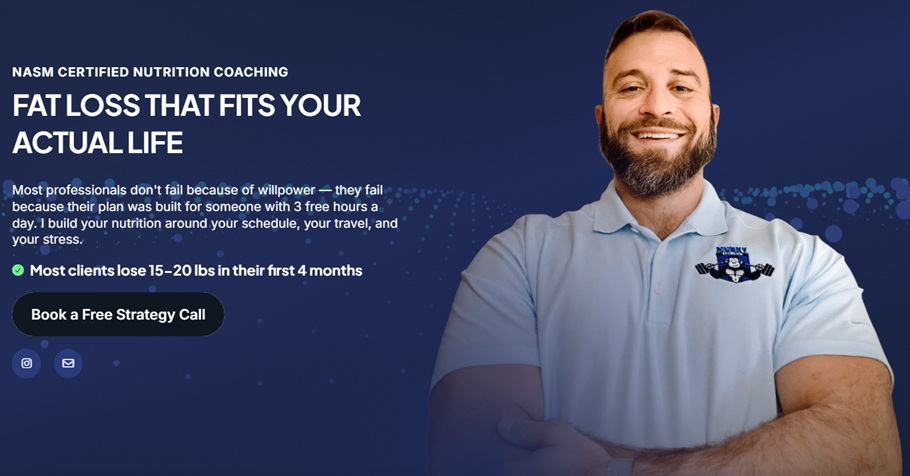
You’re firmly against the term ‘cheat meal’. Why?
That word builds a sense of shame, and you shouldn’t feel shame about eating what you want to eat. I prefer the word refeed. You’re refeeding your body. It’s a small shift in language but it makes a real difference.
For bigger people especially, there is a lot of shame wrapped up in food. If you’ve grown up in a larger body, you’ll likely have been picked on at school, or even by your own family, for what you eat and how you eat. That gets lodged somewhere in your psyche for a long time. Changing the language is a powerful first step.
Where does your passion for helping others come from?
I grew up in a difficult household. That’s where it came from. Those are things I’m still healing from as an adult, and because of that I can empathise with people. I’m here as a neutral party, to listen, to understand what people’s goals are.
What I’m really doing is empowering people with tools and education to thrive on their own. I don’t want them to lean on me forever. I want them to leave my programme with skills they keep for life. That’s why I even have an alumni programme: I send educational newsletters and check in with clients a month and three months after they’ve left, just to see how they’re doing with the skills they built.
What does the programme actually look like for someone who signs up?
You get a personalised nutrition plan built around your life, not a generic template. It’s shaped around your schedule, your job, your travel patterns, your stress levels, how you eat and why you eat what you eat. The plan survives your actual life, not some ideal version of it.
Each week there’s a personalised check-in form, about fifteen minutes, covering your weight, protein, sleep, water, steps, energy, stress, wins and challenges. I personally review it and send back a tailored response. Not an automated message. Actual coaching.
There’s also macro tracking, an education hub with articles and resources, a travel guide for people who are frequently on the road, and midweek support. I check in on Fridays and Sundays. I’m not holding your hand every second, but think of it as a concierge service for your health.
The whole thing is built around your archetype, whether you’re a shift worker, a caregiver, a travelling professional, a stressed entrepreneur. And there’s one element I’ve gamified slightly that delivers some physical rewards at certain points, but I won’t say more than that. I want people to experience it unexpectedly.
This is not about getting you to bodybuilder status. It’s about getting you to the goals you actually want. And if weight loss is part of that, it’s about sustaining that loss after you leave me. That’s what separates this from most programmes.
“Success doesn’t equal abs. My programme isn’t about getting you as muscular as possible. It’s about getting you to the goals that you actually want.”
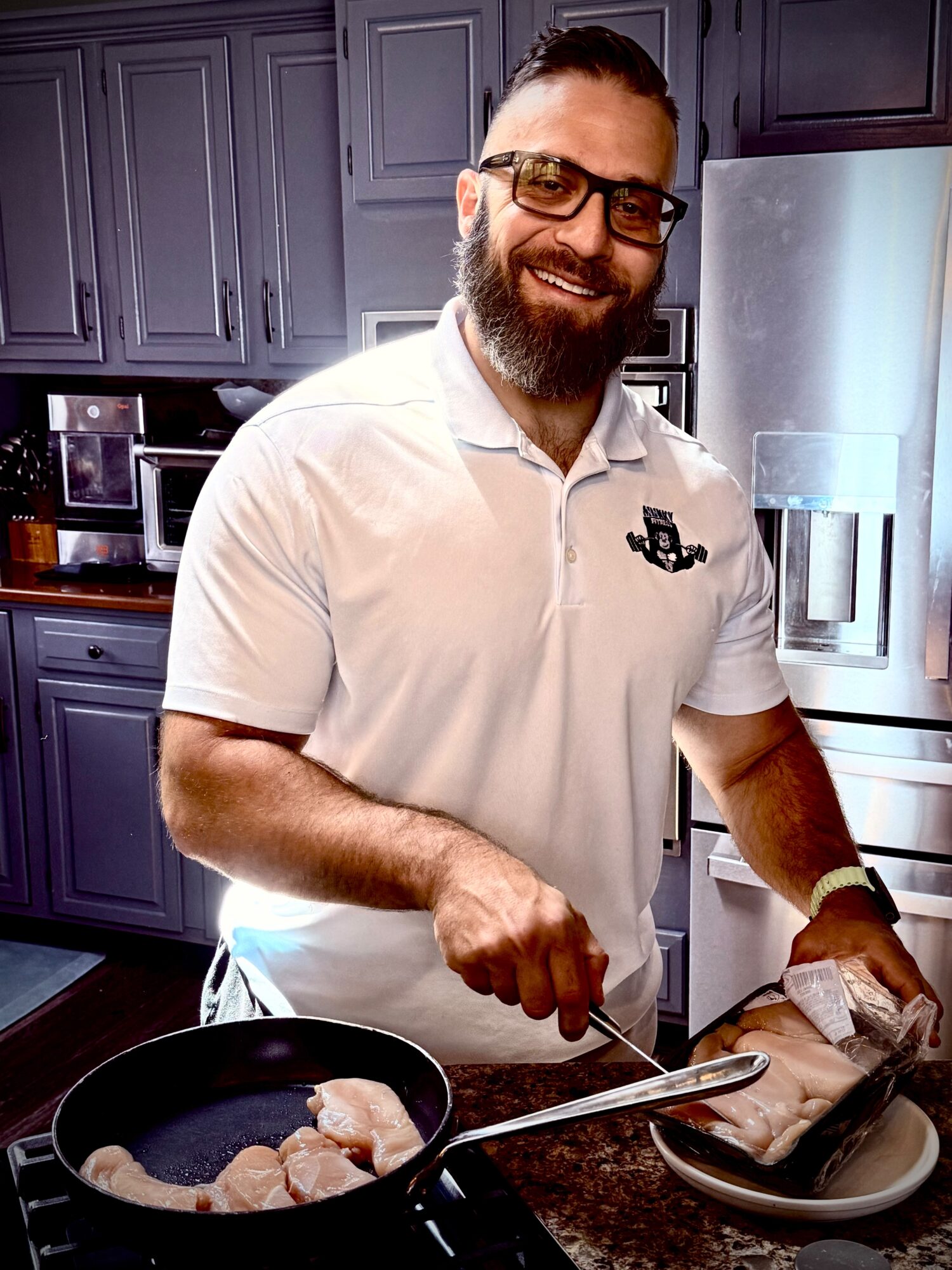
There’s a lot in this industry about achieving the ‘ideal’ body. Where do you stand on that?
I think we have this idea that success equals abs. It doesn’t. I’ve had abs. I’ve been there, done that. But I’m okay with my body fluctuating. We age. Things change. That’s completely normal.
A lot of what you see on the front cover of fitness magazines is simply not sustainable. And what a lot of coaches aren’t being honest about is the supplementation involved in achieving some of those results. If you’re going to give people advice, you’ve got to live what you’re speaking.
The truth is that your genetics are your genetics. You might achieve certain things temporarily, but often that’s all it is: temporary. And chasing something unachievable is not the same as being healthy.
Any advice for people who can’t get to a gym, or who travel frequently?
Walking is massively underrated. Every thousand steps burns roughly forty to fifty calories. That adds up to two or three hundred calories a day without a single formal workout. Get your steps in.
Exercise bands are a great investment if you travel. You can do a full workout in a hotel room. Beyond that, body weight is enough: push-ups, squats, lunges, planks, glute bridges. A twenty-minute body weight circuit is a genuinely tough workout.
And don’t underestimate what’s called NEAT, which stands for non-exercise activity thermogenesis. It’s all the movement you do that isn’t a formal workout: taking the stairs, standing at your desk, pacing on calls. That stuff accumulates. It genuinely moves the needle.
Find Robert at munkyfitness.com and on Instagram and Threads at @munkyfitness. Free thirty-minute consultations are available via Calendly at calendly.com/munkyfitness.


