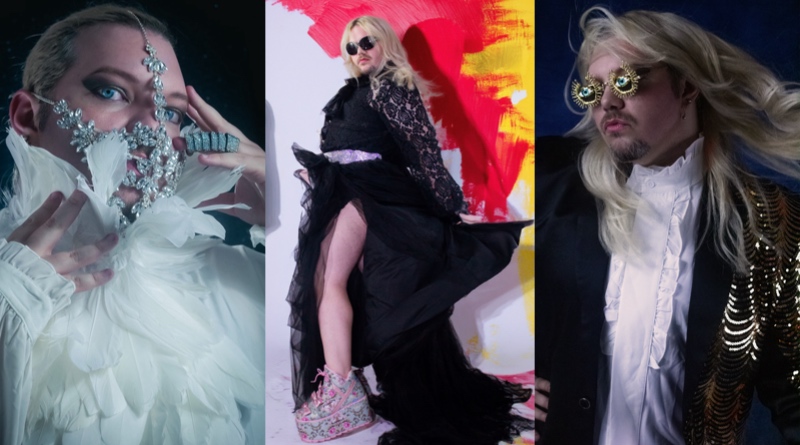
Meet JHVH, the Nonbinary Bear Trade Pop Star of the Year!
Meet JHVH, the Brooklyn-based nonbinary musician breaking the mold of what it means to be a queer pop star one song at a time. We chat with him about his new song commemorating 10 years of gay marriage, his POV on expressing femininity as a gay man, and so much more!
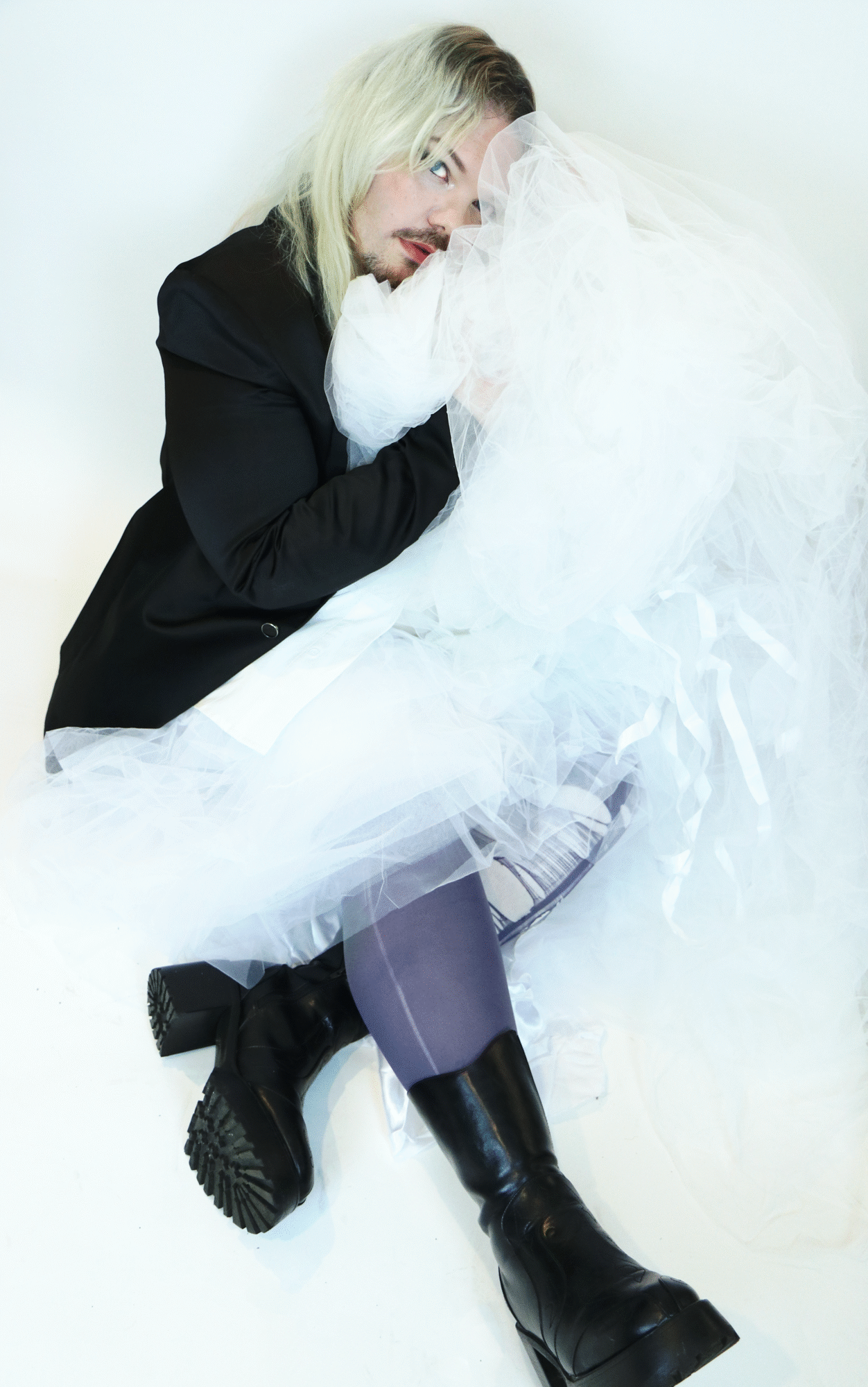
JHVH (“Jehovah”) is a triple-threat pop singer, songwriter, and producer based in New York City. With a name of Biblical proportion and a voice trained by renowned vocal coach Debbie Beinhorn (Clint Black, Kimberly Caldwell, etc), JHVH transmutes universal feelings—rejection, longing, unrequited love—into theatrical pop productions. His lyrics range from tongue-in-cheek to darkly intense, fusing pop spectacle with emotional intensity. His vocal-driven productions pair orchestral grandeur with a fierce intimacy, guided by a clear artistic vision, strong sense of identity, and hands-on creative approach.
JHVH’s breakout moment came in 2024 with “Can’t Make It to the Met Gala,” a vibrant vogue anthem dripping with irony, cheekiness, and top-tier delusional fantasy. His 2022 single “Watchtowers,” inspired by the artist’s love of witchcraft and cult cinema, debuted on Out Loud Radio, CIOE 97.5 FM. In 2020, he released his first major music video with the politically charged “Trumpets” which continues to resonate today with its overtly anti-Trump messaging. Pop superfans continue to discover his 2018 debut single “Defriended.”

His Coachella-inspired Tik Tok skit—reposted by Lady Gaga herself—catapulted him to viral attention, earning over 600,000 views. JHVH continues to push boundaries with viral-worthy videos that showcase the personality behind the music. Across platforms, JHVH has cultivated a growing audience of over 8,000 fans through bold visuals, emotionally raw productions, and unapologetic diva behavior. He also curates the “SUPPORT QUEER ARTISTS” Spotify playlist to highlight underground LGBTQ+ artists and build community in the queer music scene. With a decade of vocal training and music production experience under his belt, JHVH is poised to become a defining voice in the next wave of alternative pop.
His new song “We Can Get Married” just released on July 4th in celebration of the ten year anniversary of the Obergefell vs. Hodges Supreme Court case verdict that legalized gay marriage nationwide across the United States. The track opens with an acoustic guitar melody with JHVH’s soft vocal approach following shortly after. He brings us into this vivid love story through the lyrics, and carries us gracefully into the hook with a buildup of emotions vocally. It feels empowering as you listen through the song, and the bridge really ties the whole track together through even more powerfully gay lyrics and impressive vocals. Through and through, this touching song came from the heart, and you can feel it with just one listen!
I had the privilege of chatting with him about the new track, femininity, and much more, check it out below!
Bryce Quartz: Hey there, JHVH! Thanks for taking the time to speak with me today. How are you feeling today?
JHVH: I’m doing great, thanks! Feeling creatively electric. I’ve been working on a million projects and filming silly Tiktoks in my spare time. The art won’t let me rest.
Bryce Quartz: I want to dive right into your history as an artist. When did you start making music and what has your journey as a musician been like thus far?
JHVH: My first single “Defriended” came out in 2018, but I have old Soundcloud demos from as far back as 2012 I think. I’ve been writing little sonic spells since a heartbreak in college cracked something open in me. Music almost became like a weapon, a way to channel all those emotions. Since then, it’s been about building my own mythology through sound: each song is like a snapshot of who I was, paired with the dream of who I want to be, and also who I had to kill off along the way.
Bryce Quartz: Who are some of your favorite musicians that have inspired you personally in your life as well as musicians that have inspired you within your own music?
JHVH: There are currently two artists with Madonna’s “Ray of Light” on the mood board, and that’s me and Addison Rae. (laugh) That would have to be my biggest sonic inspiration, which I think is really apparent on my song “Under the Same Sky” which has a similar experimental pop atmosphere. Beyond that, “Jagged Little Pill” by Alanis Morissette and “Vespertine” by Björk are also my guiding stars. Those three being my top albums should indicate that I love experimental pop, but I also love emotive vocal delivery. These pillars taught me how to be fragile and also untouchable.
I’m also really into 2000s J-pop like Ayumi Hamasaki and Utada Hikaru—basically I was a huge weeb and even lived in Japan for a couple years. I think originally my dream was to make “American J-pop” and my artistry has sort of shifted as I’ve explored other things, and newer genres like hyperpop emerged. I love Charli XCX and have always been an Angel. Love SOPHIE forever. Loving Addison Rae right now too.

Bryce Quartz: As a songwriter myself, I am always curious about the songwriting process that others go through when creating something new. What does that process look like for you?
JHVH: So, we could start a debate about this, but I believe that you can tell what songs started with the music first, and what songs started with the lyrics first. Neither approach is better than the other, but the results are different. Songs that start with the lyrics first tend to be more hard-hitting emotionally because the focus is on telling that story. The music is then made to support the lyric and melody and craft those “moments.” Songs that begin with the music first and then have lyrics written over top tend to be more beat-driven, it’s more about the sonic vibe.
As a songwriter I definitely focus on lyrics first. I’ve always been a writer and a bit of a poet so it’s more natural for me to start there. I really have to have something I want to say, which I usually write together with a melody, before I even start producing any music. Sometimes inspiration comes to me out of thin air, like a snippet of a phrase or a hooky melody that then becomes a whole song. I do produce the majority of my own music, but it always starts with the topline lyric and melody. For me it’s about building that emotional architecture.
Bryce Quartz: You showcase different aesthetics and sound styles within your music but still remain authentic to yourself within your art. This may be a loaded question, but what can first time listeners expect from a JHVH song?
JHVH: For me, pop music is a ritual. It’s about starting with one feeling, possibly loss or pain or rejection, and transmuting it into something else. So you can definitely expect those types of themes to come up. But whether I’m giving you vogue ballroom absurdity like “Can’t Make it to the Met Gala,” dark pop like “Watchtowers,” or a guitar-driven love song like “We Can Get Married,” the throughline in every JHVH track is intensity: emotionally, lyrically, vocally. I think intensity is the key word to what I do. When there’s joy, there’s ache lurking underneath. Where there’s confidence, there’s also reticence and defiance. Even some of my songs that seem more “happy” on the surface have some kind of tongue-in-cheek way about them where I’m battling conflicting emotions or subverting expectations.
My aim is to really make the emotive performance come through on every record: my vocal, I’m told, isn’t really like anyone people have heard before, so that’s my signature. New listeners can expect to be taken to emotional heights, whether I’m singing about rage or betrayal or simply not being able to make it to a party, with any JHVH track. And the queer experience is always, always the center. My music is for anyone who’s ever been the outsider in the room and chose to shine anyway.
Bryce Quartz: Your song “Can’t Make It To The Met Gala” is one of my all time favorite cunty tracks of all time, not just because your social media promotion for it are clever and iconic, but because sonically speaking, it makes me want to dance! Can you tell us a little bit about this song and what went into creating it?
JHVH: First of all, thank you so much. I worked really hard on the promotion for that one and it was a really fun process. So, that was one of those I mentioned before where the inspiration just came out of thin air. Like a lot of great ideas, it was born on the subway. I was walking home from the L train one day and the lyric “can’t make it to the Met Gala, I have sooo much going on” just sort of popped into my head. I pulled out my phone and started writing down every thought that came to mind, and what emerged was this extravagant character who was simply too busy to make it to the Met Gala. This character is so over it and makes it known that he is the main event.
I think people respond to the duality: on the surface it’s giving attitude and clearly poking fun at celebrity culture. But listen close, and you’ll hear that it’s also masking real feelings about being excluded. Creating that character was like saying, “Fine, don’t invite me to your party. I’ll roll out my own red carpet.” Just the ultimate unbothered energy. And I think everyone can relate to that. So that’s what I mean about my songs always having a bit more going on below the surface, there’s always layers to the writing. That’s the JHVH signature: even when it sparkles, it stings.
I continue to get amazing responses to that song to this day. I was at the Bentley Robles & ZEE MACHINE show last night in Brooklyn and saw a friend there who was raving about “Can’t Make it to the Met Gala” to her friends when she introduced me. So again, I’m so thankful to anyone who discovered me through that song and all I have to say is: stay tuned because we’ve barely scratched the surface of who JHVH is.
Bryce Quartz: Let’s talk a little bit about your recent single titled “We Can Get Married.” It’s got such a beautiful message that’s desperately needed in the political climate we are in right now. Can you give us some more insight on what went into creating this song?
JHVH: “We Can Get Married” is an ode to 10 years of marriage equality in the US. Can you believe it? It’s been 10 years. And with so much going on these days, that milestone was barely a blip on the radar. But it’s important to look back on how far we’ve come, and how far we’ve yet to go.
I wrote this song over 10 years ago, around 2013 when gay marriage was legalized in New York but was still fragile everywhere else. That’s why the hook is “We can get married in New York, New York,” and then kind of spreads out across the US and other locales in the bridge. I imagined a chorus of queer voices echoing across the country; I imagined a huge production and I didn’t know how to pull it off. I didn’t have the resources back then to make a song like this.
So I promised myself I would release it on the 10-year anniversary of the Obergefell decision. And now, here we are, watching that decision hang by a thread. There are young queer people out there who maybe don’t remember a time where our love wasn’t recognized, they don’t remember the war that was waged. And some live in states trying desperately to undo our joy. So let this be a reminder that we can’t take it for granted. And that, yeah, we can get married!
“We Can Get Married” has been 10 years in the making. I’m so thankful to my co-writer jriftr, producer Segami, and the Brooklyn crew who helped make this song a reality. “We Can Get Married” is a love song for anyone who thought they’d never get one. That’s my gift to you.
Bryce Quartz: You recently posted a video on Tik Tok promoting this song and received some backlash from a bunch of homophobic losers in the comment section. How do you typically deal with these types of hate comments mentally and publicly, and what do you have to say to people who disagree with the message of “We Can Get Married”?
JHVH: Sadly, homophobia is alive and well in 2025. It was disheartening to me to receive a tidal wave of hate just for promoting my song. It was sad to see something I was so passionate about getting ripped to shreds, and not being served to the right audience. I was also wearing a gender bent wedding dress look in the promo video, which set people off. It just shows that queer expression continues to be a target for hatred. But I’ve learned not to waste my magic on trolls. I know what I’m building and who I’m building it for.
Growing up gay, I didn’t dare dream of a wedding because I didn’t think it was a possibility for me. I didn’t see people like me in love stories, or walking down aisles. But what once was a secret dream could be reality now. I want true love, I want that special thing. I could meet that person tomorrow; I’m singing that dream into existence. But “We Can Get Married” isn’t just about my dream wedding. It’s a declaration. A vow. It’s about being told, over and over again, that your love isn’t real or worthy or sacred. And still choosing to shout back: yes, it is.
They are trying to roll back so many rights in this country. SCOTUS has said that Obergefell v. Hodges, the landmark case which decided gay marriage, may be revisited in the future. We saw women’s rights get rolled back when they repealed Roe v. Wade. Marriage equality can disappear in a second. So we can’t get complacent now. We have to continue to shout from the rooftops. With corporations pulling their support for Pride, we need to go back to basics: Pride is a protest, and always will be.
Bryce Quartz: You are a beautiful person inside and out, embracing your femininity and queerness authentically on social media and within your music. What do you have to say to readers who may struggle with embracing their femininity within the gay community?
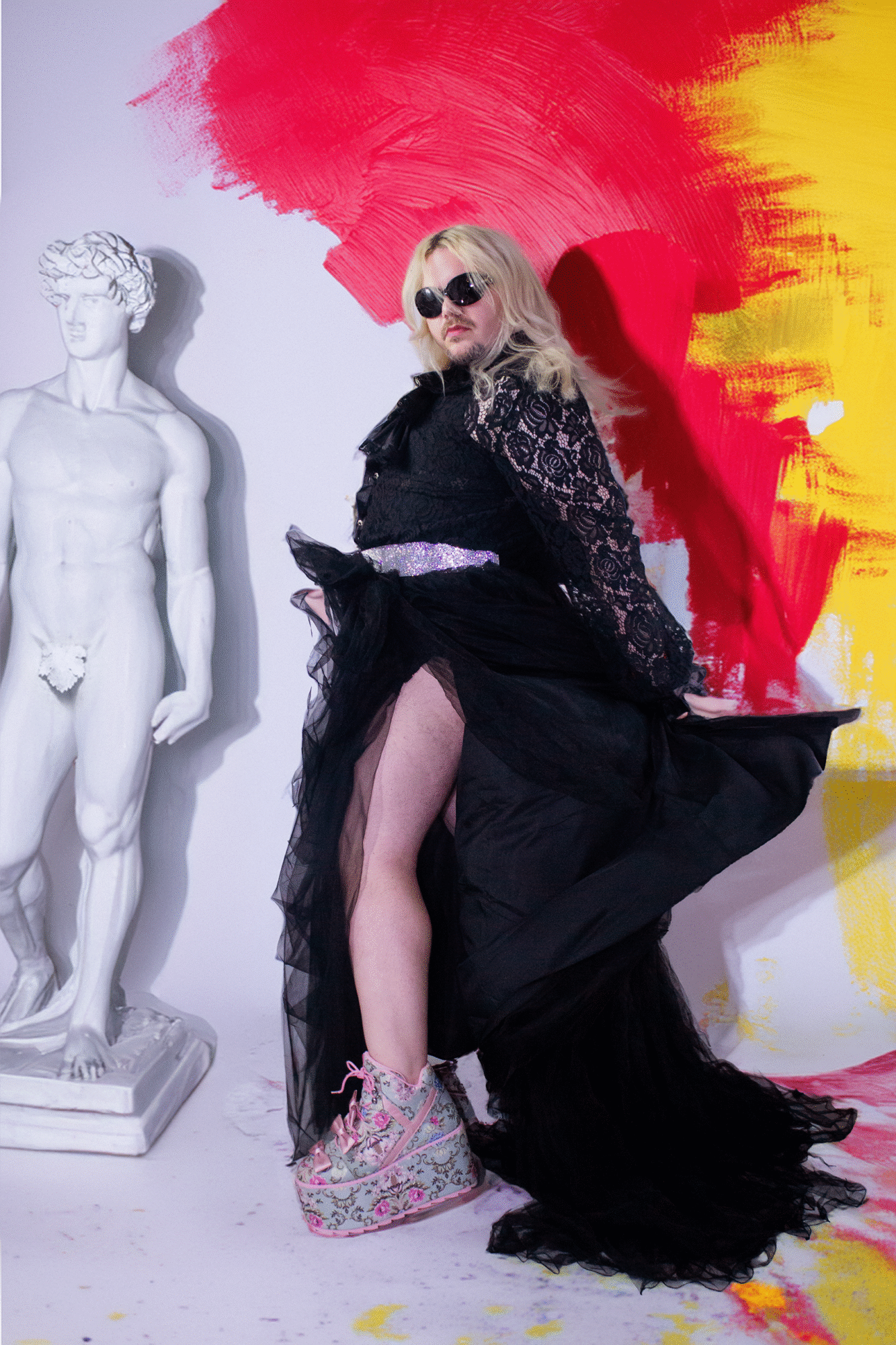
JHVH: First of all, I’m loving the “nonbinary bear trade” meme, so very that. We all know that gay culture heavily rewards one kind of body. The culture trains our eyes before we even get a chance to love ourselves. Every day I hear “no fats, no fems,” knowing that I’m both, and wondering if I should change. Or the notion that you can be one but not the other: it’s more acceptable to be bigger as long as you’re masc, or feminine as long as you’re thin. I occupy both spaces, which seems like a death sentence when trying to navigate things like dating – or even career-wise, trying to find an audience who will really get me.
I’ve always expressed femininity, androgyny – not just as a look I’m serving but as an expression of my spirit. I’ve always been drawn to certain things: Disney Princesses, unicorns, pop divas. Things that boys aren’t supposed to like. Things I was told to hide away. But I never hid, not once.
And there’s a part of me that enjoys toeing that line between masculine and feminine, and being a bit indecipherable. And I’m drawn to certain figures: David Bowie in Labyrinth, Howl’s Moving Castle, or the Vampire Lestat. I try to give that and it doesn’t always come across that way, people will see what they want. I do align with non-binary, but I feel it’s more empowering to use he/him pronouns and still serve androgyny. I refuse to be othered. YES I’m a boy, YES I love pink princesses, YES I’m beautiful, and everyone else will just have to deal with it. So let it be known: boys can wear makeup. Boys can wear pink. Boys can be pretty. And still be boys.
All I can say is it takes a lot of courage to show up as your authentic self in front of the world every single day. Knowing you might get hated, spat on, or told that you need to change. It’s extremely difficult. My hope is that by putting my face and my message out there, people like me can know that they aren’t alone.
Bryce Quartz: We just got deep for a second, so let’s lighten the mood a bit. This is one of my most favorite questions to ask recently, and as a fellow New Yorker, I’m dying to know… What is one of your go-to restaurants in NYC? What about your favorite bar?
JHVH: Weirdly, I’m not really a foodie like that. I’m too broke from being an artist to regularly indulge in New York City’s many culinary offerings. That said, I did recently do a haul at Radio Bakery in Greenpoint and the hype is very real. Rolo’s in Ridgewood has a great atmosphere and their playlist was extremely gay the day I went. And the seasonal burrata at Bottino in Chelsea is to die for.
My favorite bar – I’m more of a club girly, I love 3 Dollar Bill and would love to perform there someday. Other than that, I basically grew up at Metropolitan so that will always have a special place in my heart.
Bryce Quartz: One last thing, and mainly because I want the scoop… What can we expect next from you?
JHVH: “We Can Get Married” instrumentals and a capella are on the way. I’m also working on an acoustic version of “Defriended,” kind of taking it back to where it all started. And I’m working to churn out an EP which will be my first cohesive body of work, so stay tuned!
Bryce Quartz: Thank you for taking the time to speak with me today, JHVH! Any words of wisdom you’d like to leave us with?
JHVH: Wear your weirdness like a crown. It’s the most honest part of you.
Be sure to give JHVH a follow on social media to keep up with what he’s doing next, give his music a listen on all streaming platforms, and consider buying his music on Bandcamp here!
JHVH’s Links
Instagram Tik Tok Twitter YouTube Spotify



Great article!