An Interview with Becky Moss, Honorary Mama Bear
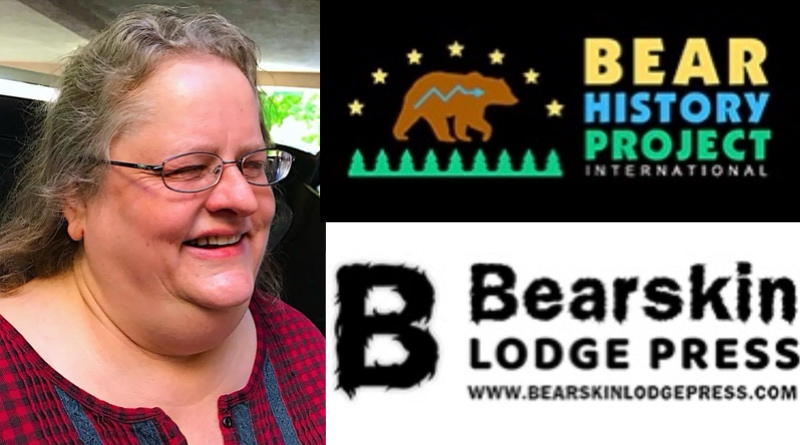
Get to know the bear community’s honorary mama bear, Becky Moss, in this insightful interview with Les K Wright and Phil James!
Becky Moss is an honorary Mama Bear for good reason. Through her presence in the LGBTQ+ community in times where we were subjects of intense prejudice and widespread hatred throughout society, to her activism over the years in Utah and more, she is more than just an honorary Mama Bear of the bear community, but to the entire LGBTQ+ community. In this interview, led by Les K Wright and Phil James, you will learn about her history and how she came to earn this title. She is the icon, the legend, the Mama Bear with a big heart, Becky Moss.
Check out the interview below!
Les Wright: Becky Moss has been identified as an honorary mama Bear. What is your full name?
Becky Moss: My legal name is Rebecca Anne Moss. My real name is Becky Moss, M-O-S-S.
Les Wright: When were you born?
Becky Moss: November 1, 1957. I had to think that over. It’s not my age, it’s just that we’re really close to the birthday, and I don’t like celebrating.
Les Wright: Where are you from? Where did you grow up?
Becky Moss: I’m from Utah. Before the age of 5, I lived all the way from northern Utah to southern Utah, and in between. But I’ve lived in Salt Lake City since before my senior year in high school. So, I’ve been here in Salt Lake City since 1975.


Les Wright: So, I guess you could tell me a bit about how you identify, and, what… if you have a coming out story, could you share that?
Becky Moss: Okay, I am clearly happily lesbian. In fact, you guys can’t see it, but I’ve always joked that If you see me walk, oh yeah, that’s a dyke. I walked just like my dad did. I think my best coming out story would be when I was 2 years old. My parents discussed the possibility that I may be a lesbian, because every single morning, I would… we lived in a little apartment building. And I would hurry up and get dressed and sit by the door till somebody would let me out so I could run across the hall and knock on the door of my best friend’s house so she could be let out of her apartment, and we could go play all day long. My dad asked me one day, he says, what are you… what do you and Kelly do? I said, we fight. But yeah, I’m very… comfortable.
Being raised in Utah, just like any kind of conservative area was a struggle, and there were difficult things, and I tried not to face it until I was 21 years old. But the comfort when I finally acknowledged to myself was massive, and I believe that can be true for other people. I don’t think that my story is all lesbians believed that it was. It’s right for me and a lot of others, and that’s why I felt drawn towards being a human rights activist, I’ve been a human rights activist my full adult life. That means, for me, that everybody who’s marginalized deserves to have their rights.
Les Wright: Could you tell me a bit about the evolution and your involvement as a human rights activist? Also about what Utah is like. Most of us have no idea, so that would be very helpful.
Becky Moss: Let me give you a quick quote about Utah. It’s not an exact one, but if you ever listen to “Wait, Wait, Don’t Tell Me” on National Public Radio. The host once described us as “Salt Lake City people are weird. You all move to Salt Lake City, and you’re the opposite of the rest of your state,” and that is true. In Salt Lake City, we are extremely progressive, we’re very strong about taking care of everybody. It’s true we’re extremely white in Utah. We tease about, if you see 3 Black people in one day in Utah, you’re probably up in Ogden, where the Air Force base is, you’re probably not anywhere else. Very, very white here. But we had a lesbian mayor. We’re just really, really strong in fighting for everybody in Salt Lake City. But the rest of the state. You’re gonna find them to be seriously different than us. They’re very, very conservative, very red.
They’re going through some difficulty right now because they voted for Donald Trump for president, and now they’re struggling with selling their product because one of the biggest exporters in the United States is Utah. We export hay that goes to China, and suddenly now, China can’t buy it because of these super high tariffs, and the hay’s rise, Utah is a little bipolar. Okay, now I’ve described Utah. The other part of the question was my activism.
I remember, at age 6, watching the Nuremberg trials with my father and asking him what all this stuff was. I’ve been totally fascinated by the news for as long as I can remember. So I think that triggered a knowledge of, “wait a minute, people aren’t treated right.” When I moved to Salt Lake, it was sudden shock—my parents divorced, mother kicked me out, because, you know, I was a straight-A student, a great kid, I had a job, I gave her all my money, you know, the kind of kid that needs to be kicked out. I babysat all of her children. There’s 7 of us who are biologically linked, plus stepbrothers and sisters. She kicked me out, so I ended up in Salt Lake. I was a little lonely. So I started attending groups that sounded interesting. First thing right off the bat was feminists, I wanted to learn more. This was part of what got me kicked out of my mother’s house.
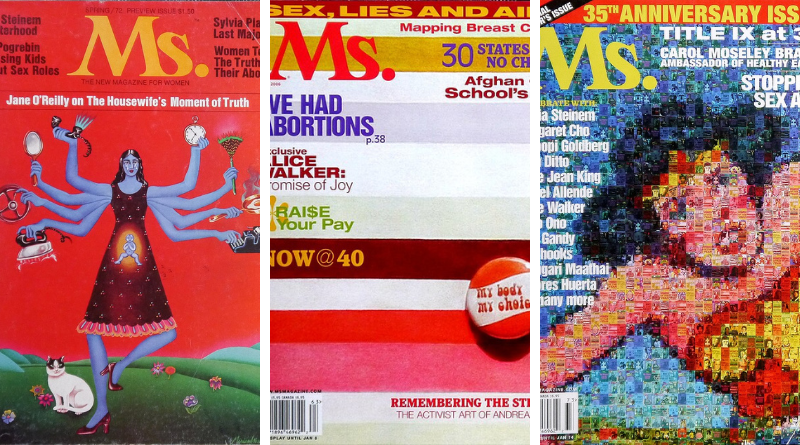
I secretly had a copy of Ms. Magazine, and she discovered that I had Ms. Magazine coming to our P.O. Box. You know, when your mom is so paranoid that she has a P.O. box and doesn’t have mail delivered to the house, you might have a different parent than the rest of the street. So I started by joining the National Organization for Women, or NOW. This was at a time when NOW was trying to decide if they wanted to allowed lesbians in the organization. It was kind of like the conversation recently about whether or not transgendered women should be in organizations.
There’s push and pull in organizations, which the Bears see. But I joined then, and that meant that I started to face to myself that I might be gay. It took a while, but I started joining marches and watching and doing this stuff, and eventually, not only did I come out, but I ended up becoming the producer of the gay radio program on our local community station, KRCL91.9. I ended up being the producer of that. That’s where I met Mel Baker [Mel is on the Bear History Project International board of directors]. And Mel was engineering. He and I were really young back then. This was like, 1981. And we started working together.
The program before had been about reading a person’s thesis. They had printed this thesis, had written it for BYU, Brigham Young University, Super Mormon. And they were reading this, and I was listening to the program. It turned out that the producer was a lover of my drama teacher and high school drama teacher. He introduced us, and they talked me into coming on the air. I agreed to come on the air for a few weeks until they found a female host, and then I stayed on the air until 2003. But Mel and I decided to start spotlighting local people and local organizations. And the other producer moved to Seattle to pursue his dream. He’s doing very, very well, and healthy, and wonderful. Mel and I spent years looking for people, and then he found the Bears, now we’re into the story that counts.
Les Wright: Okay, well, tell me about how Mel got you to the Bears, and how you found the local Bears in Salt Lake City.
Becky Moss: Well, each time we would locate and identify a group. The groups were wondrous. They were just so much fun. Everything from the Royal Court of the Golden Spike Empire to gay sports, et cetera, et cetera. So then we would talk, like, if I discovered a group, I would talk to him and then invite them to be interviewed by the two of us over coffee or something and see if they would feel comfortable being interviewed on the radio. And the other thing we would do is we would record. The program sounded live, but we always pre-recorded. Because we had so many death threats, and people threatened to blow up the station, so it was decided that this program needed to be quietly recorded and not advertised where we were. And we would pre-record and still, like, record on Sunday, and it wouldn’t air till Wednesday, so there was plenty of time to destroy the tape in case somebody became uncomfortable. I think that the Radical Fairies had organized, and they became quite a wonderful group to be on the radio to talk and stuff.
I came from a time with feminists where they had separatists women having separate spaces of their own, which was considered radical in the 60s and 70s, because women were supposed to belong to men. So they weren’t supposed to have their own face space. And now we’re in the early 80s. And we’re finding radical spaces for men. So I thought this was great. I think it’s important. So I told Mel at the time that since this was a men’s space, that I shouldn’t invade it. But he kept telling me these things, and when he got the permission, he brought them in to be interviewed.
They were gorgeous men, they looked just like Mel, they were men with beards. They were healthy and big, and gorgeous, and wonderful. I was enamored immediately. But I still believed very strongly this was their space and not for me to invade. So I’m still embarrassed and still don’t want to be called a mama Bear, because I think that it should be a men’s space. But yeah, that’s where it came from. And then the organization he started attending a lot of it. And it was one of those things where Mel had been this sweet little Mormon boy. I love this part about how the church gets the boys and the girls separately. They lecture you on not having sexual feelings, and da-da-da, and not touching. So he knew he was a really good Mormon boy, and he was really righteous, because he didn’t imagine wanting to touch girls. But I watched him come into his own. He’s a majorly wondrous person. If you’ve got Mel Baker’s history on the Bear site. Look it up. I adore Mel. We’re still friends to this day.
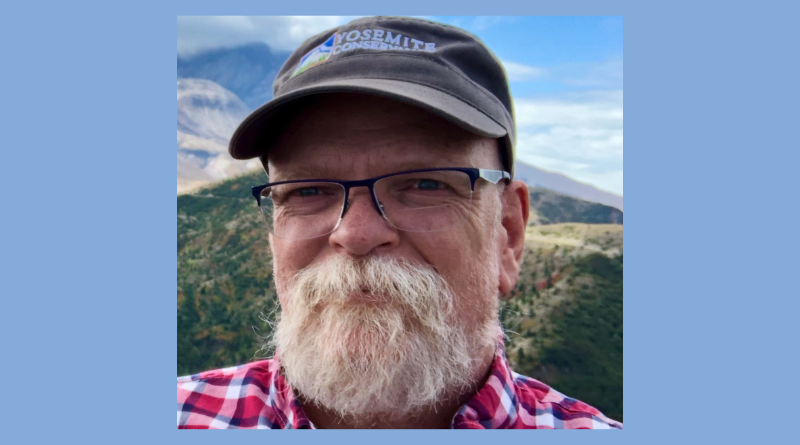
Les Wright: At some point, I will interview all of the board and central committee members of the Bear History Project International. But I haven’t done that yet because we’re all busy doing stuff like interviewing you.
Becky Moss: Well, this interview has taken us 2 months for us to get our schedules together. And we’re retired! I can’t imagine what it’s like with people with jobs. But through him, I started to learn a lot of great things about this wonderful Bear organization [IBR]. These are men that take care of each other emotionally and in that social way, and that’s a huge, healthy way to keep people up there. They take care of their communities. My experience with the Bears in Utah, and lots of other places I go, is these are community minded people who are available to help with anything. There’s no advertisement, there’s no “look at us,” They don’t beat their chest, it’s just quietly taking care of people. There’s another [titleholder] of IBR. He is another incredibly dear, wondrous friend. Les has recently started to meet him.
Les Wright: Oh, Daddy Todd. We’re interviewing him on Friday.
Becky Moss: Yeah, good! I love Daddy Todd, that’s what his name is in the Bears. Me, he’s just the wonderful dog, Todd Benson. But Todd has a fantastic sense of humor, which describes Bears. And he’s lovely. But he did this silly thing… I got beat up and told I had to tell you guys the adamant truth, and I can’t let my embarrassment in here. I didn’t realize that being on the radio was something that made you famous in Utah. For me, this was just something I was supposed to do, and it was just a voice. But it turns out some people admire what I did. I was very naive and didn’t know how dangerous it was, what I was doing. But Todd honored me by making a proclamation in the Bears. And he does the proclamation in a way so the Bears can understand it and so Mormons can understand it. “All Bears are Becky Moss’s minion for a lifetime,” so Mormons will understand it for time and eternity. That’s Mormon speech. So Bears are my minion. I thought this was a funny, funny thing. This is long before those movies with the Minions in it. This was back in the early 90s, and I knew what “minion” meant because there’s a movie from back in the 50s called Her or She and it’s a riot. So he made all the Bears my minions, but I discovered accidentally, throughout the years, that this is a serious thing.
I get called Mistress Becky by Bears. But if I’m in trouble in any way, if I need help, if I put a request, it comes. I’ve had things like knowing that there’s going to be an event that there’s been a mention that maybe it’s going to be attacked. So you invite the Bears. They don’t have to patrol or anything, they just have to be the big, wondrous men they are and wander around. And we don’t get attacked. But I think the funniest one of all kind was I was traveling back from when my partner and I had been in Florida. We both had to set our different ways, we lived in different states, and I was flying, just taking whatever flight they could get me because I was leaving a day earlier than my ticket. And I’m in the Atlanta, Georgia terminal, trying to carry everything, and I’m exhausted, and suddenly: Big, beautiful men with beards come up on either side of me and say, “Mistress Becky. Where can we take you? What do you need?” And they got me escorted to the Delta room, got me set up so I was covered. They double-checked everything. They spoke with people at the counter, and before you knew it, the next flight got me direct to Salt Lake. I didn’t have to hop all over the United States.
Les Wright: And they were Bears!
Becky Moss: 500 miles away from where I live. I try not to take advantage of that one anymore.
Phil James: My people. My people.
Becky Moss: Thank you. That’s who Bears are. And I believe that even if they, for some reason or another, why they knew what I looked like or who I was, I have no clue. But my belief is, if they saw anybody struggling-
Les Wright: They would step in and help.
Becky Moss: So, I love Bears. But I won’t go to Bear meetings. I won’t go to Bear campouts, even though I have been assured that if I had to go someplace where everybody was naked, there’s a lot of naked men who have larger breasts than I do. There’s just so much joy and wonder and fun. Now, we have one of the Salt Lake City-based Bears group. They had me on their Facebook page, and I’d get all the invitations to go to the meals that they have every few weeks, and I tease because I’ve accidentally gone to the lunches. If I stop in the restaurant, the owners of the restaurants will say, “Becky, your boys are here.”
Les Wright: Awww.
Becky Moss: Yeah. Can you imagine how wonderful that is, to walk into a place and be assumed to be associated with this table full of caring, lovely, gorgeous, fun people? That’s pretty cool stuff. I think I’m gonna live to be a very, very old person just because I have so many reasons to be happy. I think you’ve exhausted the Bear’s conversation, because all I can tell you is I will continuously say they’re gorgeous, wonderful, amazing, funny, helpful. I cannot…I would… I could… cannot imagine a negative thing to be said about this organization, this group of people.
Phil James: You have not met enough people.
Becky Moss: Well, I end up being lucky. Okay, every organization has problems in it, they happen. One of the local Bear presidents lived in my house for a while, and there was some drama going on, but it wasn’t that weird drama where everybody has to get involved. It was this quiet sadness as they worked the problems out. That’s a compliment to say that. Oh, I forgot to tell this one. Les and I have talked so much, I imagine I’ve told him everything, but I gotta tell you one more story about the Bears. So, Utah accidentally became the final push for marriage equality. We had a group of people who got together and filed a court case against Utah for giving us marriage equality. And we thought, like most of the cases, would file it, and then courts would look at it in 3 years. But what happened instead, things went way fast–we knew it was happening.
I had the privilege of putting together a fundraiser so we could pay the attorneys so they could file the papers. And I spread the word we were going to have Drag Queen Bingo at Alliance, Elks Lodge, because they gave us the space for free. And you know Drag Queen Bingo is definitely a fun way to do it. We wanted to include dinner with this. A Bear called me up and said, “don’t worry about dinner, it’s covered.” And when we got there to set up it turned out he was a manager at a Costco, and Costco had donated more food than we were able to use that night. We raised enough money that night to pay for the filing. The Bears didn’t put up a sign saying the food was distributed by us. They didn’t do that. Just set up the food and kept an eye on it and made sure everything was good. Yeah, so I want to give credit to the Bears as well as everybody else who did this. The fundraising was, like, in February, the filing was in September, and suddenly a judge ruled on it in December and said, “Utah, you can’t discriminate against same-sex marriages.” And that triggered, and it popped and popped, and before you knew it, the Supreme Court had done it. We’re not the site that was from the Supreme Court, but it turned the last switch. And Bears were actively involved in that. And doing what they do well. So, thank you. Thank you, all Bears, you did this.
Les Wright: So, I have one more formal question. I think you’ve actually covered it, but in your opinion, what is a Bear?
Becky Moss: Somebody whose heart is bigger than their whole body. They’re healthy, gorgeous men. I know that when Mel first told me about the Bears, it was so funny. He said, “Becky, these are men like me. They have beards, and they have bellies, and they’re not the perfect-looking people that everybody assumes, this stylized, exact, perfect, I don’t know, clean cut, da-da-da, and “he was saying this other.” I said, “but you’re describing what I think gay men are.” It’s wonderful gay men could look like anybody. If you don’t look exactly like this, you’re not welcome in the Bears. The Bears will even let the perfect-looking guy come in.
Les Wright: That’s very generous of us, yes.
Becky Moss: Hugs are amazing. The smiles all go all the way to the eyes. Since we started talking, a photo came up and reminded me that there are straight men who join the Bears in my area. Because they, as one of them said to me, “I need the companionship of men that are just like me.” It’s just pure. Isn’t that great? I think it’s one of those places where humans build joy and goodness. We’ve got a lot of crap–a little bit of crap goes a long way and makes us uncomfortable, but the truth of it is there’s a lot more people who are Bears than are not Bears. There are a lot more people who are loving and kind and that are supporting each other than people who are hurting each other. So, thank you for you guys who do put Bears together in your areas. For those of you reading this interview, it’s really fun. I’m in Utah, you got that, you can hear the funny accent, but we have Les, who is in Syracuse, New York. And PhiI, I know he’s on the West Coast. But for some reason, I was thinking San Diego, but I probably had the city wrong.
Phil James: I’m in Oakland, and I’ve also just been texting with Mel. He says hello. He was so happy to see we’re getting the interview done, yes.
Becky Moss: Well, you know, give him a kiss when you see him in real life.
Phil James: I will.
Becky Moss: Thank you. Well, that’s good. So, yeah, we’ve got the country. Three, just 3 of us are from all over the country.
Les Wright: So, before I turn this over to Phil, is there anything else that you would like to share, either that has not come up or that you’d like to go into in more depth?
Becky Moss: Well, I’m going to do something. If you’re traveling through Utah, and you find yourself in a really, really kind of nervous feeling about being in a really red state with a whole bunch of people who look like homophobes, it’s okay to look up the Bears and come do something with the Bears. And I’m going to tease, I’m going to do something I’m not comfortable with, but might as well If you need, you can even call directly to me, and leave me a message, and I’ll get back. If you remember Ma Bell, Mountain Bell, gave me a phone number in 1979, and at the time I had to have a change on the phone number. They told me, “well, most people don’t want this number.” I said, ‘I don’t know, just give it to me, I don’t care.” It turns out it spells ITS487– ITS and the last digits, 3953. D-Y-K-E. My phone number is 801-ITS-DYKE.
Les Wright: Oh, and I do have one other thing I was hoping you would talk about, and that is your story about your difficulties with Pink Flamingos.
Becky Moss: I am a lesbian, but I don’t care for Pink Flamingos. I lost a little sister to AIDS. She was smarter, verbally better than me. She was amazing, but she didn’t like Pink Flamingos either. It was so funny, she called me up one day when she was in her late teens and said, “now I know why you don’t like Pink Flamingos.” And I shuddered and thought, “oh, please don’t let it be true.” It was true. She had seen the Pink Flamingo movie.
Les Wright: Yeah, the John Waters movie.
Becky Moss: Yes, it’s a wonderful movie. Just don’t watch during that one scene!
Les Wright: That would be the final scene.
Becky Moss: Peggy, my sister is named Peggy. My parents had so many children that they named two daughters almost the same name, Becky and Peggy. Our stepmom found out about the Pink Flamingos thing, and she got really funny. She started sending us funny pink flamingo cards. But it backfired on our stepmom, and she started getting pink flamingo garbage from people. People mail me pink flamingos. My front lawn gets flocked on a regular basis. I get up, and there are pink flamingos of all kinds, everything from the ugly, plastic, original ones, to this last Christmas, they were little flat ones that had Christmas messages. I get so many pink flamingos that I try hoisting them off on Bears to let them take them to the camping trip and don’t bring them back. Even this year, I still had so many that I managed to hit almost every family grave with a pink flamingo. Peggy and my stepmom, they both got pink flamingos.
Les Wright: You could start a small business selling pink flamingos.
Becky Moss: Oh, don’t open that! Somebody’s obviously buying them and putting them on my yard, and my neighbors will just laugh when they see it happen. get funny little gidgets, and I promise you, I get so much of this crap that I’m able to make baskets and donate them to fundraisers. And people bid money on those ugly things. I had a great uncle. He and his wife, Aunt Emily always had plastic lawn ornaments. And as a family, we joked, and we would call plastic ornaments “Emilys.” I worked at a place where I discovered that one of my coworkers, his wife, was related to Aunt Emily. Their family called the plastic ornaments “Oscars.”
Les Wright: I’m gonna turn this over to Phil.
Phil James: I’m doing a Google search for pink flamingo Bears, because, Becky, I hope to meet you in March. I come to Salt Lake City every year for the big genealogy convention. Mel’s been trying to get me to contact you while I’m there for several years.
Becky Moss: Well, now you know my phone number.
Les Wright: I’m looking at pink flamingo Bears.
Phil James: I’ll try to find you a pink flamingo Bear. I met Mel in DC, I want to say, like, 1993, but I’ve known him for a really long time. I’ve known Les for about 5 or 6 years.
Becky Moss: Yeah, I’ve only known him about 10 years longer than you have. In gay years, this means we’ve known each other for a thousand years, right?
Phil James: In our list of Bears you’re, like, Bear number 46. You are Becky, Queen of the Bears.
Becky Moss: I did something, oh, late 80s, early 90s. If you remember that horrible church in Kansas where … yeah, that guy came to Utah to protest gays and Mormons. I knew he was coming because I’ve always been ahead of these things, I put a request out for everybody to do a fundraiser in his name, to donate money to gays, Mormons, whoever you love in the name of that pastor. And my fundraiser got picked up by the United Press International and the American Press Institute. It went to Australia and England, I mean, it went worldwide because I just said, please make donations to organizations that would upset the pastor.
Les Wright: And this was Pastor Fred Phelps, right?
Becky Moss: Yes, the awful Fred Phelps. One more thing, I’m trying to do this right now, something important that I feel strongly I have to say. So if we can close with this one: right now, our rights are in danger. But don’t get super upset, don’t think that it’s useless. We can fight right now. The only time that we know it will be useless is if those people who fought and brought civil rights to the Black community, if the Black community loses their rights, then all of us have lost. We know that the Black community did the fight for civil rights correctly, because who did we imitate, who did we follow? Who did we watch and see what they did? And how did LGBTQ people do their civil rights fight? They did it by emulating the Black community.
Phil James: Thank you, Becky.
Les Wright: So much.
Becky Moss: Thank you.