Heavier Is Better: QueerCraft Brings Tokyo’s Queer Trading Card Game to the US
QueerCraft, a queer-owned studio in Hoboken, New Jersey, has released the first US edition of Gravity Reversi Masters, a queer trading card game you could until recently only really get in Shinjuku 2-chōme, Tokyo’s gay district. QueerCraft’s K-Pup picked up a set on a trip to Japan, got hooked, and then realized he was probably the only person in America who owned one. So he tracked down its creator, Nichoman!, and brought the game home.
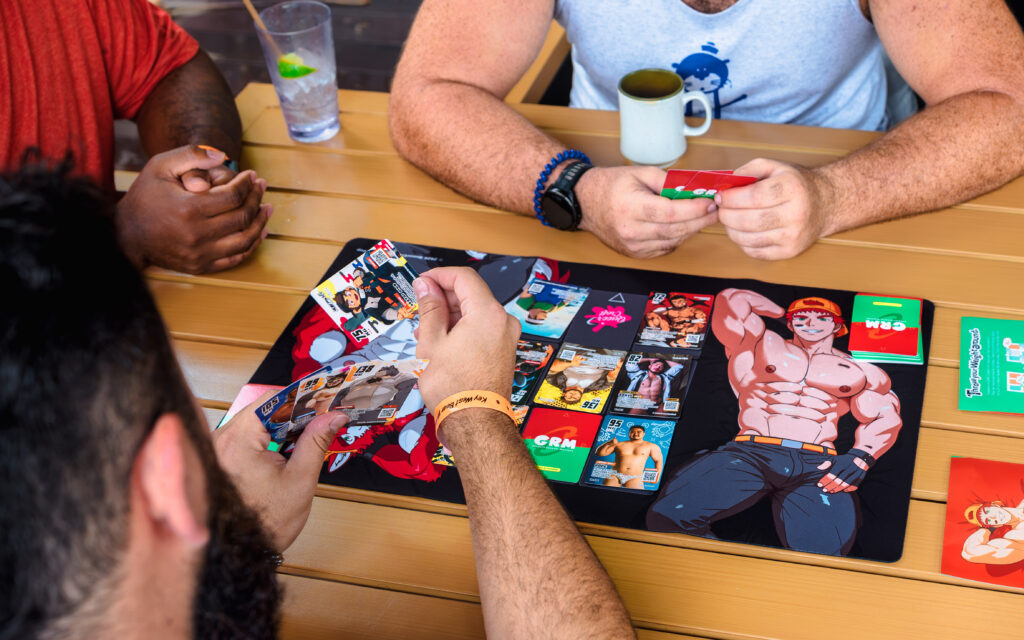
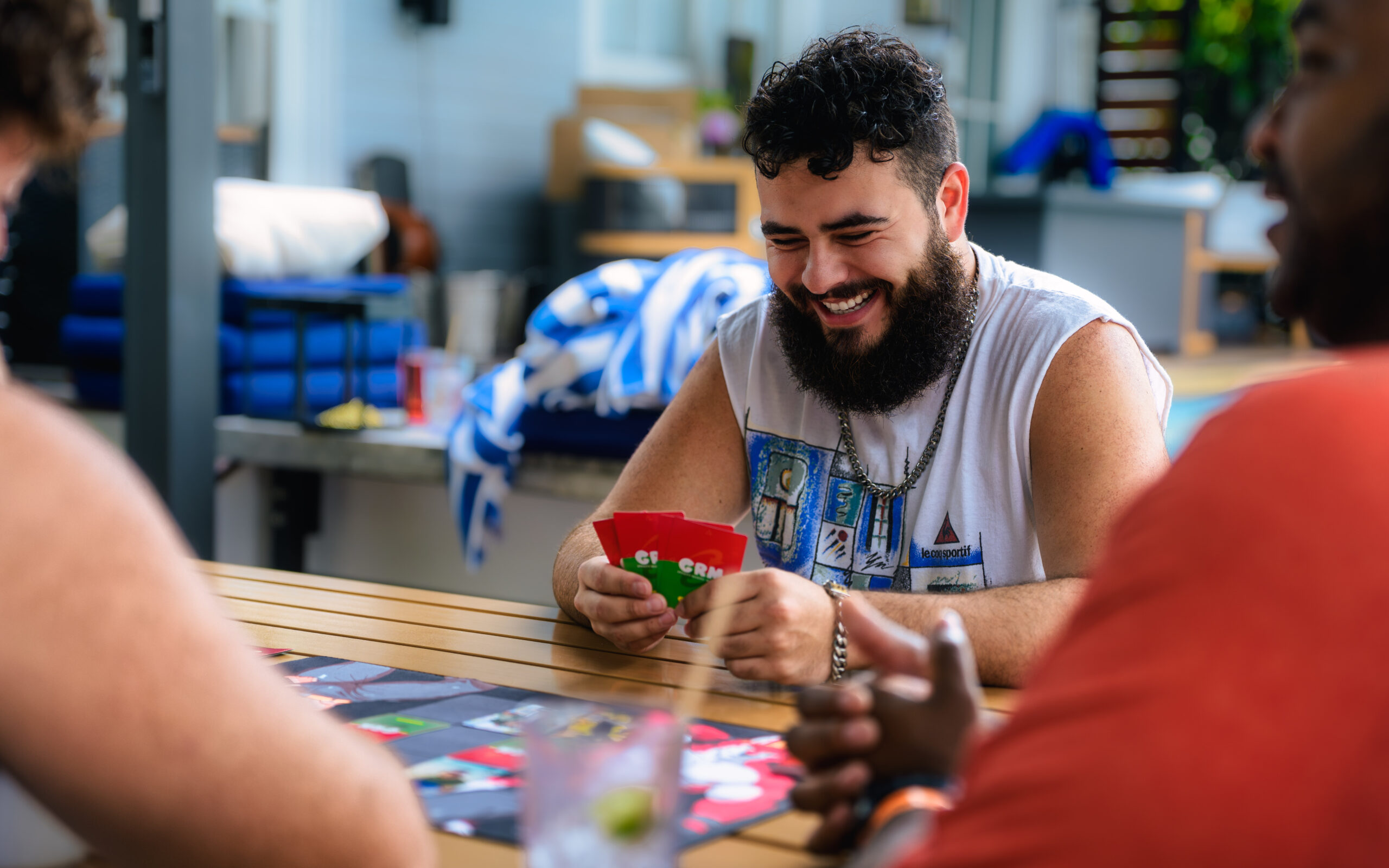
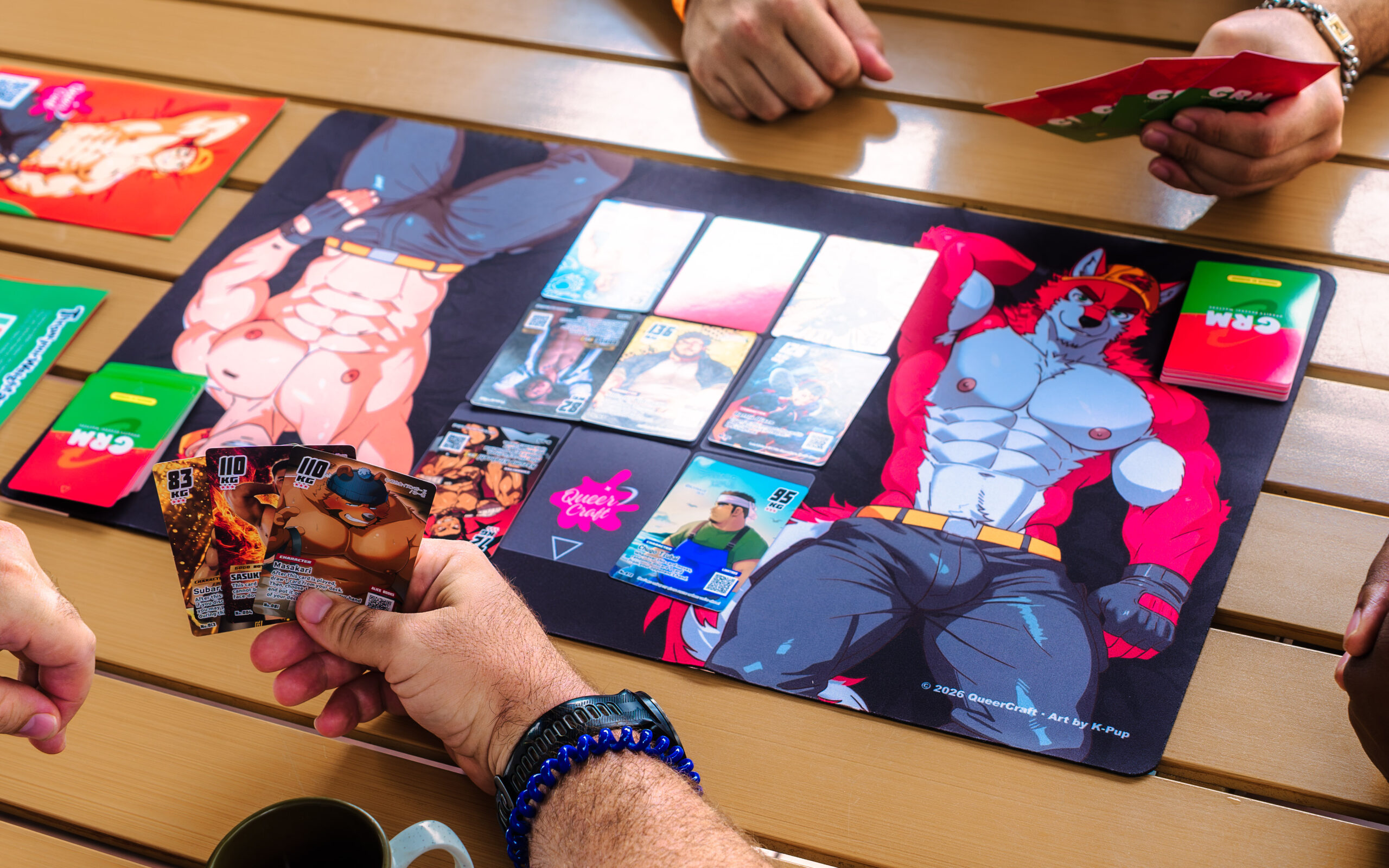
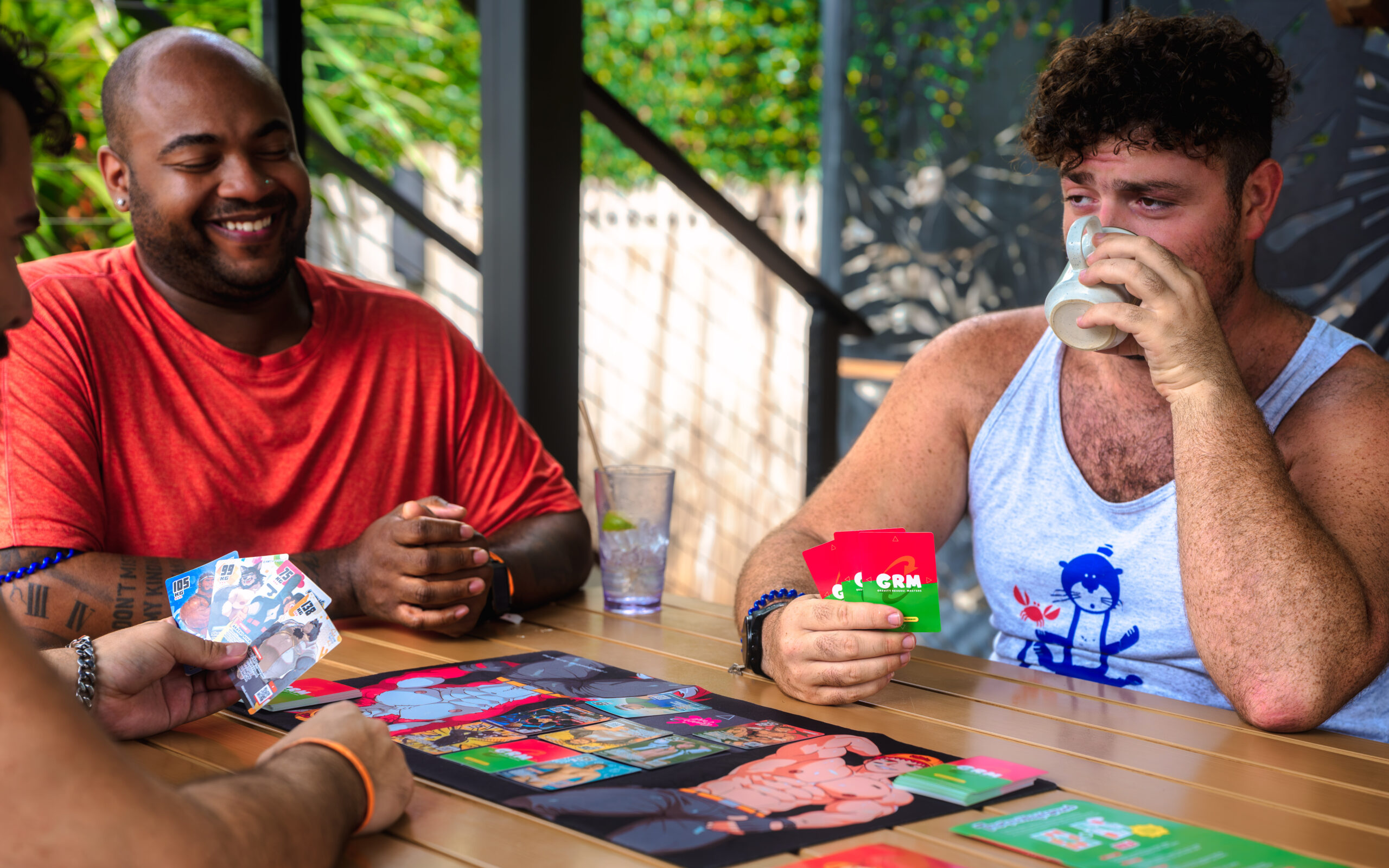
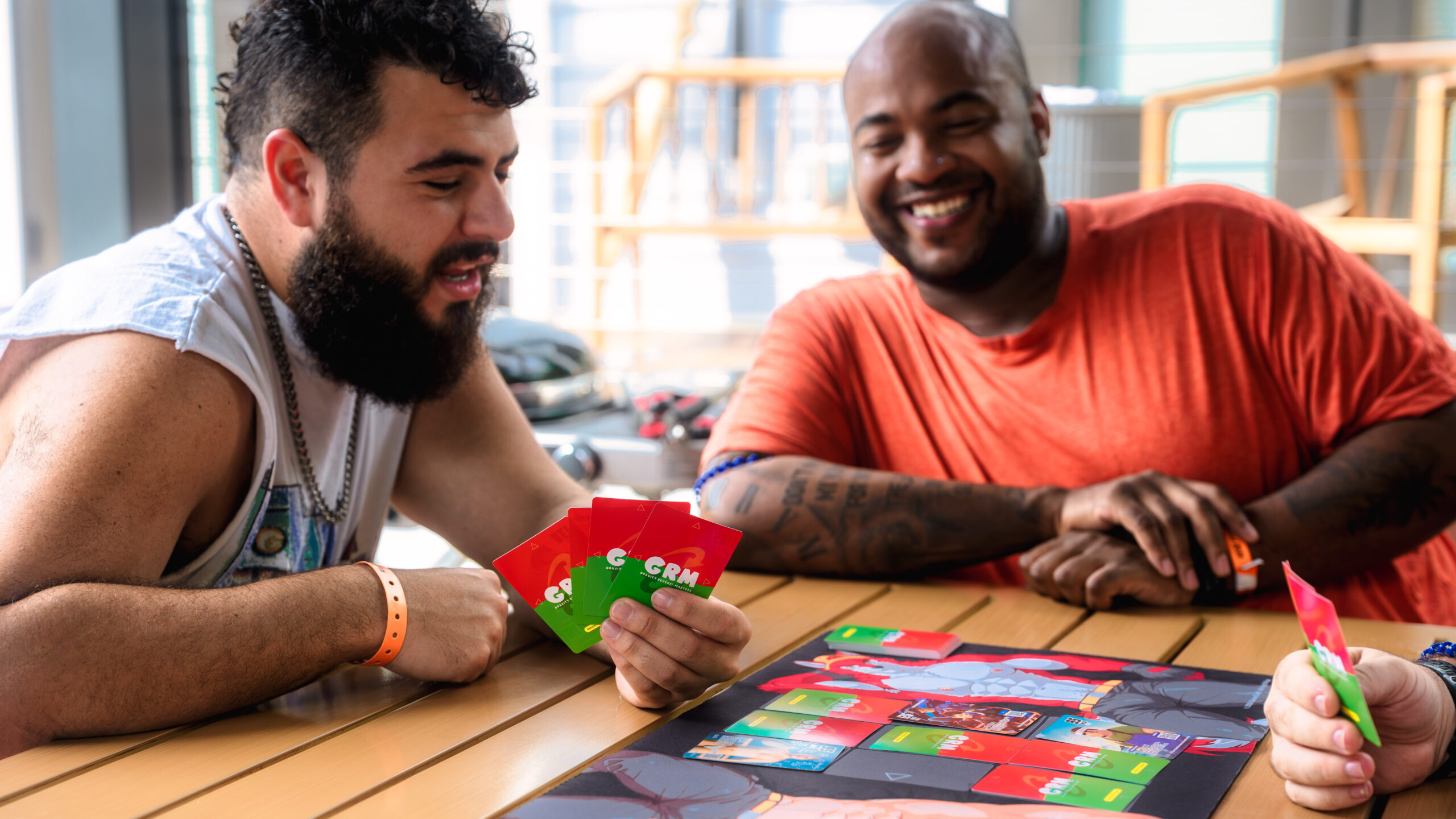
GRM puts real go-go boys, drag queens, artists, furries and, crucially, bears from Japan’s queer scene on its cards. Players lay cards on a board and weigh them against their opponent’s, and heavier cards flip lighter ones over to their side. Yes, in GRM the bigger boy wins. Bears got there early, too: the team play-tested the game at bear weekends at The Woods in the Poconos, and we got our own hands on it at Key West Bear Weekend.
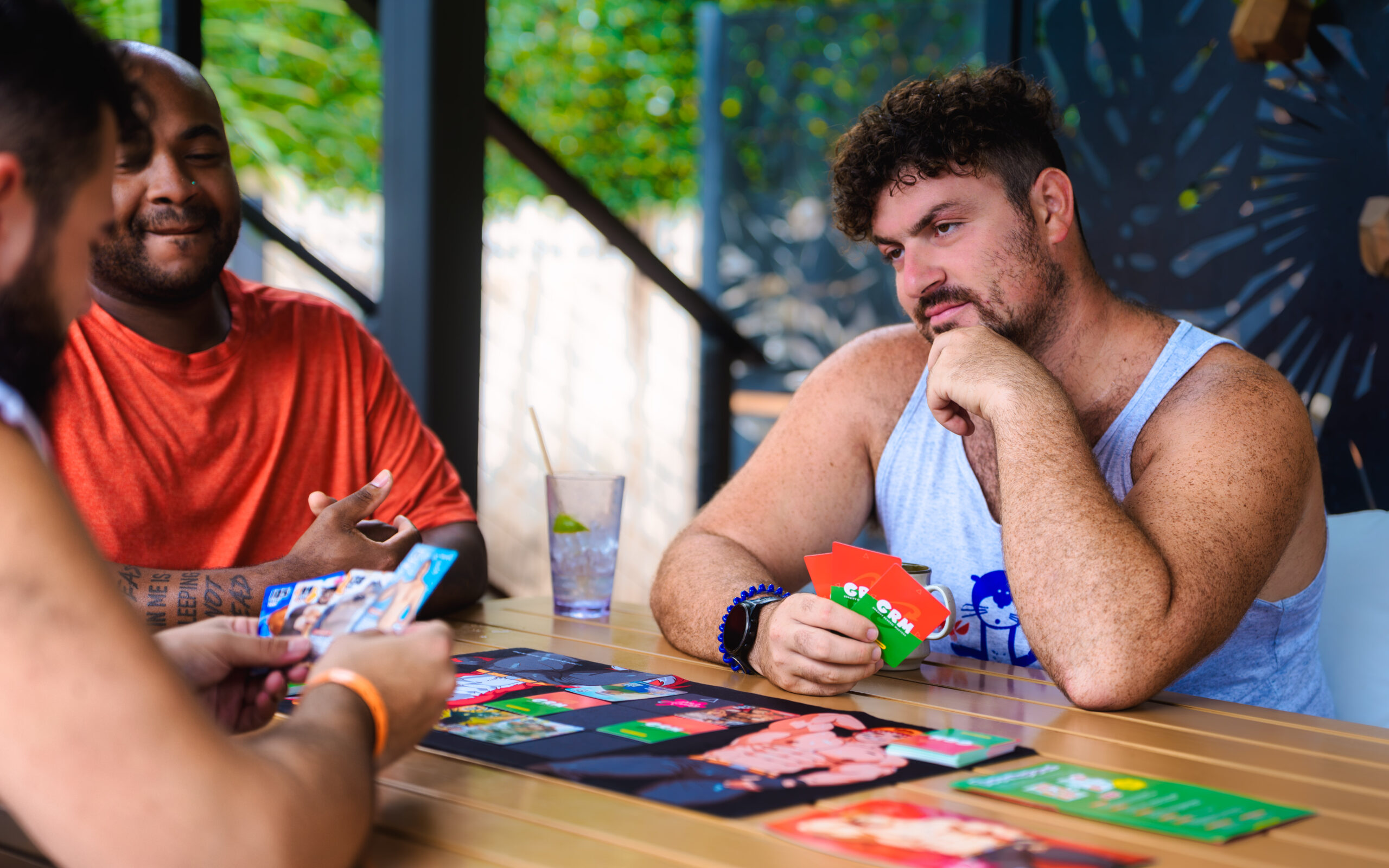
The team are also bringing GRM to Bear Fuzz Fest in Gettysburg this December, with Provincetown Bear Week in their sights for 2027.
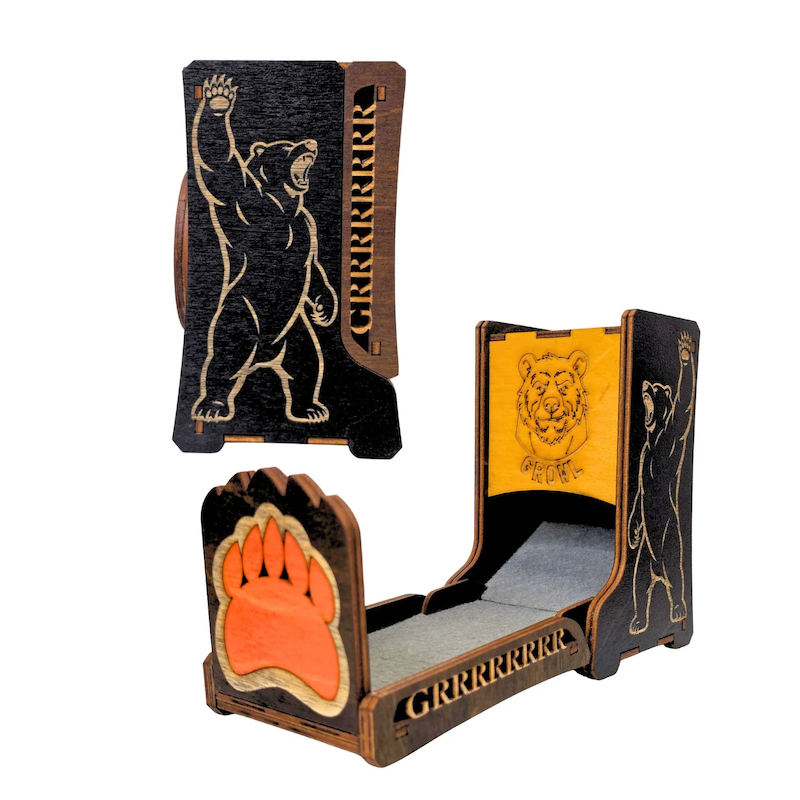
K-Pup, Ron and Zhao started QueerCraft laser-cutting tabletop gear with a gay agenda, from the Bear Pride Dice Tower and bara shadow boxes to pup pins and a bottle opener called “Bottoms Up”. Now GRM booster packs, due between late 2026 and early 2027, will add more bears, chasers, cubs and daddies, plus pup gear, rope and leather.
We talked to all three about why bears make the best playtesters, putting bigger, hairier bodies front and center at the game table, and what Japan’s bara scene can teach Western bear culture.
Robin: Let’s start at the beginning. What was the first game that properly hooked each of you, and when did you realize your gaming life was a lot queerer than the box art let on?
Ron: I played a lot of board games with my family as a kid, but Everdell is what really got me hooked on exploring board games as an adult. It was also the first game we made stuff for with our laser: little resource boxes engraved with cute critters.
I think gaming got a lot queerer for all of us once we started noticing the game cafés that seemed to be popping up everywhere. A lot of them (most of them, actually) had LGBTQ+ game nights on the schedule, which we thought was really great. Once we started going to some of the cafés regularly, it really hit us how much overlap there is between tabletop gaming and the queer community.
Zhao: Gaming has always been a sanctuary for me. As an overweight, nerdy kid, it gave me a safe space to be whoever I wanted. The first game I was obsessed with was the Yu-Gi-Oh! trading card game, and I spent a lot of my allowance pulling cards. I was heavily influenced by the anime, and I was mesmerized by the excitement of the duels and the stories the cards brought out of each character. Growing up in China, there was no queer space for me in real life, but the game often mapped queer identities, metaphors and aesthetic subcultures onto specific card archetypes. Exosister, for example, plays on classic yuri and religious-sister tropes. And of course, some of the sexy male characters, like the Dark Magician, were my early gay sexual awakening.
K-Pup: I was four years old, playing Mortal Kombat on the PS1, and I remember loving Kitana… Let’s just say I love combat, but for some reason her elegant fan moves mesmerized me. One day, I want battle fans too… As for the queer side, Sora x Riku and Roxas x Axel from Kingdom Hearts started something when I was a kid… I mean, c’mon…
If you were each a playable character, what’s your class, your signature move and your fatal flaw?
K-Pup: Hoho!! I love this question… My human, pup and furry forms all revolve around me, so I’d say my class is a ranger type with a twist mechanic. I use a paradigm system (kudos to FFXIII), where my human form is a support/medic class, my pup form is a ravager/agile class and my furry form is a tank/berserker class. My signature move combines all three into one (honestly, it’s still TBD). My fatal flaw? I’m driven by a hyper-independent need to protect others, so I usually fight alone, hence the complicated system.
Zhao: A tiger furry paladin who wields a big, hefty magical ax. Signature move: busting out of my shiny armor and spinning my ax into a thunderous hurricane. I love a powerful, dramatic super move. Fatal flaw: hopeless romantic.
Ron: Wizard. A raccoon wizard, hands down. Signature move: probably teleporting away. My social battery drains pretty fast, so an instant getaway lets me recharge my magic and not have a meltdown. Fatal flaw: probably getting distracted by garbage cans.
What made you look at a game table and think it needed more queer energy, and more hairy chests? Was there a moment you realized bears and big bodies were missing from the games you loved?
Zhao: The turning point for me was playtesting at bear weekends up at The Woods, the LGBTQ+ campground in the Poconos. We set up a playmat with two decks at our vendor table in the pavilion and opened the game to whoever walked past. Bears turned out to be the best playtesters we’ve ever had. Warm, curious, completely unafraid to ask questions and genuinely eager to sit down and engage, with each other and with us. Nobody was performing coolness at that table. They wanted to know what the card did and who the artist was, and then they wanted to argue about it.
Watching a game come alive in someone’s hands like that, I realized the game should reflect the people actually sitting there, not some imagined audience. That’s the joy we’re chasing now. If we can take that energy (warm, curious, full of laughter) and carry it to every game table through the games we make and the accessories that sit on them, then we’ve done the job.
From the Bear Pride Dice Tower to your bara shadow-box art, bears clearly have a home at QueerCraft. Why was it important to you to put bigger, hairier, sexier bodies front and center in tabletop gaming?
Zhao: For me, I spent my whole childhood as the big kid at the table. I know exactly what it does to you when every hero on the box has a body you’ll never have, and the only character who looks like you is the joke or the villain. You don’t realize it at the time, but it’s a constant message that you’re not the main character. Putting bigger, hairier, thicker bodies front and center is my correction to that, and it’s also just better design. The bara tradition in Japan has been drawing exactly these bodies for decades. For a US audience, we’re just putting them front and center and making sure they show up at every queer event and in every queer subculture we can.
Ron: Yeah, I don’t want to speak for everyone, but I think all of us have had that experience of being the bigger person at the table, just like Zhao. I’ve struggled with my weight my whole life and, to Zhao’s point, it always makes you feel like an outsider, because it’s not what you see as the celebrated hero or the popular guy in mainstream media. As I got older, the bear community was one of the first communities I felt comfortable in, where I realized you can be happy and proud and visible, whatever your body type or size. Bringing that into QueerCraft was really important to me because, even though bears are larger than life in person, there was still a lack of representation at the game table.
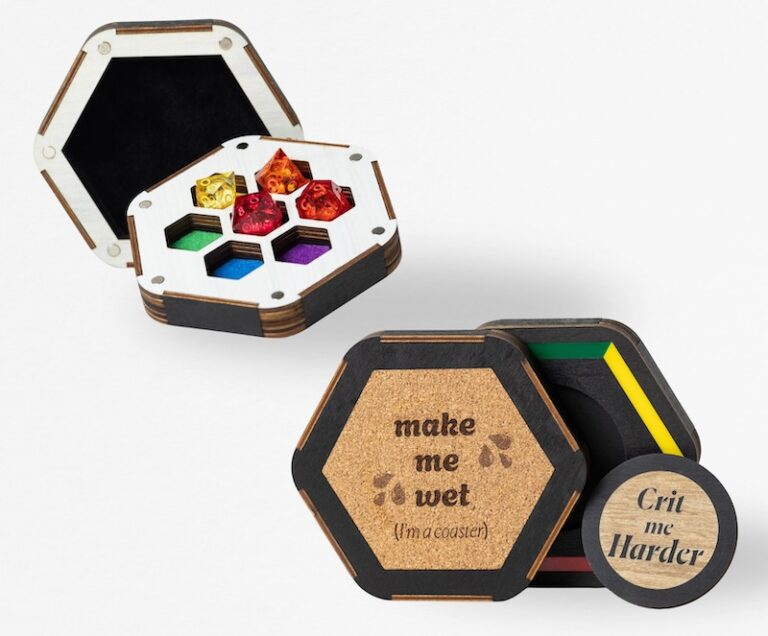
Bara art, kink pins and a bottle opener called “Bottoms Up” aren’t exactly what the big tabletop brands are selling. Has that caused you any trouble with conventions, and how do you stay unapologetic about it?
Ron: Yeah, I’m pretty proud that we’re pushing the NSFW boundary without going over it, for the most part. And to your point about it not being what the big tabletop brands are selling: that’s exactly why we’re doing what we’re doing. They’re either too scared, too biased or too unimaginative to create anything new and exciting.
K-Pup: I once went to a small anime convention on my own and had my bara shadow-box art on display. They’re all bara, so shirtless men in briefs and provocative poses. Sexy, but not nude or explicit.
One of the staff came over and questioned whether what we were displaying was suitable, which really frustrated me. I immediately said, “Well, if you think this isn’t appropriate for the venue, then I assume you’re going to go over and talk to that vendor with a woman riding a motorcycle with her boobs popping out, where you can almost see her vagina.”
As soon as I pointed that out, they said, “Oh, OK, good point,” and moved on. They were definitely caught up in it being queer, but at least they backed off once they realized the double standard.
Zhao: I handle most of our convention and event applications, and a good portion of the ones we apply for don’t accept us. It’s hard to say whether that’s because they’re highly competitive or because something’s going on behind the scenes when they look at what we sell. I think it’d be naive, in today’s political and social climate, to think it hasn’t been a factor in at least a few of those rejections. We’ve had really strong positive feedback from attendees, and convention staff have noticed us at some of these events, so I hope what we’re doing starts to become a bit more mainstream.
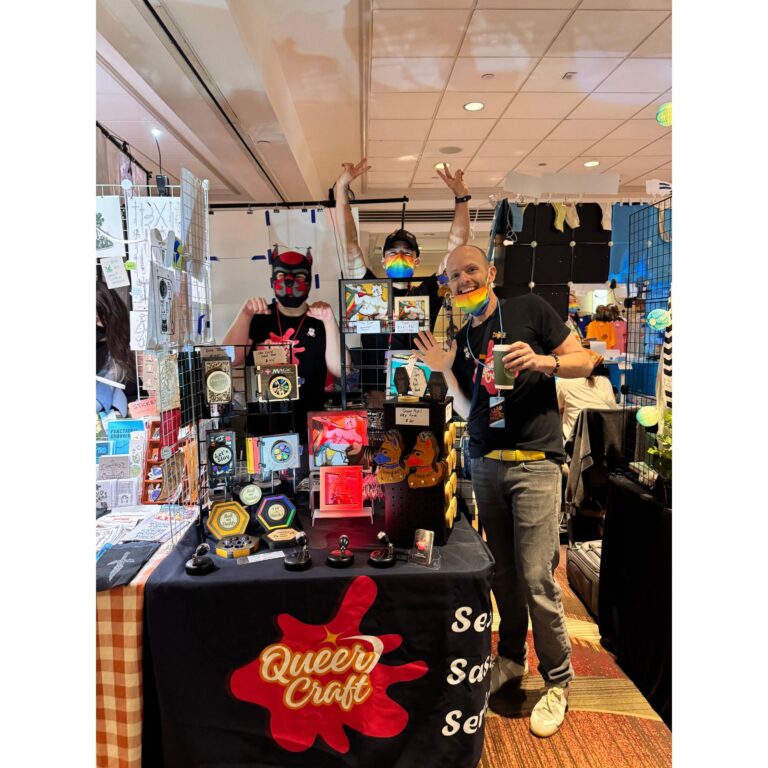
Was there a specific moment while running QueerCraft when you thought, “yeah, this is why we do it”? We’d love to hear a customer story that made you laugh, cry or blush.
Zhao: It was absolutely our first convention, FlameCon 2025. We had a tiny four-foot table with a handful of deck boxes, dice towers and the shadow boxes Tim made. That event could really have broken our spirit if it hadn’t gone well or if we’d been overlooked, but we sold out of a lot of products on our very first day. At one point our booth was surrounded by a group of pups, and they were all just so excited that we had pins, dice towers and deck boxes representing the pup community. Seeing how excited customers were and how much it meant to them, we really thought, “Holy shit, this is something we’ve got to grow.”
Ron: Not to get too sentimental or mushy, but the customer stories that make me happiest are when teens come to these events with their parents. We see parents completely embracing their kids’ involvement, not just in queer culture but in subcultures like pup play and drag. I never expected to see it, but it’s so surprising and amazing, especially with all the negative shit you see in the headlines.
I mean, a mother came to our booth with her son, a teenager who performs in drag and was there in an amazing drag outfit, and she was just gushing about what a great performer they are, how beautiful they are and how much talent they have. It was really great to see.
K-Pup: I remember the first time we debuted at FlameCon. At first I was scared and terrified. Then I remembered I’m actually really comfortable being “fun” in front of people, which is EXACTLY what I did. I was jumping around, saying hi to everyone and just being the happy pup I am! Somehow, by the next day, I’d drawn a HUGE pup crowd to the booth and we just started pupping out. Next thing, the drag queens came over, gave me gifts and said, “We were told there was a cute pup here and we really wanted to meet him!” Yeah… I do this because I want to bring smiles and energy to people.
How did a studio in New Jersey end up bringing a trading card game from a queer manga market in Shinjuku 2-chōme to the US for the first time? Tell us how the collab with Nichoman! came together.
K-Pup: I visit Japan quite often because I have a lot of friends who live there. Last year, I saw a bunch of queer card games and bought almost all of them to check them out. GRM really stood out to me, and I got hooked on collecting the Japanese cards. But it got lonely: I was probably the only American with GRM cards, and I had no one to play with. That’s when I knew I wanted to bring the game to America. Not just to introduce Americans to the performers and artists, but to expand the game with American queer culture, and other countries’ queer culture in the future. That’s a goal Nichoman! (GRM’s creator) and I share. After that, it was just a matter of working my network. My dear friend Coffee found me Nichoman’s contact, and once I introduced myself, everything started falling into place!
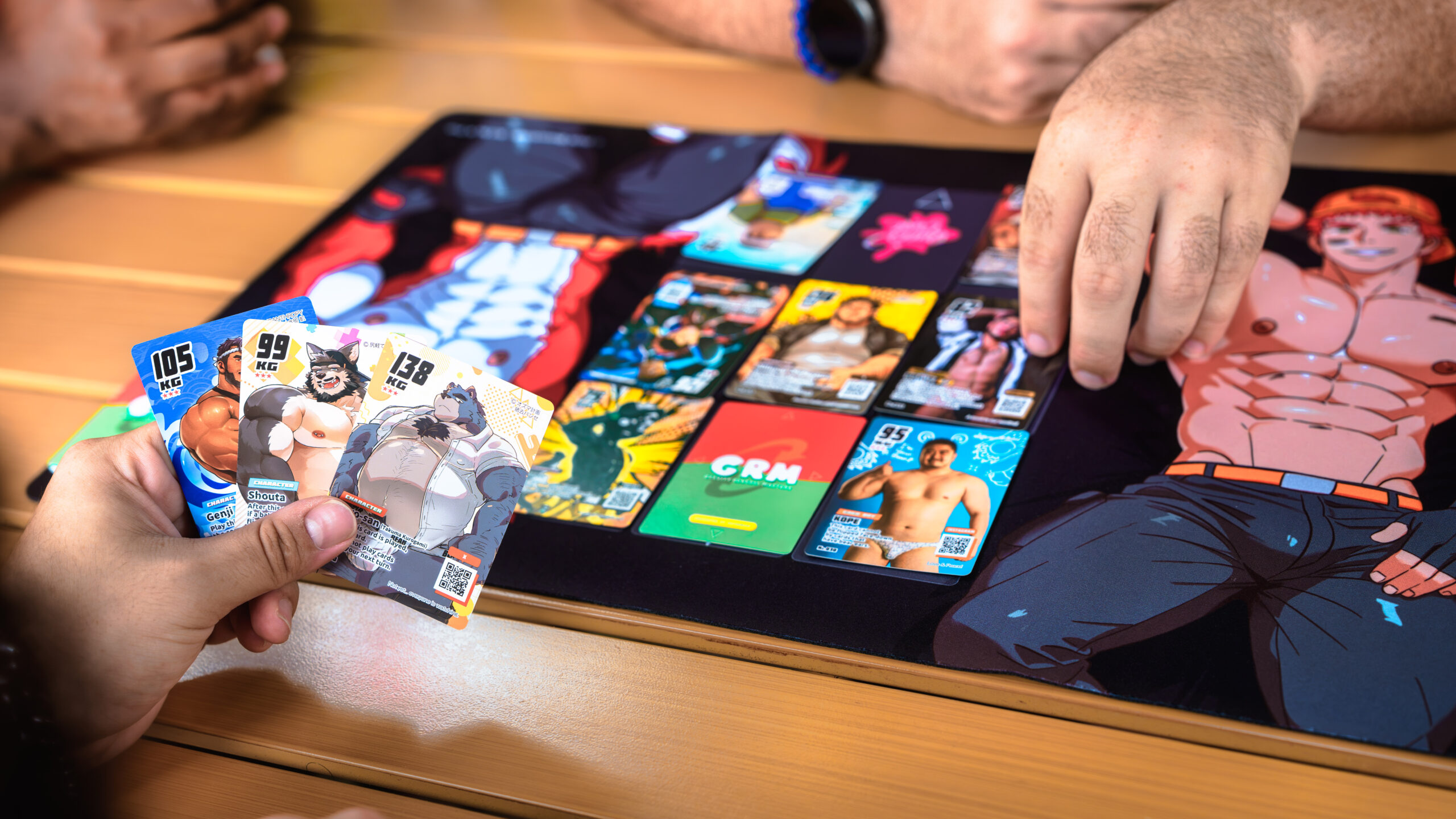
In GRM, heavier cards flip lighter ones, which might be the most bear-friendly game mechanic ever invented. Was that something that attracted you to GRM in the first place? And which burly bear card would you trust to dominate the board?
K-Pup: It definitely was. The strategy is what made me go, “Wow, this is simple but powerful.” And I’d trust Stir to dominate the board, because not only is he big, he can also make your opponent lose cards, which is a huge strategic advantage.
GRM features burly bears, bara hunks, furries, go-go boys and drag queens side by side. Why does that kind of body diversity matter, especially in a gaming world where heroes so often come with the same chiseled six-pack?
K-Pup: In any community, the “perfect body” doesn’t exist. Everyone should be proud of who they are, whether they’re big or small, thick or slim, whatever. That goes for the gaming world too. So many game characters are slim, athletic, muscular or curvy. I mean, sure, they’re hot, but what about the bigger, thicker ones? There’s a reason I love characters like Mei and Roadhog from Overwatch. They were some of the rare ones who weren’t like everyone else! Sure, they’re heavier, but they’re also insanely powerful! And it’s important to me that the game I’m working on represents that too.
Ron: Yeah, I know I said this in an earlier answer, but I think it’s important for the health, and especially the mental health, of queer youth to show that there’s no such thing as a perfect body type. Every body can be beautiful and celebrated. Mainstream media and culture don’t necessarily reflect that, but it’s really just a frame of mind, and I think developing that frame of mind, that confidence and that healthy outlook on who you can be starts with representation like this.
A lot of the conventions we go to have a really high number of teenagers and young adults in their twenties. Being at these events alongside art and artists that only ever show that traditional, idealized body type, and offering something different, is a small way of showing them that people like them are seen, and that there are people out there who celebrate and welcome them.
Introduce us to some of the bear characters and the artists behind them. Is there a bear card the QueerCraft team fought over? And what does the bara art scene in Japan have to teach Western bear culture about celebrating big, hairy men?
K-Pup: I wouldn’t say we fought over any bear cards. It was more about deciding which ones went in the first deck and which ones waited for the booster packs. Daxue is one example. Originally a different bear had that spot, but to keep the gameplay balanced, we made the hard decision to bench that other, very attractive bear (he’s definitely a keeper) and bring in Daxue instead.
In Japan, the boys love their bears. Bara isn’t only muscle; it’s chubby guys and big-boned men too. In America, when you look at porn or pin-ups, it’s usually muscular men with six-packs and bulging muscles, but in Japan you’ll find a huge variety. A lot of the time it’s guys who definitely work out, but who also LOVE to eat. Now, “hairy” is a bit rarer to come by in Japan, since body hair is more of a genetics thing and us Asians aren’t usually gifted with that!
We recently got to play GRM at Key West Bear Weekend. What other bear events are on your wish list to bring it to? Lazy Bear Weekend? Bear Week in Provincetown? A bear bar near you?
Ron: It’s crazy. Once you really start talking to the bear community and getting more involved, you realize there are so many events, because the community is so close-knit and connected. We’ve got Bear Fuzz Fest coming up in December in Gettysburg, Pennsylvania, which I never would have guessed had a bear event! Bear Week in Provincetown is absolutely on our radar for 2027. We’ve been meaning to check it out for a few years now, since before QueerCraft was even a thing, and since launching we’ve met at least five or six bears at conventions who’ve asked if we’ll be at Provincetown Bear Week. So we don’t want to disappoint this year.
Booster packs are planned for late 2026 into early 2027. Any chance we’ll see even more bears, chasers, cubs and daddies join the deck?
Ron: Oh yeah, the roster of bears, chasers, cubs and daddies is definitely going to grow, you name it. What’s really exciting is that the bear community shows up in all the different kink subcultures in the queer community too. You’ll see upcoming cards that feature those body types in other ways, like pup gear, rope play and leather. We’re really going to show the full range of the bear community and all their different interests. Recognizing that you can belong to more than one tribe in the queer community is important.
What I love about GRM, and why being part of it means so much to me, is that, as I keep saying, there’s a card for everybody. I’ve gone back and forth with my weight and had a lot of body image issues when I was younger. It’s always been frustrating that the queer community so often fixates on an idealized version of what a male body should look like.
The fact that GRM embraced every body type from the very beginning, and represented the whole spectrum of what the queer community looks like, was really important to me. It’s something I know we’ll all want to keep doing.
Finally, what’s your message to bears who’ve never felt like the hero of a game before?
K-Pup: In this game, heavier is better, so prove it and flip your opponents. Just… not against me… I promise you won’t like the results!
Ron: This might sound a little cheesy, but the bear community has always been heroes in real life for the queer community. It was one of the first queer communities where I felt comfortable and accepted because, from my perspective, there’s so little judgment. Bears are so welcoming to all kinds of people that they really are heroes to a lot of queer kids, and adults, who’ve struggled to find their place, and they help them on that journey. So the fact that they’re going to be heroes in a game is great. It just reflects what the bear community already is in real life.


